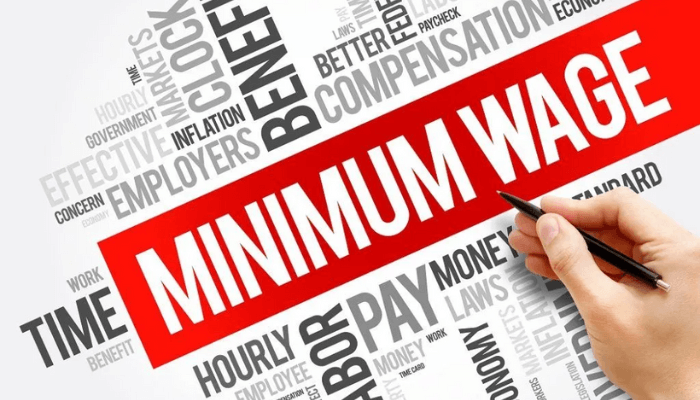
When former President Goodluck Jonathan signed the national minimum wage into law in 2011, it was set at ₦18,000. At the exchange rate of the time, around ₦160 to $1, that amounted to roughly $112.5 a month. Today, under President Bola Tinubu, the national minimum wage stands at ₦70,000. But with the naira now trading at around ₦1,500 to $1, that comes to about $46.6 a month.
Looked at this way, the ₦18,000 Nigerian workers earned under Jonathan was worth more than double what ₦70,000 is worth under Tinubu today. The naira figure went up, but the real value of what workers can actually buy or exchange has gone down.
This is worth remembering whenever the current administration boasts that states are no longer owing salaries. States finding it easier to pay salaries is not necessarily a sign of prosperity. It may simply be a sign that they are now paying a fraction, in real terms, of what workers used to earn. It is easier to pay N70,000 today than it was to pay N18,000 in 2011, not because government revenue has improved, but because the value of that N70,000 has shrunk. Tinubu did not raise the minimum wage in any real sense. He presided over a naira collapse severe enough that even a naira figure nearly four times higher than 2011’s still buys workers less.
The Other Side of the Argument
To be fair, some economists would push back on a straight dollar comparison like this one, arguing that Nigerian workers earn and spend in naira, not dollars, so the local cost of things like food, rent, and transport matters more to their daily lives than the exchange rate does. They would also point out that the naira’s decline did not start under Tinubu. It has been sliding for decades, and Tinubu’s decision to unify the exchange rate in 2023 exposed a devaluation that had, in some ways, already been happening informally on the black market for years.
Even so, that does not change the core of the argument. Whether the naira’s fall is entirely Tinubu’s doing or not, the numbers still show that Nigerian workers today are earning less in real, exchangeable value than they were in 2011, even after their naira wage was raised.
What This Means Going Forward
If governments keep measuring progress by whether the minimum wage in naira has gone up, without accounting for what that naira can actually buy or exchange for, workers will keep losing ground while being told things are improving. A minimum wage review that does not account for the naira’s real, ongoing depreciation will always eventually fall behind, just as ₦18,000 did, and just as ₦30,000 did before it reached ₦70,000.
Published by Chuks Nwachuku