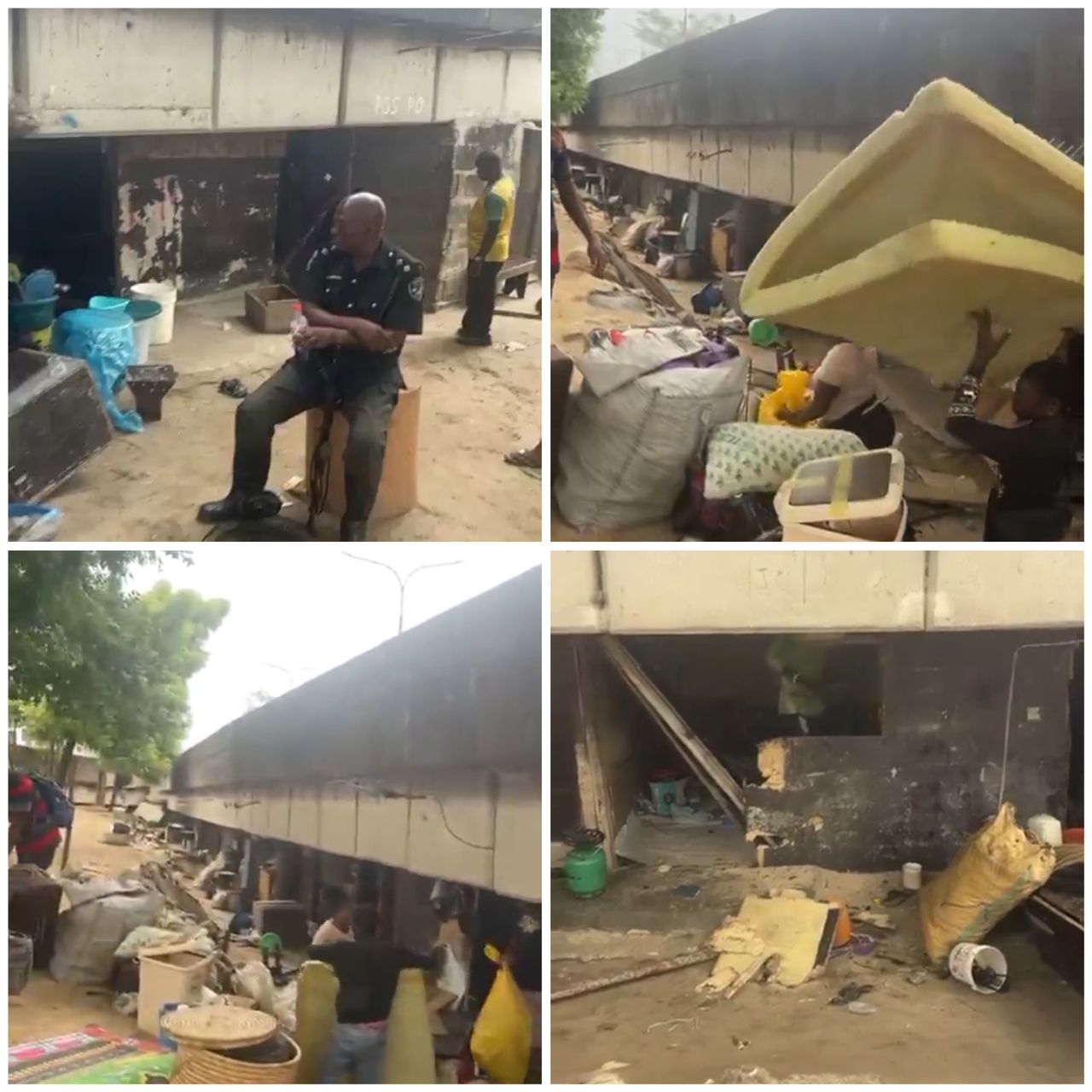
Lagos State Government officials have begun demolishing unauthorized “apartments” built under a bridge in the state, where people were reportedly living, allegedly tapping electricity illegally, and running large storage warehouses beneath public infrastructure.
This is not the first time such a discovery has been made in Lagos, and it likely will not be the last, going by how often this exact scenario has repeated itself across the state in recent years.
Beneath Lagos’s Bridges: A Long, Recurring History of Illegal Settlements
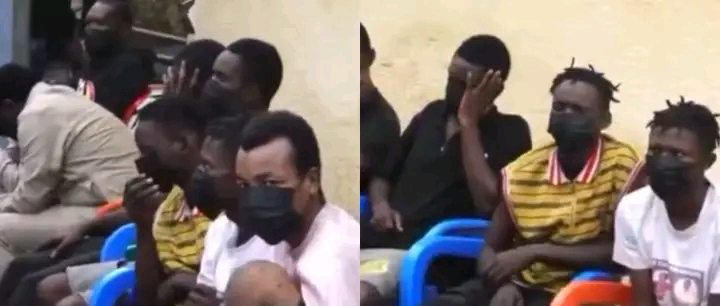
In 2024, the Lagos State Ministry of the Environment and Water Resources discovered 86 partitioned rooms built under the Dolphin Estate bridge in Ikoyi, where squatters paid an average of ₦250,000 in annual rent to live there; 23 people were arrested when the structures, including a container used for illegal activity, were cleared. Days later, officials found another settlement built with mosquito nets, wood, and tyres under the nearby Osborne bridge, also in Ikoyi.
In January 2026, the government issued a quit notice to squatters operating under the Obalende bridge and motor park, noting that residents had already been warned to leave as far back as 2024.
The danger these settlements pose became starkly visible at Eko Bridge, where the Apongbon section caught fire in 2022 in an area occupied by traders and squatters, forcing an indefinite closure while engineers tested the structure’s safety. Before repairs were complete, another fire broke out at the same bridge’s Ijora-Olopa end, in a stretch used as an informal frozen food market. At the time, then-Works Minister Babatunde Fashola warned bluntly that unless the practice stopped, Lagos’s bridges would eventually collapse and kill people.
Just last month, in August 2026, the state government demolished illegal structures built beneath high-tension electricity lines in Ikola, Agbado Oke-Odo, after a communal clash in the area, linked partly to disputes over the settlements, left four people dead.
Why People Move Under Bridges, and the Real Danger It Poses to Lagos
People move into these spaces largely because of Lagos’s housing crisis. With formal rent in the city far beyond what many low-income residents can afford, the space under a bridge offers free or extremely cheap shelter, and for some operators, a hidden location to run storage or illegal businesses without paying commercial rent or scrutiny. Once one structure goes up unchallenged, others tend to follow, turning informal shelter into a full illegal settlement, sometimes, as seen at Dolphin Estate, complete with paying tenants and a de facto landlord collecting rent.
For the people evicted, the human cost is real: sudden loss of shelter, scattered belongings, and, for those running small businesses from these spaces, an abrupt loss of income with no immediate alternative.
But the risk extends far beyond the occupants themselves. Illegal electricity connections, open cooking fires, and stored flammable goods under a bridge create conditions for exactly the kind of structural fires already seen at Eko Bridge. Since Lagos’s bridges, including major arteries like the Third Mainland Bridge, carry a large share of the traffic and trade moving through Nigeria’s commercial capital, damage to any one of them has consequences far beyond Lagos, disrupting the movement of goods and people that the whole country’s economy depends on.
The Hard Choice Between Enforcing Safety and Protecting Livelihoods
Those who back strict, swift demolition argue:
Bridges are critical infrastructure, and any activity that risks their structural integrity puts thousands of daily commuters and the wider economy at risk.
Illegal electricity connections and informal storage under bridges have already caused real fires and real danger, not just hypothetical ones.
Allowing settlements to remain, or grow into organised rent-paying arrangements as seen at Dolphin Estate, only makes eventual removal more disruptive and harder to enforce.
Those who caution against demolition without a safety net argue:
Many occupants are Lagos’s working poor, and demolishing their shelter without offering an alternative simply pushes the same crisis to a different location.
Human rights advocates note that without relocation options, evicted residents and traders often regroup and rebuild once enforcement teams leave, creating an expensive, repeating cycle rather than a real solution.
Some communities affected by these demolitions report feeling targeted, and officials have had to publicly deny that enforcement is aimed at any particular ethnic or social group.
What Would Actually Stop People From Returning to Live Under Bridges
Government figures show the scale of the ongoing effort: by May 2026, Lagos had already demolished over 1,544 illegal structures and arrested more than 10,500 people for environmental offences that year alone. Yet new settlements keep appearing, which suggests demolition alone is not solving the underlying problem.
A more lasting fix would likely need to pair enforcement with genuine alternatives, such as designated low-cost housing or relocation sites for displaced residents, and formal, monitored spaces for small traders currently operating informally under bridges. Continuous monitoring after each demolition, rather than one-off clearance operations, would also help prevent the same spot from being rebuilt once officials move on, a pattern already seen at some previously cleared sites.
Our Perspective on Lagos’s Endless Cycle of Demolition and Return
We understand why the government keeps stepping in. A collapsed bridge in Lagos would not just be a local tragedy; it would disrupt commerce and daily life on a scale that touches the whole country. Illegal electrical connections and stored goods under a structure already scarred by past fires are not risks any government can responsibly ignore.
At the same time, we don’t think repeated demolition, on its own, is solving anything. If the same desperate housing and business conditions that pushed people under this bridge remain unaddressed, another illegal settlement will likely rise somewhere else in the city before long. Lagos needs a housing and informal-trade strategy that goes beyond bulldozers, or this story will keep repeating itself under a different bridge, with a different name, for years to come.
Published by Ejoh Caleb