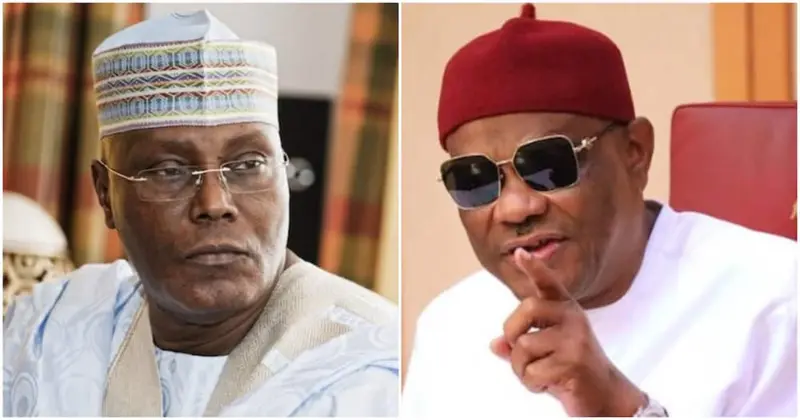
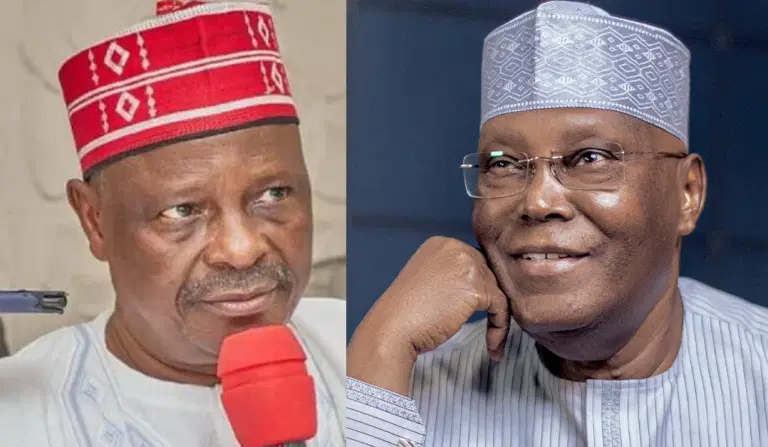
Senator Rabiu Musa Kwankwaso, vice-presidential candidate of the Nigeria Democratic Congress (NDC), a Nigerian opposition coalition not to be confused with Ghana’s party of the same name, has publicly urged former Vice-President Atiku Abubakar to withdraw from the 2027 presidential race, citing his age and health.
Speaking in Hausa and Fulfulde to members of the Fulani Farmers Association who visited his Abuja residence, Kwankwaso said: “Go to the Wazirin of Adamawa’s house and tell him in Fulani that he needs to focus on his traditional title of Wazirin, given his age and health.” The Wazirin Adamawa is a traditional chieftaincy title Atiku holds in Adamawa State.
He added a promise of support if the opposition wins: “If Allah grants us success, we will take good care of him, especially since you all come from Adamawa. An apology should be offered to him.” Kwankwaso, who is running on a joint ticket with Peter Obi’s presidential bid, also questioned whether today’s Nigeria still suits Atiku’s style of leadership, saying the country “was better suited for him about 30 years ago.”
Atiku, the presidential candidate of the African Democratic Congress (ADC), will turn 80 in 2027. He himself acknowledged in April that this campaign would likely be his last attempt at the presidency.
Splitting the Opposition Before: How the 2023 Vote Divide Helped Tinubu Win
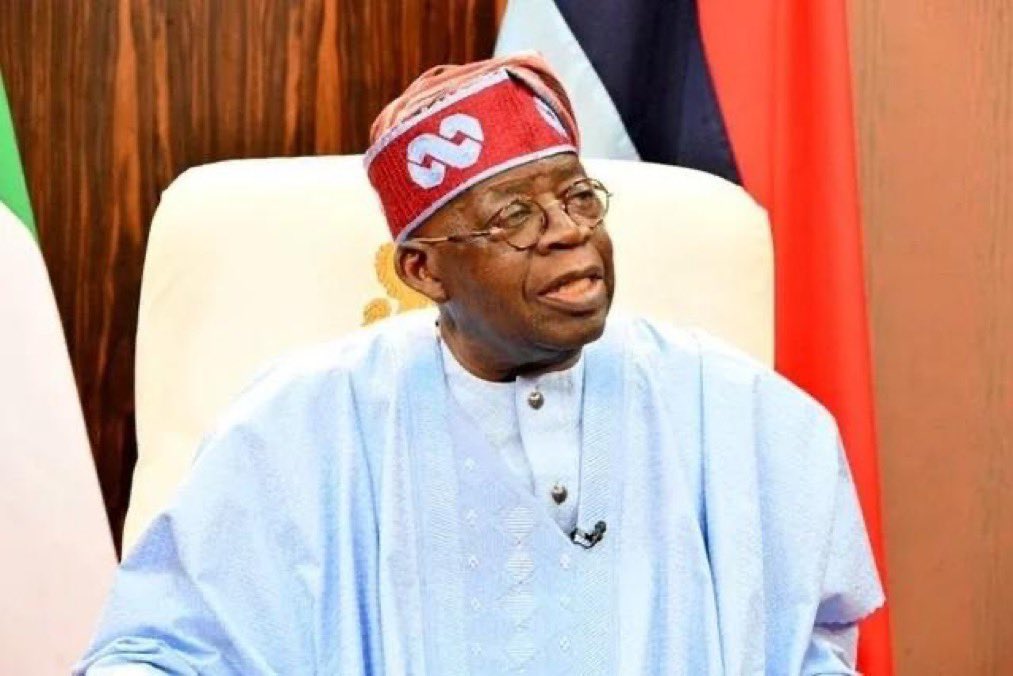
Kwankwaso’s appeal is playing out against a backdrop opposition figures know well. In the 2023 election, the anti-establishment vote was split between Atiku (PDP), Obi (Labour Party), and Kwankwaso himself, who ran under the New Nigeria Peoples Party and finished fourth. That division is widely seen as a key reason President Bola Tinubu was able to win with a plurality rather than a clear majority.
The current NDC coalition between Obi and Kwankwaso was built specifically to avoid repeating that mistake in 2027, but Atiku’s decision to instead run under the ADC has reintroduced the very risk of a divided opposition vote that the coalition was designed to prevent.
Age as a Campaign Weapon: Why Health Concerns Carry Extra Weight in Nigerian Politics
Questioning a candidate’s age and health is not new in Nigerian presidential politics, and it carries particular weight because of past experience. President Umaru Musa Yar’Adua’s prolonged illness while in office between 2007 and 2010, which included an extended, unexplained medical absence abroad, created a constitutional crisis and ended with his death in office, an episode that still shapes how seriously Nigerians take questions about a leader’s fitness for the job. Concerns about President Muhammadu Buhari’s age and repeated medical trips abroad were also a recurring feature of the 2015 and 2019 election cycles.
Against that backdrop, Kwankwaso’s comments tap into a genuine national anxiety about electing an ageing leader, even as critics say the specific language he used, invoking a traditional title and appealing to Atiku’s ethnic community to persuade him, reads more like a political sidelining tactic than a neutral health concern.
Genuine Concern or Political Elimination? Reading Kwankwaso’s Real Motive
Kwankwaso’s remarks can reasonably be read two ways, and Nigerians commenting online appear split along similar lines.
One reading treats this as a legitimate, if blunt, concern about leadership capacity. Atiku will be one of the oldest candidates in the race, has run for president multiple times since 1993 without winning, and has himself spoken about 2027 likely being his final attempt.
The other reading treats it as a calculated move to eliminate a rival power centre. One analysis described the approach as “positioning Atiku’s retirement as a matter of elder statesmanship rather than political defeat,” allowing Kwankwaso to sideline a competitor while still appearing to show cultural respect within their shared Northern political base. Atiku’s supporters, for their part, argue that his decades of experience and political network are exactly what the opposition needs to seriously challenge the ruling party.
Building a Genuine Coalition: What History Suggests Could Actually Unite the Opposition
Nigeria has seen opposition unity work before. In 2013 and 2014, several opposition parties merged to form the All Progressives Congress, a coalition that went on to defeat a sitting president in 2015, the first time an incumbent had lost a Nigerian presidential election. That merger succeeded because it was formalised well ahead of the election, with agreed structures for choosing a single flagbearer, rather than settled through informal public appeals close to the vote.
A comparable path for today’s opposition would involve a transparent, agreed process, whether a joint primary, a negotiated zoning arrangement, or an independently mediated agreement, for choosing a single candidate between the NDC and ADC camps, rather than one side publicly pressuring the other’s candidate to step aside. Without such a structure, informal appeals like Kwankwaso’s risk deepening resentment rather than producing unity.
What We Make of This Rift Inside Nigeria’s Opposition
We think Kwankwaso is right that Nigeria’s opposition cannot afford a repeat of 2023, when a divided vote handed the ruling party a win it may not have otherwise secured. That strategic concern is real and worth taking seriously.
But we don’t think publicly telling a veteran politician to retire to a traditional title, however respectfully framed, is the way to build genuine coalition unity. If the NDC and ADC camps are serious about defeating the ruling party in 2027, they owe Nigerians a transparent process for choosing a joint candidate, not a public appeal dressed up as concern for an elder’s health. Until that happens, this rift looks less like the beginning of opposition unity and more like a preview of the same division that cost them the last election.
Published by Ejoh Caleb