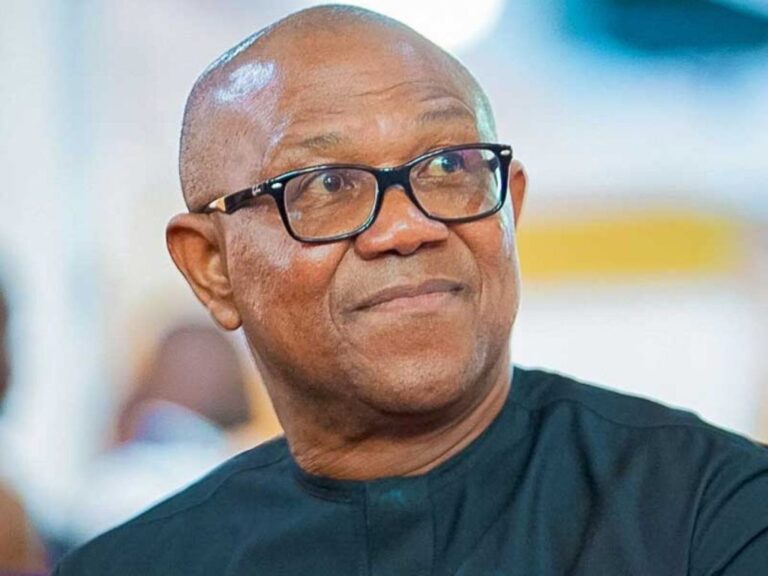
Nigeria Democratic Congress (NDC) presidential candidate Peter Obi says his campaign will run its own independent system to receive election results from every polling unit during the 2027 election, alongside the official transmission to the Independent National Electoral Commission (INEC).
Speaking on Arise TV, Obi said: “We must make sure that at every polling unit, the votes are counted, the votes are recorded properly, the votes are transmitted properly. And we will have even a dual transmission so that as it’s going to the proper designated INEC portal, it’s also being transmitted where the people can see it.”
When asked whether this amounted to creating a parallel version of INEC’s Result Viewing Portal (IReV), the platform Nigerians use to view uploaded polling-unit results, Obi rejected the description, saying his team simply wanted its own accurate record to compare against official figures. He also alleged that former INEC chairman Mahmood Yakubu “worked for the ruling party” during the 2023 election, and said, “We took things for granted in 2023, not anymore.”
INEC has already responded, reaffirming its exclusive statutory authority to collate and announce Nigeria’s election results, while the African Democratic Congress (ADC), the party of rival candidate Atiku Abubakar, has publicly endorsed Obi’s proposal.
A Fight That Didn’t Start Today: The Long Battle Over Electronic Result Transmission in Nigeria
This dispute did not begin with Obi’s Arise TV interview. During the 2023 presidential election, delays in uploading results to IReV caused widespread criticism from opposition parties and their supporters, and Obi, who ran on the Labour Party platform that year, was among the politicians who challenged the outcome in court. The Supreme Court ultimately affirmed President Bola Tinubu’s victory.
The fight resurfaced in February 2026, when the Senate amended the Electoral Act to remove the provision requiring mandatory real-time electronic transmission of results from polling units. Obi and other opposition figures protested at the National Assembly over the change, with former Kaduna State Governor Nasir El-Rufai saying he would have joined the protest had he been in the country.
Why Trust in INEC Is So Low, and What a Parallel Count Could Mean for Nigeria’s Democracy
The core issue driving this proposal is a trust deficit built up over successive elections, where delayed or inconsistent result uploads have left room for doubt about whether announced results match what was actually recorded at polling units.
For individual voters, a second, independently verifiable record could offer some reassurance that their vote was captured correctly, especially in areas where past network failures or delays affected official transmission. But it also carries risk: if Obi’s figures and INEC’s official figures diverge on election night, Nigeria could face competing claims of victory circulating publicly before results are even finalised, a scenario that could fuel unrest rather than confidence.
Nationally, this standoff tests a bigger question about Nigeria’s democracy: whether an election result seen as trustworthy requires more independent checks and balances, or whether multiple unofficial vote counts risk undermining the single, constitutionally recognised authority meant to declare a winner. How this plays out could shape how peacefully the 2027 result is accepted, whichever way it goes.
Transparency Tool or Legal Overreach? INEC and the Opposition Disagree
Legal analysts note the distinction matters. Nigeria’s Electoral Act 2026 gives INEC the sole legal framework for managing and declaring election results, and a private organisation independently collecting and publicising polling-unit figures is different from simply asking INEC to improve its own system.
Those who back Obi’s plan argue:
Multiple independent records make it harder for anyone to announce a result that cannot be traced back to actual polling-unit figures.
Political parties and civic organisations are already entitled to monitor elections through their own agents; this simply formalises and speeds up that process.
After the 2023 IReV delays, additional transparency mechanisms could help rebuild public confidence in the process.
Those aligned with INEC’s position argue:
Allowing candidates to run their own result-collection systems risks eroding INEC’s sole constitutional authority to collate and declare winners.
Competing, unofficial vote counts circulating before INEC’s official announcement could create confusion or be used to dispute a legitimate result.
If every major party ran a parallel system, election night could produce several conflicting “results” before any of them are verified.
What Would Make Result Transmission Trustworthy for Everyone
A less contentious path might involve INEC itself strengthening and guaranteeing the reliability of IReV, including clear, enforceable timelines for uploading results from every polling unit, rather than opposition parties building separate systems to compensate for those past failures.
Independent, accredited election observers, both domestic and international, already provide a form of neutral verification that carries less legal ambiguity than a candidate’s own situation room collecting results. Clearer rules from INEC on exactly what independent monitoring parties and observers can and cannot do with polling-unit data would also reduce the uncertainty currently surrounding Obi’s proposal.
What This Standoff Tells Us About Nigeria’s Election Trust Problem
We think Obi is responding to a real and understandable frustration. The 2023 IReV delays left lasting doubts, and Nigerians deserve confidence that the votes cast at their polling unit are the votes eventually counted.
But we also think a private campaign running its own results system, whatever the intention behind it, risks creating exactly the kind of confusion INEC was designed to prevent. The better fix is forcing INEC’s own systems to work as promised, not building competing ones around it. Until INEC and the opposition find common ground on this, expect this argument to keep resurfacing every election cycle, just as it has since 2023.
Published by Ejoh Caleb