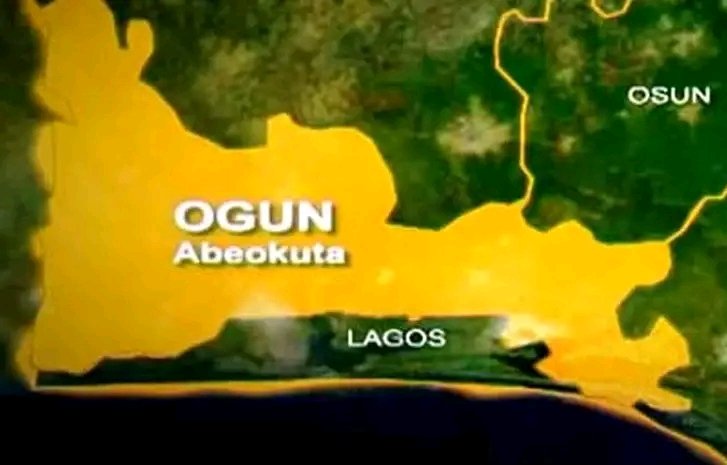
One of the passengers critically injured in a road crash on the Lagos-Ibadan Expressway on Friday has died at the Olabisi Onabanjo University Teaching Hospital (OOUTH) in Sagamu, Ogun State. The Ogun State Traffic Compliance and Enforcement Agency (TRACE) confirmed the death in an update on Saturday, following a visit to the hospital.
Hospital management told TRACE officers that the only passenger in critical condition taken to OOUTH had died. The crash involved a Mazda bus carrying 18 people, which TRACE said suffered a tyre burst. The driver lost control, and the bus overturned and hit a concrete barrier. Thirteen passengers were first reported injured.
What TRACE Reported and What Is Still Missing (A Preliminary Cause Is an Early Finding That May Change)
TRACE said eyewitnesses at the scene also named the tyre burst as the cause. It noted that the concrete barrier stopped the bus from plunging into a deep ditch beside the road, which may have prevented a worse outcome. The bus was taken to TRACE’s Papa Oscar holding facility.
The agency listed the injured as two men, eight women and three children, and its first report said no life was lost. That changed on Saturday with the death. We do not have the passenger’s identity, the driver’s condition, the speed of the bus or the age and state of its tyres. A full inquiry would need to check those things.
A Dispute Over the Rescue: Two Accounts of How Fast Help Arrived (A Dispute Means a Disagreement Over Facts)
A second story has grown around the crash. Nollywood actor Kunle Afod reportedly posted a video criticising the emergency response. Ogun Crime Watch asked the police to question him, saying responders arrived at 12:28 p.m. and his video was posted at 12:29 p.m.
The Ogun State Government also disputed his claims. It said six ambulance points lie between OPIC and Ogunmakin on the expressway, that its emergency call centre received no distress call from that area about this crash, and that the police and TRACE joined the response. It said victims went to a nearby private hospital, while those with serious injuries were taken by state ambulance to OOUTH.
TRACE’s own report puts its rescue team’s arrival at 12:48 p.m. These times do not match, and we cannot settle them. An open review of call records and response logs would help the public judge.
A Familiar Stretch of Road: Earlier Crashes in the Same Corridor
Ogun State’s highways have seen worse. In September 2024, a Mazda bus crashed on the Abeokuta–Sagamu road with seven people injured, and the accident was blamed on excessive speed and a tyre burst, after which the vehicle somersaulted. In April 2025, an 18-person death toll was reported in a multiple-vehicle crash on the Ikorodu–Sagamu road, which the Federal Road Safety Corps linked to brake failure.
In an earlier case on the Lagos-Ibadan Expressway, 18 people died at Isara Bridge in a crash involving two Mazda buses and a Previa bus that led to an explosion. Just last week, four people died when a container truck overturned onto a bus on the Ibeju-Lekki Expressway in Lagos. The causes vary, but the toll keeps growing.
Why a Tyre Burst Can Become a Tragedy: Speed, Old Tyres and Packed Buses (Tyre Failure Means a Tyre Suddenly Breaking Down While a Vehicle Moves)
When a tyre bursts at speed, the driver can lose control in seconds. Heavily loaded buses make this harder to manage, since they carry more weight and are less stable. Old or worn tyres, poor inflation and long hours in heat can raise the risk.
We do not know the condition of the tyres on this bus, and we make no claim about the driver. But tyre failures are a known danger on busy expressways. One report on the crash noted that tyre failures remain a threat, especially when vehicles travel at speed.
The Human and National Cost: Broken Families and Crowded Hospitals
For the family of the passenger who died, the loss is immediate and heavy. Twelve other passengers, including children, faced injuries and fear. Some may still need care or time to recover.
The wider cost reaches the country. Each fatal crash on a major corridor takes workers and parents from their families, and it strains hospitals and rescue teams. The Lagos-Ibadan Expressway links the nation’s busiest commercial centre to the rest of the country, so repeated crashes add to costs for travellers and trade. They also remind people that safe travel is not guaranteed.
Fixing the Basics: Tyre Checks, Faster Rescue and Open Reporting
Operators of commercial buses can inspect tyres before each long trip, replace worn ones and avoid overloading. Transport unions can enforce this among their members. Enforcement agencies like TRACE and the Federal Road Safety Corps can carry out routine vehicle checks at motor parks and on the highway.
For emergencies, the Ogun government can publish ambulance locations and call-centre numbers along the corridor, and report response times. Hospitals and agencies can also tell the public promptly what happened to each victim. Open data can settle disputes like the current one and help the public trust the system.
A Safer Road Is Everyone’s Work: Our Reading of a Sad Weekend
We offer our sympathy to the family of the passenger who died, and we wish the others a full recovery. We also recognise the responders who reached the scene.
We do not know exactly why the tyre failed, how quickly each team arrived or who is right about the response. We urge the authorities to review the facts and publish them, including the call logs and arrival times. If the response was fast, the record should show it. If it fell short, lessons should be learned.
Meanwhile, drivers, owners and passengers can act. Check the tyres, keep to safe speeds and refuse to board an overloaded bus. A busy expressway should not cost lives on a normal Friday.
Published by Ejoh Caleb