
Inspector-General of Police (IGP) Olatunji “Tunji” Disu has asked Nigerians to stop recording police officers for skits and social media content, calling the trend “very, very demoralizing” for the force.
Disu spoke in Abuja during a meeting with Nigerian Bar Association (NBA) President Oyinkansola Badejo-Okusanya and members of the NBA executive committee, held to ease tension between lawyers and the police.
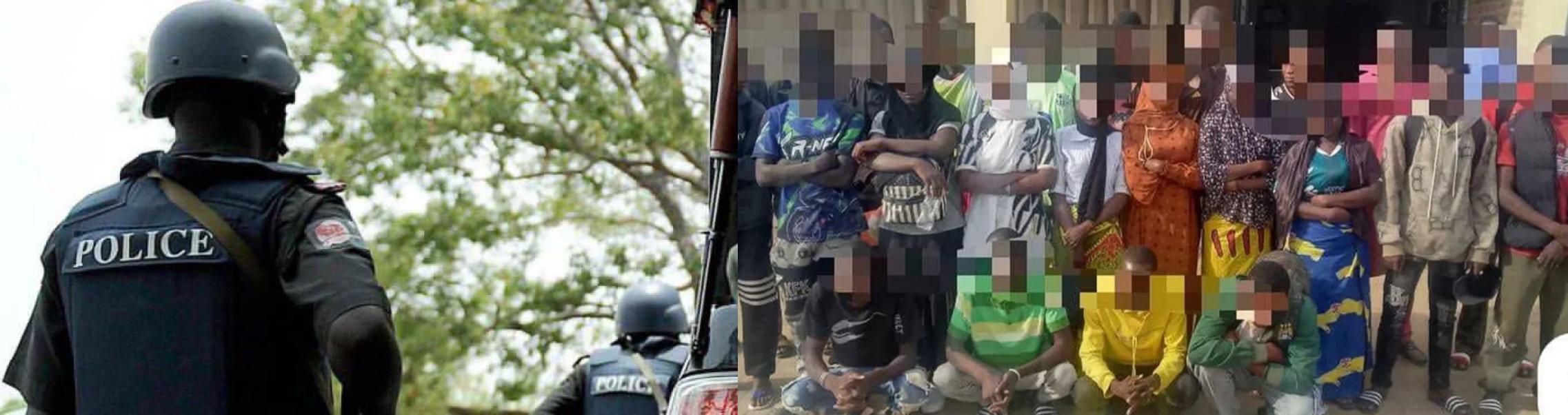
He asked whether Nigerians would accept police officers walking into their own offices or a courtroom to record them at work, and pointed out that many officers serve in isolated, dangerous locations like forests and highways to protect the public.
The IGP was careful to say he was not asking Nigerians to stop recording altogether. “We are not saying they cannot exercise their rights of recording officers in the public places while doing their jobs,” he said, “but they should put restraints and not turn our police officers to content for their skits or anything.”
How We Got Here: The Court Case and Incidents Behind This Debate
Disu’s comments did not come out of nowhere. He said a recent court judgment on recording police officers “really jolted” the force, after which more Nigerians began filming officers in different settings, including restaurants.
That judgment came from the Federal High Court in Warri, Delta State, on March 17, 2026. The case was brought by lawyer Maxwell Nosakhare Uwaifo after police stopped him near Sapele in May 2025 and an unidentified officer threatened to arrest him for trying to record the stop. Justice H. A. Nganjiwa ruled that officers cannot lawfully harass, intimidate, arrest, or seize devices from citizens simply for recording police activity in public, and also ruled that officers operating without visible name tags or force numbers are acting unconstitutionally.
Since then, several incidents have shown why many Nigerians insist on their right to film. In May 2026, a video showed police officers in Abia State assaulting a commuter after accusing him of carrying too many phones and recording them; the state police command later confirmed the officers were arrested and disciplined. In another case in Lagos, a resident said officers slapped him and seized his phone after he insisted it was his right as a civilian to record a stop-and-search. A newspaper editor in Abuja also said officers beat him with an electric cable and seized his phone after he began filming a demolition exercise in August 2026.
This tension also has roots in the 2020 #EndSARS protests, when video evidence recorded by ordinary Nigerians became central to public campaigns against police brutality, a period that still shapes why many citizens now treat their phones as a form of protection when dealing with officers.
What’s Driving This Clash, and Its Cost to Nigerians and the Police
Two things are pulling against each other here. On one side, Nigerians increasingly see their phones as protection against abuse of power, especially after years of documented cases of police brutality, extortion, and unlawful arrests. On the other side, officers say constant filming, especially when clipped for jokes and comedy skits, strips away their dignity and can put their safety at risk if identifying details end up online.
For individual Nigerians, the cost of getting this balance wrong is high. People who record officers in good faith have reported being slapped, detained, or having their phones seized and footage deleted, despite the law now standing clearly in their favour.
Nationally, this dispute affects how much Nigerians trust the police to police itself. A police force seen as hostile to being recorded feeds public suspicion that it has something to hide, at a time when the force is still working to rebuild trust lost during the #EndSARS period. How this balance is handled going forward will shape whether ordinary Nigerians see the police as accountable partners or as an institution that operates beyond public scrutiny.
Two Sides of the Argument: Public Accountability Versus Officer Dignity
Those who defend the right to record without restriction argue:
Recording is one of the few tools ordinary Nigerians have to hold police accountable in the moment, not after the fact.
Court rulings, including the Warri judgment, have already settled that citizens have this right, so the debate should focus on enforcement, not restriction.
Officers who fear being filmed while doing their job lawfully raise the question of what exactly they don’t want seen.
Those who support the IGP’s call for restraint argue:
Turning routine police work into comedy skits can be humiliating for individual officers who are simply doing their job.
Officers deployed to dangerous, remote locations deserve some basic dignity while carrying out difficult, sometimes life-threatening assignments.
A culture of constant filming for entertainment, rather than accountability, can distract officers and escalate tension during encounters that would otherwise pass quickly.
Finding a Middle Ground Between Accountability and Respect for Officers
The NBA president’s response points to one workable path: distinguishing clearly between recording to document misconduct or hold officers accountable, and recording purely to mock or entertain.
Clearer, written guidelines from the Nigeria Police Force on what officers can and cannot do when someone records them would help, alongside consistent discipline for officers who seize phones or assault citizens unlawfully, as already happened in the Abia case. For citizens, legal commentators have advised recording openly rather than secretly, keeping a safe distance, and avoiding confrontation, since this protects both the citizen’s rights and the integrity of the encounter.
What This Debate Says About Trust Between Nigerians and the Police
We think the IGP raises a fair point about dignity, but we don’t think it can override a right that a Nigerian court has already confirmed. Turning a tense police stop into a skit for laughs is different from documenting an officer’s conduct, and the two should not be treated the same way.
At the same time, we believe Nigerians recording police officers are, more often than not, protecting themselves, not mocking anyone. Years of incidents involving seized phones, deleted footage, and assaulted citizens explain why so many people now reach for their cameras first and ask questions later. Until police conduct at checkpoints and during stop-and-search operations consistently matches what the law and the courts expect, the recordings will keep coming, whatever the IGP prefers.
Published by Ejoh Caleb