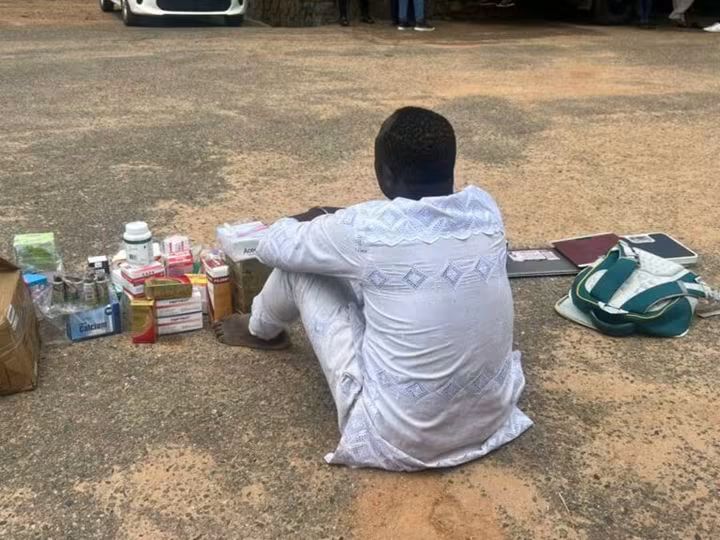
The Oyo State Police Command has arrested a 45-year-old man, Adeniyi Benjamin, over alleged quack medical practice and the operation of an unlicensed medical facility in the Olodo area of Ibadan. A quack is a person who treats patients without the qualifications or licence to do so. The command’s spokesperson, DSP Ayanlade Olayinka, announced the arrest in a statement on Wednesday, October 7, 2026.
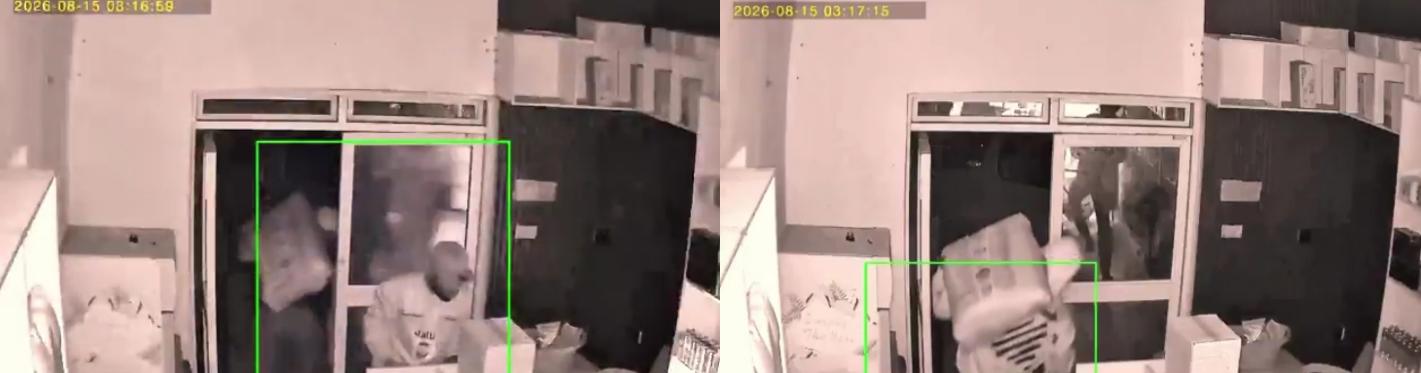
Police say operatives of the Command Monitoring Unit arrested him on Friday, October 2, at about 3:00 p.m. They acted on what they called credible intelligence about his activities at Life Is Good Hospital in Olodo. The allegations are police claims. The suspect has not been tried, and only a court can decide his guilt. Some outlets reverse his name and call him Benjamin Adeniyi.
What the police say they found (the arrest and recovered items)
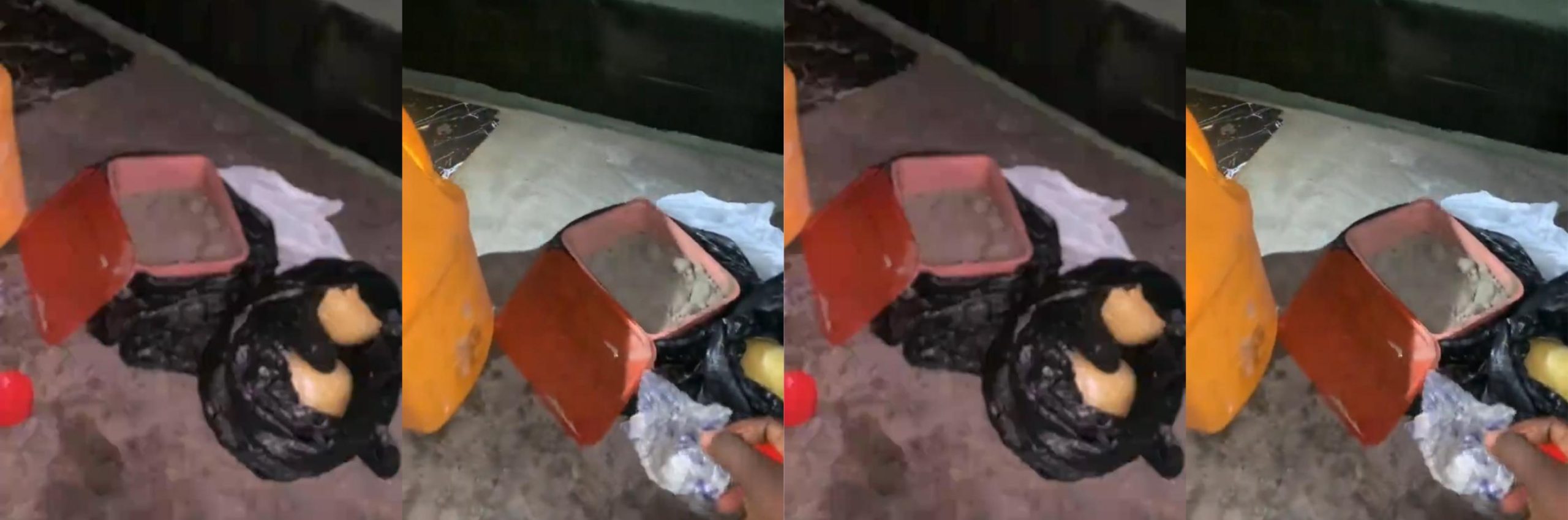
According to the police, the suspect was found attending to patients and giving treatments, particularly for fertility problems, although he is not a certified medical doctor. They say several items were recovered from the premises, including two weighing scales, four Quantum Magnetic Resonance Body Analysers, one stethoscope, a large carton of assorted medicines and specimen bottles.
The command was paraded at its headquarters in Eleyele, Ibadan, together with suspects in other cases. At that parade, he was described as an auxiliary nurse, and police accused him of running two hospitals named Life Is Good, in the Olodo and Academy areas of Ibadan.
A confession whose details do not match (the timeline question)
Police say the suspect admitted during preliminary investigation that he had practised as a quack, without any licence, and that he specialised in fertility treatment. The police statement gives the length of time as about seven years. Your brief says five years. In a separate interview with Radio Nigeria, he reportedly said he had been practising since 2022, which would be about four years. The length of time is therefore unclear. A statement made to the police is not proof in court, and he may say something different when he is charged.
We found no report that any patient has been harmed at the clinic, or that anyone has come forward with a complaint. The police said the case raises concerns about the risks to members of the public, particularly in sensitive areas such as fertility care.
When fake practitioners meet the courts (past cases and outcomes)
Nigerian courts have convicted people for posing as medical professionals, sometimes with heavy sentences. In March 2026, an Ekiti State High Court sentenced a 48-year-old man, Olatide Temitope Emmanuel, to death by hanging on charges of murder and impersonation. The court heard that he had falsely presented himself as a medical doctor, and that a woman died after he carried out a childbirth operation in June 2019. He told the court he was a nursing apprentice, and that she developed complications after a successful operation. The court found that his reckless act caused her death.
In November 2024, the High Court of the Federal Capital Territory jailed a fake doctor, Martins Ugwu, for four years and ordered him to refund ₦17.2 million in salaries. He had used his best man’s medical certificates to get a job at the Federal Ministry of Health. The Nigerian Medical Association said the conviction would strengthen efforts against quackery.
These cases show that quackery can lead to long sentences, particularly when a patient dies. They also show that cases can take years: the Ekiti offence happened in 2019 and the sentence came in 2026.
Hope, cost and weak checks (why people go to such clinics)
Fertility problems cause deep distress, and many couples are desperate for answers. Specialist care can be expensive and hard to reach, and some people feel pressure from family and society. A clinic that promises results at a lower price, or with confident claims, can seem attractive, especially if it looks like a real hospital.
Weak checks add to the risk. Many patients do not know how to confirm that a doctor or facility is licensed, and a name like “hospital” on a signboard is easy to put up. The police did not say whether the devices called “body analysers” were used to diagnose patients. Such machines are not standard medical diagnostic tools, so patients should ask what tests a clinic actually uses.
Health risks and lost trust (effects)
Treatment by someone without training can cause injury, infection, wrong diagnosis and delays in proper care, and fertility treatment is a sensitive area where a mistake can be costly or permanent. Patients may also have spent savings on treatment that did not work.
For the health system, quackery erodes trust in all providers, and makes honest practitioners suffer. At the national level, it adds to the burden on hospitals that must treat the complications.
Protecting patients and closing fake clinics (possible solutions)
Anyone who was treated at either branch of Life Is Good, particularly for fertility, should consider seeing a qualified doctor for a proper review, and may report to the police. The police said they will work with regulatory agencies, and the Medical and Dental Council of Nigeria, which licenses doctors, can help by checking the premises and the treatments.
Patients can check that a doctor is registered with the Council and that a hospital is licensed by the state health ministry, before beginning treatment. They can ask what qualifications the person holds and what tests are being used. Government can run regular inspections, publish lists of licensed facilities, and prosecute offenders quickly, so that quacks see a real cost.
Trust in medicine should not be left to chance (our view)
We understand why people turn to anyone who offers hope on fertility. That is not a failing, and nobody should be blamed for it. The suspect, for his part, is entitled to a fair hearing, and the details of his reported statements need to be tested in court.
But the allegations, if proved, would mean patients may have put their health and money in the hands of someone without the training to look after them. We hope the police and regulators will investigate fully, identify anyone who may have been harmed, and make the results known. For the public, the lesson is simple: before any treatment, check the licence.
Published by Ejoh Caleb