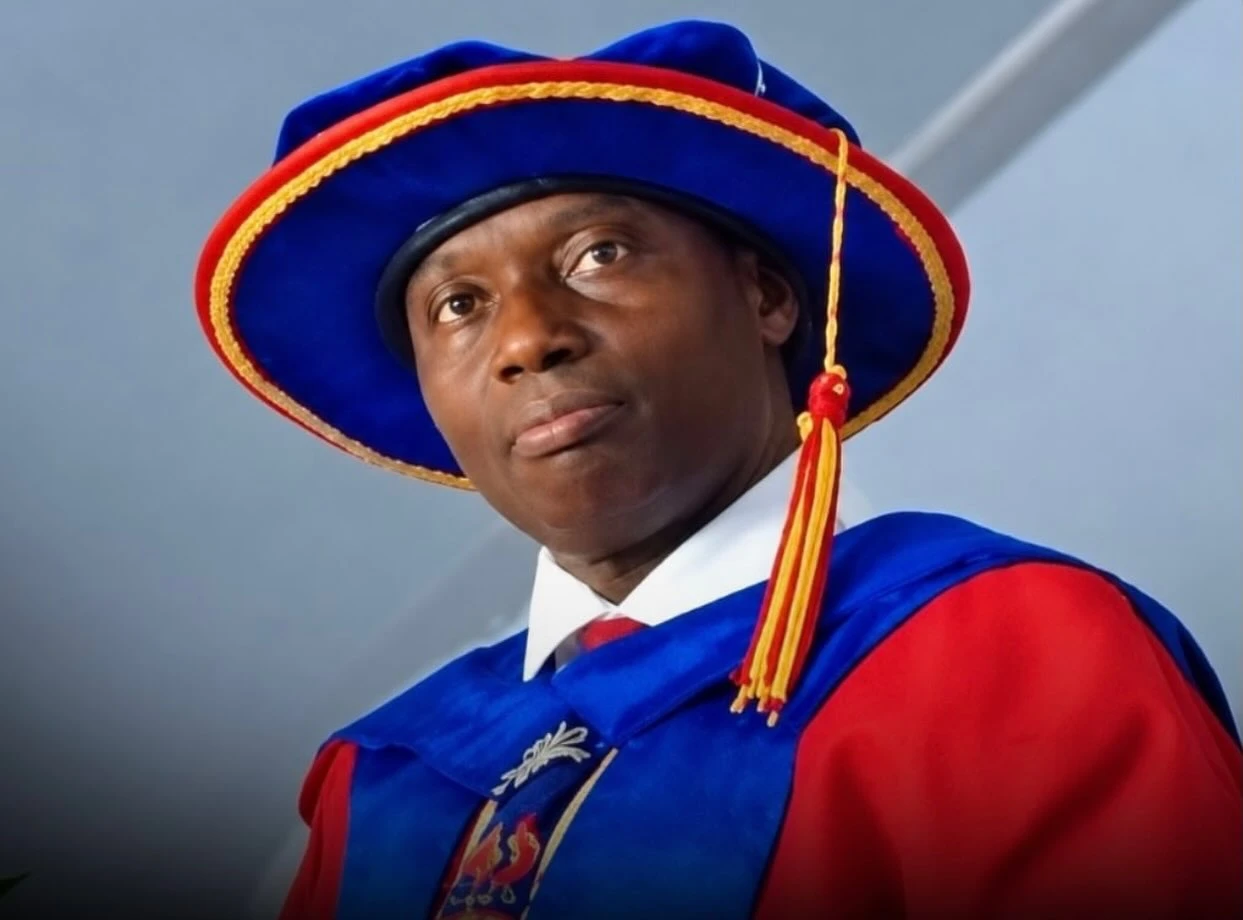

Nigerian Bar Association (NBA) President Oyinkansola Badejo-Okusanya, a Senior Advocate of Nigeria, has pushed back on concerns raised by Inspector-General of Police (IGP) Tunji Disu over citizens recording officers, pointing to body-worn cameras in the United States as proof that transparency works.
“We should not be afraid of being transparent while carrying out our duties. That’s why the USA introduced body cameras for its police officers. It makes for a better society,” she said.
Her comments came directly in response to Disu, who had asked Nigerians earlier in the same meeting, “Can we come to your office and record you? Can you record in the courtroom? Don’t turn our police officers into content.”
Badejo-Okusanya explained that body cameras let officers know their conduct can be reviewed later, which she said helps identify misconduct and holds officers to account. She did, however, agree that recording officers during private moments, such as eating, could count as an invasion of privacy, and called for the Cybercrimes Act and related laws to be reviewed to clearly define where recording crosses that line.
Where the Body Camera Idea Comes From, and What Happened When the US Tried It
Body-worn cameras became a major part of American policing after the 2014 killing of Michael Brown in Ferguson, Missouri, when then-President Barack Obama asked Congress for $263 million to fund cameras and training for police departments nationwide. By 2016, nearly half of all general-purpose police agencies in the US had acquired the cameras, rising to 80 percent among large departments.
The results have been mixed rather than the clear win Badejo-Okusanya’s comment might suggest. A review of citizen complaint data in Chicago found officers wearing cameras were 64 percent more likely to face discipline after a complaint was investigated, and researchers linked the cameras to a drop in racial bias in how complaints were resolved. Other research has shown reductions in citizen complaints and, in some studies, reduced use of force by officers wearing cameras.
At the same time, a comprehensive review of 70 separate studies found no consistent, statistically significant effect from body cameras on police use of force, officer assaults, or arrest patterns overall, showing that cameras alone do not automatically fix police conduct.
Nigeria’s own recent experience shows why this debate matters here too. The March 2026 Warri court judgment already found that officers who acted without visible name tags or force numbers were operating unconstitutionally, a finding that speaks directly to the kind of accountability gap body cameras are meant to close.
What’s Really at Stake: Cost, Trust, and Who Controls the Footage
The disagreement between Disu and Badejo-Okusanya is not really about whether transparency matters, both agree it does, but about who should control the recording and when. Citizen-held phones put ordinary Nigerians in charge of the footage, while body cameras would shift that control to the police force itself, which decides when devices are switched on and who can access the video afterward.
For individual Nigerians, this distinction is not abstract. Cases of officers seizing phones, deleting footage, or assaulting people for recording show why many people trust their own cameras more than they trust promises from the force.
For Nigeria as a country, adopting body cameras would mean a real financial commitment, since Nigeria Police Force would need funding for the devices, storage, and maintenance, resources that are often scarce. It would also test whether the force is willing to make footage available for independent review, rather than keeping it internal, which is the difference between a genuine accountability tool and a public relations gesture.
Two Sides of the Argument: Do Body Cameras Actually Deliver Accountability?
Those who support the NBA president’s proposal argue:
Cameras controlled by the police, if paired with a clear policy on public access, could reduce disputes over what happened during an encounter.
Some of the strongest US studies show real drops in citizen complaints and disciplinary action once cameras were introduced.
Officers themselves could benefit, since footage can also protect them against false accusations.
Those who are skeptical of body cameras as a fix point out:
The broadest reviews of the evidence found no consistent effect on police use of force or misconduct, meaning cameras are not a guaranteed solution.
Cameras only work if officers are required to keep them on and if the footage stays accessible to the public, conditions that depend on strict policy enforcement.
Introducing body cameras does not automatically restore citizens’ right to record independently, which the Warri judgment already protects and which some officers continue to resist in practice.
What a Nigerian Body Camera Policy Would Need to Work
If the Nigeria Police Force takes up the NBA president’s suggestion, experience elsewhere points to a few conditions that matter more than the cameras themselves. Policy must require officers to keep cameras on during stop-and-search operations, checkpoints, and any encounter with the public, not leave it to individual discretion. Footage should be stored independently of the officers involved and made available for review by oversight bodies, and where appropriate, the public, so the tool serves accountability rather than only the police’s own narrative.
Alongside this, Badejo-Okusanya’s call for the Cybercrimes Act to be reviewed is worth taking seriously, since a clearer legal line between public accountability recording and private intrusion would reduce the back-and-forth currently playing out between the police and citizens with their own phones.
Why This Argument Between Two Institutions Actually Matters to Ordinary Nigerians
We think it is a good sign that the IGP and the NBA president are having this disagreement openly rather than letting it fester. Both sides claim to want transparency, which is progress compared to a force that simply denies citizens the right to record at all.
Still, we don’t think body cameras should be presented as a replacement for the right citizens already have to record police themselves. The US evidence is clear that cameras alone don’t guarantee accountability, and a Nigeria Police Force that controls the footage will need real, enforced rules before Nigerians have reason to trust it over their own recordings. Until such a system exists, ordinary Nigerians reaching for their phones will remain the most reliable form of accountability available to them.
Published by Ejoh Caleb