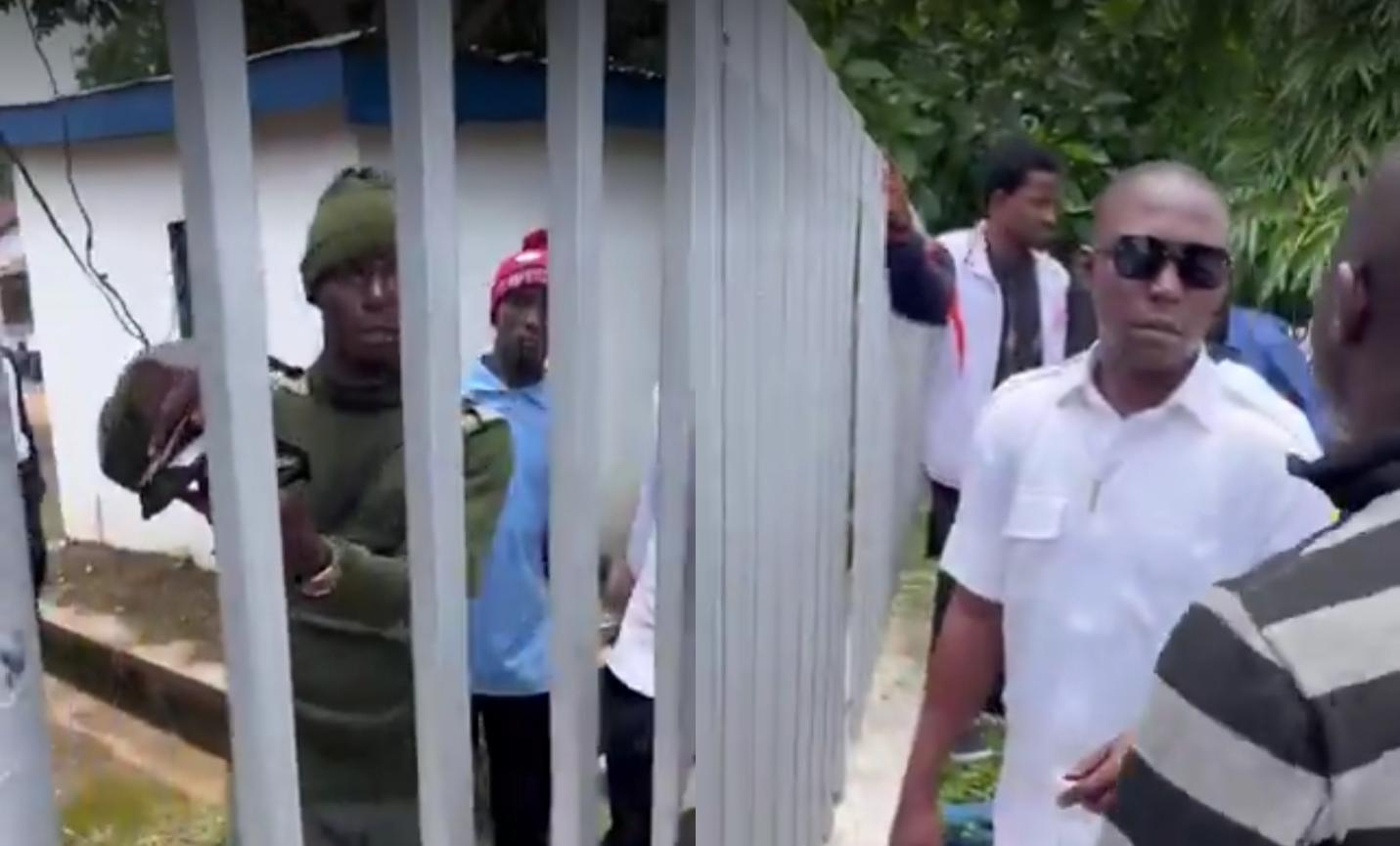
Two officers of the Nasarawa State Police Command have been detained at the Force Headquarters in Abuja. They are accused of detaining two young travellers and framing one of them with drugs in order to extort ₦150,000 for his release.
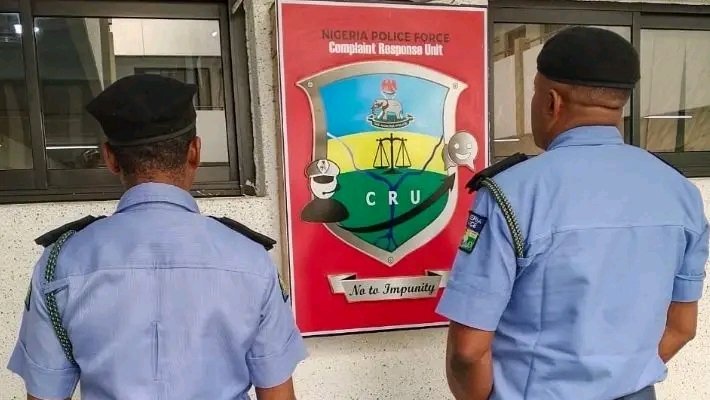
The Nigeria Police Force Complaint Response Unit (NPF CRU) announced this on Thursday, November 5, 2026. It said the officers were identified after a viral video showed armed personnel attached to the Ado Area Command arguing with two travellers. The travellers were returning from a wedding and heading to the airport to fly to Lagos.
What the Police Say and What the Video Alleges (An Allegation Is a Claim That Has Not Yet Been Proven)
The CRU said the officers in the video were identified and invited to the Force Headquarters for an interview. It said the team leader, Insp. Sani Mikailu, reportedly died two days earlier under circumstances not yet established. Only two officers appeared, and they have been detained until the investigation ends and the Inspector-General of Police gives further directions. The Unit said it will submit its findings to the IGP as soon as practicable.
The detailed claims come from the account in the video. It says the officers stopped the travellers for a stop-and-search, drove one of them to an isolated place, took his phone and drove away with him. His friend then went to the station with a lawyer. The video account says the DPO demanded ₦100,000 for the victim’s bail, because the officers had allegedly presented weed as being found on him, plus ₦50,000 for fuel. It also says the victim refused to write a statement implicating himself, so the officers allegedly wrote one saying drugs were found on him.
These are serious claims that no court has tested. We have not heard from the officers or the DPO, and the police have not said whether the DPO is under investigation. The reported death of the team leader adds a further unknown, and we do not speculate about it.
A Familiar Complaint: Earlier Cases of Officers Accused of Extorting Citizens
This is not the first time a viral video has led to action against officers. In March 2026, police in Anambra reportedly arrested six senior officers accused of torturing a trader in Onitsha and extorting ₦200,000 from him. They were arrested after the victim petitioned police authorities.
In Delta, four police operatives were seen in a video counting bundles of naira in a parked police truck. The command said two senior officers were queried and two inspectors were detained to await orderly room trial. In Edo, a video showed an officer asking travellers for ₦5,000 or five litres of fuel over a vehicle registration document, and the Force PRO said the officers were summoned to the Force Headquarters.
The Nasarawa command has faced complaints before. In February 2026, it opened a probe into its Anti-Cultism Squad at the Bukan Sidi Area Command, after a man said officers slapped and detained him for filming them. These cases involve different officers and different claims, but each began with a citizen who spoke up or filmed.
How Stops Can Turn Into Shakedowns: Little Oversight, Fear of Arrest and Power Over a Traveller (A Shakedown Means Forcing Someone to Pay Money)
An officer who stops a traveller holds great power in that moment. The traveller may not know his rights, may fear a criminal record and may be far from home. A planted or claimed drug allegation, as alleged here, could make even an innocent person feel he has to pay.
Weak supervision can make such acts easier. Isolated places, missing body cameras and no independent record of a stop leave the officers’ word against the citizen’s. Fear of retaliation also keeps many people silent. In this case, the video and the friend’s decision to bring a lawyer may have made the difference.
The Price of a Planted Charge: Harm to Citizens, the Force and the Country
For the traveller, an arrest on a false drug charge can mean lost time, lost money and fear. A record could also damage a job or a future. His friend and family also faced stress and cost.
The wider cost reaches the whole country. Every case like this weakens public trust in the police, and people who do not trust officers are less likely to report crime or help investigations. Honest officers also suffer, as they get judged by the actions of a few. Extortion on the roads raises the cost of travel and business, and it feeds a belief that justice has a price. That belief damages the rule of law.
Credit and Caution: Weighing the Police’s Quick Response (Accountability Means Being Answerable for One’s Actions)
There is a case for noting what the police did right. The CRU acted within days of the video spreading, identified the officers and detained two of them at the national headquarters. That is more than some earlier cases saw.
But a detention is a first step, not an outcome. In earlier cases, officers were queried or sent for orderly room trial, and the public often did not learn the result. A real test of accountability is whether the findings are published, whether any charges follow, and whether the DPO’s alleged role is examined too. The death of the team leader may make it harder to establish the full chain of events.
Making Stops Safer: Body Cameras, Clear Records and Easy Complaints
Police can require body cameras for officers on stop-and-search duty and keep the footage. Each stop should be recorded, with the officers’ names and the reason for the stop. Stations should have a clear, private way for people to complain, and that complaint line should be well known to the public.
Courts and prosecutors can also help by treating any claim of a planted drug charge seriously. The CRU can keep publishing its findings. Citizens can protect themselves by staying calm, noting officers’ names and numbers where safe, contacting a lawyer and using the CRU’s channels. The authorities can also protect people who film officers in public.
A Test of Honest Policing: Our Reading of Two Detentions
We welcome the speed with which the CRU acted. Taking armed officers in for questioning after a video went viral shows that public pressure can matter.
We also hold that the officers are suspects, not convicted persons. They deserve a fair process, and the allegations need proof. We note the CRU’s report of the team leader’s death, and we make no claim about it.
We urge the Inspector-General to see the investigation through and to publish the outcome, including any findings about the DPO. If the claims are true, the officers and anyone who profited from the scheme should face the law. If any part is false, that should be shown clearly too. Nigerians want a police force they can trust. That trust grows only when officers who abuse their uniforms are held to account in the open.
Published by Ejoh Caleb