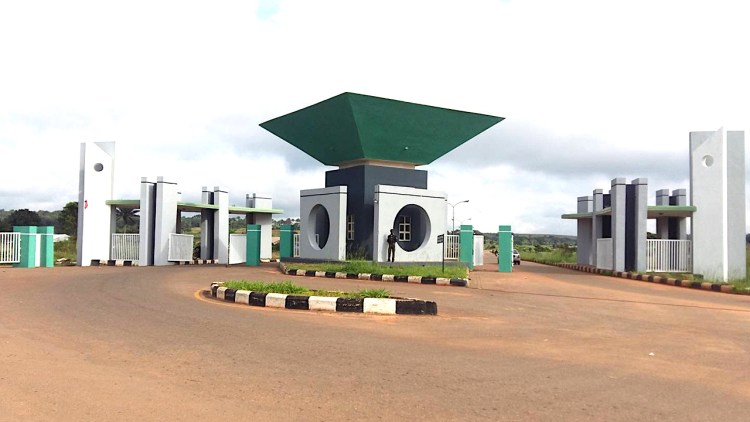
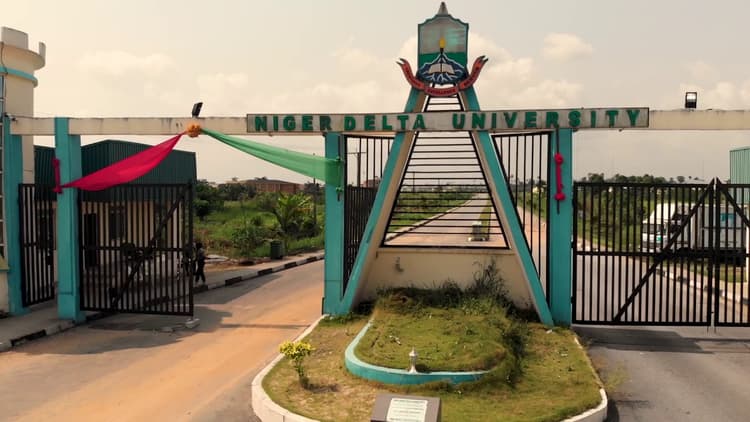
Niger Delta University (NDU) management has reversed its recent increase in school fees, days after students protested and their union leader threatened an indefinite strike. In an official notice, the university said the fee structure for the 2025/2026 session will now be maintained into the 2026/2027 academic year, following what it described as extensive consultation with stakeholders in the state.
The reversal came after the Bayelsa State Government ordered NDU’s management to suspend the new fee regime, directing staff and students to return to normal academic activities while the matter was resolved. The dispute began when NDU students learned that fees for new intakes had jumped from about ₦110,000 to ₦319,000, with those already at higher levels expected to pay even more. Angry students took to the streets, and their SUG president was filmed declaring an indefinite strike: “If you love your education… from this day, we begin an indefinite strike.”
A Pattern That Keeps Repeating Across Nigerian Campuses
NDU is not the first Nigerian university where a sudden fee hike has pushed students onto the streets, only for management to eventually back down. In 2023, the University of Lagos (UNILAG) raised fees for some courses from around ₦19,000 to as high as ₦190,250, sparking protests and a police crackdown. Weeks of pressure from students and the National Association of Nigerian Students (NANS), along with a directive from President Bola Tinubu asking institutions to avoid arbitrary fee increases, eventually pushed UNILAG’s management to agree to reconsider the new charges.
Obafemi Awolowo University (OAU) followed a similar path that same year, hiking fees by more than 300 percent before student protests forced management to cut the new rates down significantly. Other schools, including the University of Benin and Ahmadu Bello University, have gone through the same cycle of quietly announcing large increases, facing student anger, and later adjusting the figures.
Why Universities Keep Raising Fees, and Who Ends Up Paying the Price
University managements generally blame rising costs — inflation, higher electricity and fuel prices, and shrinking government funding — for the need to raise fees. Since the removal of the fuel subsidy in 2023, transportation and power costs for running universities have risen sharply, and many institutions say they can no longer operate on old fee structures.
For students and their families, a sudden jump like the one NDU announced can mean the difference between continuing school and dropping out entirely, especially for families already struggling with the rising cost of living. When fees roughly triple with little warning, many students simply cannot raise the money in time, no matter how much they value their education. That NDU reversed course this quickly shows how disruptive the threat of a prolonged strike can be to a university’s academic calendar.
At the national level, these repeated cycles of fee hikes, protests and reversals chip away at Nigeria’s ability to plan its higher education system predictably, since students who fear sudden cost increases may delay enrollment or drop out. They also add to a growing sense that public university education, meant to be affordable, is being priced out of reach for ordinary families, and each cycle of protest-then-reversal raises questions about how carefully university managements plan fee changes before announcing them.
How Nigeria Can Stop the Next Cycle Before It Starts
Some experts argue that universities need transparent, gradual processes for reviewing fees, with proper consultation with student unions and clear notice periods, instead of abrupt announcements that spark protests and then hasty reversals. Nigeria’s Students Loan Scheme, introduced to help students cover tuition costs, could also be strengthened and expanded so that future fee adjustments don’t fall entirely on families’ shoulders.
State governments could also set clearer guidelines on how much and how often public universities may raise fees, similar to the directive Bayelsa State issued to NDU this week. Addressing the deeper problem of chronic underfunding of public universities would also reduce how often institutions feel forced to pass rising costs directly onto students in the first place.
A Reversal That Shows Pressure Works, But Shouldn’t Be Necessary
We’re glad NDU’s fee increase has been reversed, but we notice the same sequence playing out here as it has elsewhere: a university announces a steep increase, students protest and threaten a strike, and only then does government step in to reverse it. That the fees were suspended within days of the protest shows public pressure works, but we don’t think it should take a strike threat and a viral video every time before students are treated fairly. We believe universities and state governments owe students clear, early conversations about fees, not sudden announcements that leave families scrambling and campuses on edge. Until that changes, we expect this same cycle to repeat at another Nigerian university before long.
Published by Ejoh Caleb