
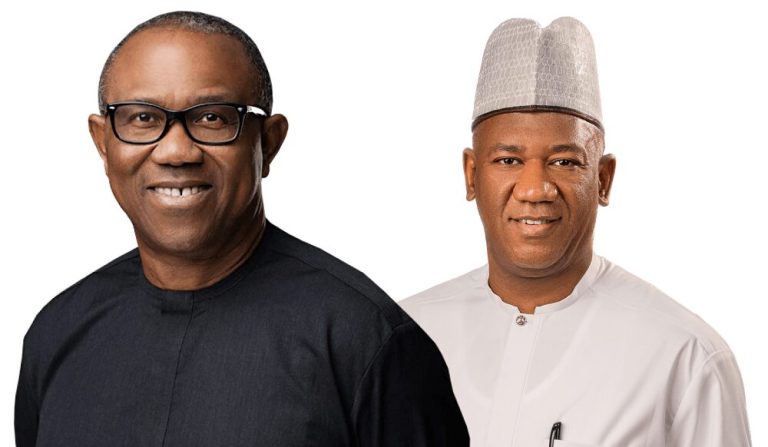
Presidential candidate Peter Obi has defended his ability to lead Nigeria after his former running mate, Yusuf Datti Baba-Ahmed, said he lacks the capacity to improve the country. Asked by Arise TV’s Ojinika Okpe to respond to Baba-Ahmed’s claim, Obi said: “I passed through Anambra State and I improved the state in critical areas of development. And I can do the same thing in Nigeria.”
Obi, who now flies the flag of the Nigeria Democratic Congress (NDC) for the 2027 election after previously running under the Labour Party, said that if elected he would focus on bringing order to governance, cutting the cost of running government, and tackling corruption. His response followed comments from Baba-Ahmed, his 2023 running mate, who said on the MicOn Podcast that none of the politicians challenging President Bola Tinubu in 2027, including Obi, had what it takes to move the country forward. When asked directly whether Obi was among those he meant, Baba-Ahmed replied, “Including Peter Obi, I’m sorry to say.”
When Running Mates Fall Out
Public fallouts between former political allies are common in Nigerian politics, and often shape how voters view a candidate’s inner circle. In the run-up to the 2023 election, Baba-Ahmed himself was a vocal defender of Obi’s candidacy as his running mate, making the current public break between them notable given how closely tied their political fortunes once were.
Similar splits have shaped past Nigerian elections. Atiku Abubakar’s relationship with former President Olusegun Obasanjo, his one-time boss and running mate, famously soured into years of public feuding after they left office together in 2007, with each questioning the other’s fitness for leadership in the years since.
Why These Public Disagreements Matter, and What They Signal to Voters
Baba-Ahmed’s comments come as Nigeria’s 2027 election season begins to take shape, with parties and coalitions positioning themselves against President Tinubu’s re-election bid. Public criticism from a former running mate carries particular weight because it comes from someone who worked closely with the candidate and presumably knows their strengths and weaknesses firsthand, making the comments harder for supporters to dismiss as mere political rivalry.
For Obi personally, the exchange puts him in a position of having to defend his record publicly rather than simply campaign on it, which can shape how undecided voters perceive his readiness for national office. More broadly, this kind of very public disagreement between former allies affects Nigeria’s opposition politics as a whole heading into 2027: it raises questions about how united or fractured the coalition against Tinubu’s re-election might be, at a time when opposition figures need to present a credible, coordinated alternative to voters.
How Candidates Typically Respond to This Kind of Criticism
Political analysts often note that candidates facing public criticism from former allies have a few options: directly rebut the claim with evidence, as Obi did by pointing to his time as Anambra governor; ignore the comments to avoid amplifying them; or seek to publicly reconcile with the critic to project unity. Obi appears to have chosen the first path, citing measurable achievements from his tenure rather than attacking Baba-Ahmed directly.
For voters trying to evaluate such claims, independent fact-checking of a candidate’s actual record in office, rather than relying solely on the competing claims of political figures, remains the most reliable way to assess these disputes.
A Preview of the Battles Still to Come
We think this exchange is worth watching not just for what it says about Obi and Baba-Ahmed’s relationship, but for what it signals about the opposition’s cohesion heading into 2027. When a candidate’s own former running mate publicly doubts his ability to lead, it hands ammunition to political rivals regardless of how the candidate responds. We won’t weigh in on who’s right about Obi’s capacity to govern nationally, but we do think Nigerians deserve more of this kind of direct, evidence-based exchange between politicians, rather than vague campaign promises. If this is a preview of how sharp 2027’s contest will be, even within opposition ranks, it’s shaping up to be a closely watched race.
Published by Ejoh Caleb