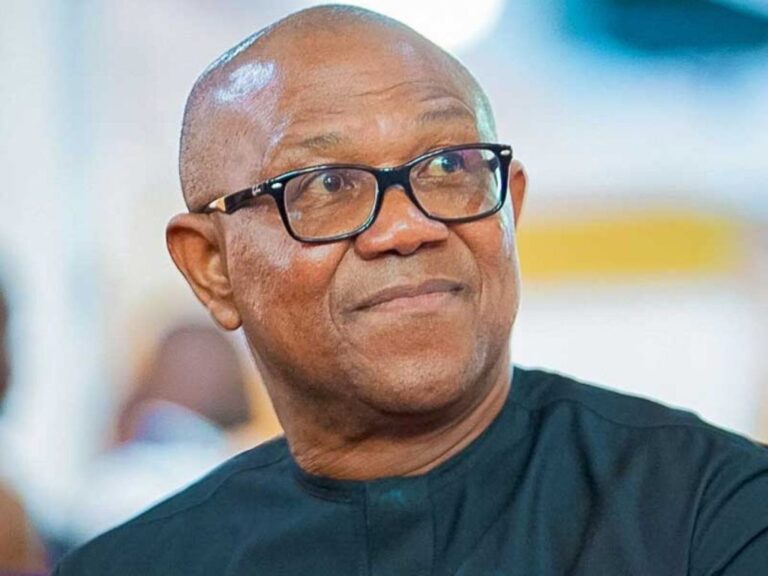
The argument over Peter Obi’s financial record in Anambra has now become a battle of figures.
Peter Obi has maintained that he left substantial funds and investments for his successor when he handed over power in March 2014. Reports on his handover account put the figure at more than ₦75 billion in cash, foreign-currency deposits and investments.
The Soludo administration, on the other hand, says eight external loan facilities associated with projects implemented during or inherited into the Obi administration still had an outstanding balance of $92.35 million as of June 30, 2026. The state government valued that balance at approximately ₦127.37 billion using its 2026 exchange-rate calculation.
And this is where the numbers need to be looked at carefully.
₦75bn then. ₦127.37bn now.
If Obi’s reported ₦75 billion in assets is being compared with Soludo’s ₦127.37 billion figure, we must first make sure we are comparing like with like.
The ₦127.37 billion is not presented by the Soludo administration as the amount Obi physically handed over in 2014. It is the 2026 naira value of the $92.35 million still outstanding on the identified loan facilities.
That distinction matters.
In fact, available DMO records show that Anambra already had formal public debt around the end of 2013 — about $30.32 million in external debt and roughly ₦3.03 billion in domestic debt.
So the debate cannot honestly be reduced to simply saying:
“Obi left zero debt” versus “Obi left ₦127 billion debt.”
Those are not the same questions.
But there is another important question
If the Soludo administration uses a 2026 naira value to present the current outstanding balance of loans linked to the Obi era, then the public also deserves to see the actual outstanding balance of those facilities on March 17, 2014, the day Obi handed over power.
That is the number that would directly answer the question:
How much debt was actually left by Obi at handover?
A 2026 balance cannot automatically be treated as a 2014 handover balance.
Some of the loans were also structured through the Federal Government and involved state participation or on-lending arrangements, so saying simply that “Peter Obi borrowed $123.77 million” leaves out important details about how the financing was structured.
So what does the ₦75bn figure tell us?
It shows that Obi’s administration claimed to have left substantial financial assets, savings and investments behind.
The handover document released by Obi’s camp also reportedly showed a net financial position of more than ₦86 billion, although the exact composition of that figure needs to be considered alongside the state’s liabilities.
Therefore, comparing Obi’s reported assets with Soludo’s current outstanding loan figure can raise an important question about Anambra’s overall financial position, but it does not by itself prove that Obi left a ₦127 billion debt or that he left a ₦128 billion surplus.
For that conclusion to be established, there needs to be a proper reconciliation of:
- The value of assets at March 17, 2014
- The actual debt outstanding on that same date
- The amount of each loan actually drawn
- The amount repaid between 2014 and 2026
- The amount still outstanding today
- Any inherited loans from administrations before Obi
The value and purpose of the investments included in the reported ₦75 billion
The real issue is the March 2014 balance sheet
This is where the debate should go.
Instead of arguing only over ₦75 billion and ₦127.37 billion, the public should ask for the complete loan-by-loan reconciliation showing exactly what Anambra owed on March 17, 2014.
If that figure is produced, Nigerians can properly compare it with the assets Obi says he left behind.
Until then, using a 2026 debt figure and comparing it directly with a 2014 asset figure can create a misleading picture because the two numbers come from different dates and represent different things.
Published by Chuks Nwachuku