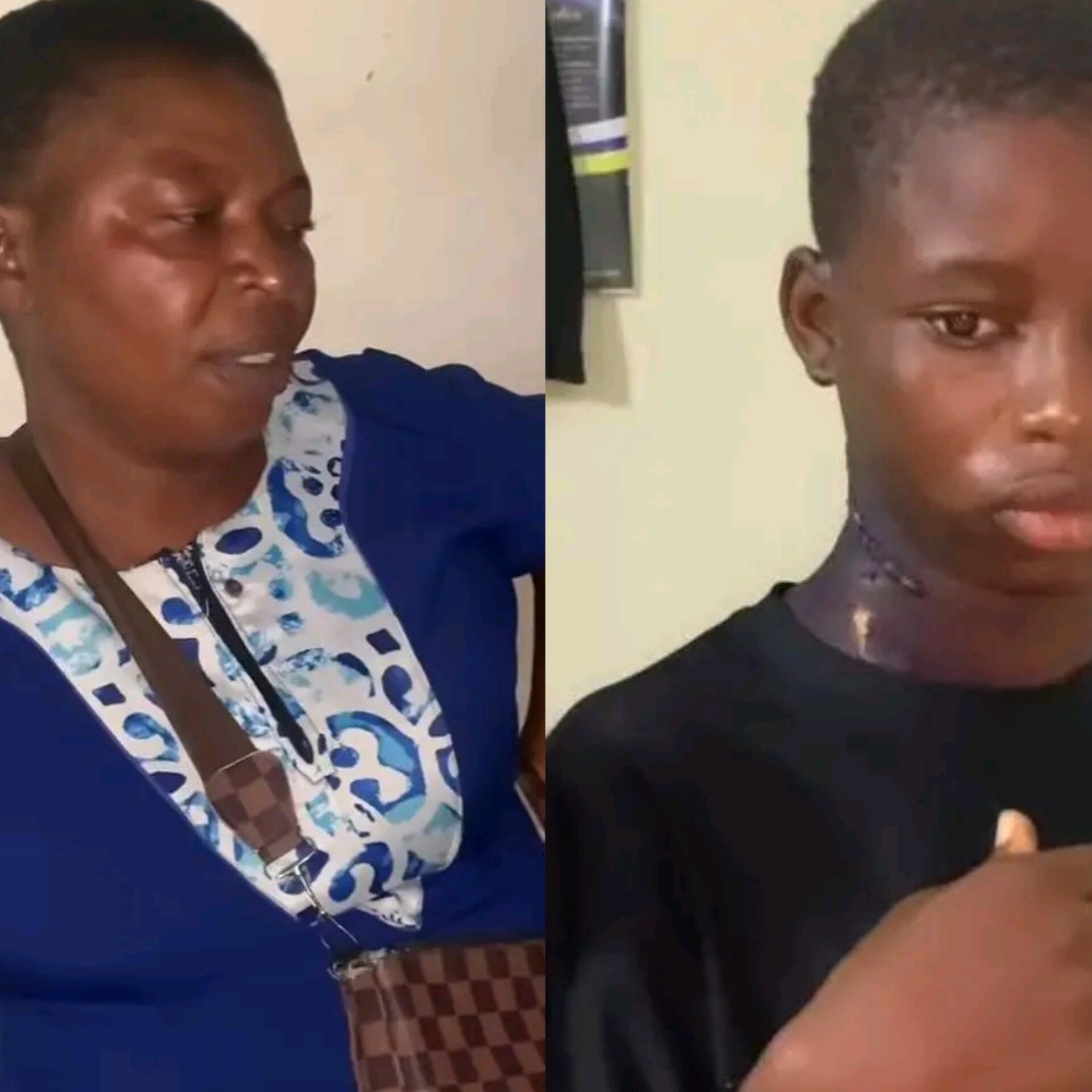

A male student of Nnamdi Azikiwe University (UNIZIK), Awka, was reportedly attacked with hot water by a female student at about 2am while he was sleeping in a corridor, after spending hours reading ahead of his final year project defence.
According to reports, the female student had earlier woken up to find that someone had touched her while she was asleep in her room, and she suspected the male student was responsible. However, neighbours said the male student had never left the corridor that night, insisting he had simply been reading for hours before deciding to rest briefly where he sat.
The young man was left with burns from the attack and reportedly still had to sit his project defence the following morning, despite his injuries.
A troubling pattern of self-administered “justice” at UNIZIK
This is not the first time a student at UNIZIK has resorted to pouring hot water on another student during a dispute. In February 2024, a 200-level student, Loveth Chibuifem Emefo, allegedly poured hot water on and stabbed the president of her lodge, MacDonald Egbuluche, at Twins Fall Lodge, Ifite-Awka, following a disagreement over hostel cleaning duties. He was left with burns on his neck, shoulders, face and right hand, alongside a stab wound, and was rushed to hospital for treatment.
Both incidents point to a recurring, worrying pattern: students at the university resorting to violent, self-administered punishment when they feel wronged, rather than reporting to hostel management, campus security, or the police.
This kind of attack is also not limited to campus disputes. Similar cases keep surfacing in relationships across Nigeria. In Kano, a 25-year-old woman, Chioma Michael, allegedly poured hot water on a 23-year-old hotel worker, Victoria Emmanuel, after finding her in an apartment with her boyfriend, leaving Victoria hospitalised with burns to her face, back, chest and hands.
In Lagos, a spa worker was hospitalised after a man allegedly hired by her former partner poured a corrosive substance on her at a client’s location, in an attack she said followed months of threatening messages after she ended their relationship.
In an older but similarly telling case, a woman reportedly stabbed and poured hot water on her partner after he ended their relationship, one of several reports over the years of jealousy or heartbreak turning into scalding or corrosive attacks between partners in Nigeria.
Why disputes like this keep turning violent
Fear and trauma play a significant role in cases like this one. A student who genuinely believes she has been sexually violated while asleep is dealing with a deeply frightening experience, and in the absence of a quick, trusted way to report and investigate such incidents, some students may act on suspicion alone rather than verified fact.
The slow or inconsistent response of many Nigerian tertiary institutions to sexual harassment and assault complaints also pushes some students toward taking matters into their own hands. When students do not trust that a formal complaint will be taken seriously or investigated quickly, self-styled justice becomes, in their eyes, the only fast option available.
Jealousy and heartbreak drive a similar pattern in romantic relationships more broadly. As the Kano, Lagos, and older cases above show, hot water and corrosive substances have become a recurring weapon of choice in Nigeria when a partner feels betrayed, humiliated, or rejected, often because the person attacking sees it as a way to permanently mark or punish the other person rather than simply end the relationship.
How this affects both students and the wider campus community
For the male student in this case, the consequences were severe and, by neighbours’ accounts, entirely undeserved: physical burns, and the added stress of having to sit a major academic defence the next morning while injured and likely traumatised by a wrongful accusation.
For the female student, if her account of being touched while asleep is true, she remains a victim of an unresolved assault, with her actual attacker still unidentified. Acting on a wrong suspicion does not erase the reality of what may have happened to her, but it does mean the true offender may still be walking free.
For the wider UNIZIK community, incidents like this raise real concerns about student safety, both from the original threat of assault in hostels and lodges, and from the risk of being wrongly targeted by a fellow student acting out of fear or suspicion. It also reflects a broader national problem: many Nigerian university students do not feel confident that reporting an assault to their institution will lead to a fast, fair outcome, which can push some toward drastic and dangerous responses.
Possible solutions
UNIZIK and similar institutions need faster, more trustworthy channels for students to report sexual harassment and assault, so that suspects can be properly investigated rather than left to individual students to identify and punish.
Hostels and off-campus lodges frequented by students should improve basic security, including better lighting, and where feasible, CCTV coverage in shared spaces like corridors.
Campus security should conduct regular night patrols around known student housing clusters, since incidents like this often occur in the early hours when supervision is lowest.
Students should be educated on the risks and consequences of retaliatory violence, alongside clear information on how to escalate safety concerns through proper channels.
The university should ensure genuine victims of assault receive real support and a functioning investigative process, so they do not feel forced to act alone out of desperation.
A balanced view: both students may be victims here
It would be easy to view this story as simply an aggressor and a victim, but the fuller picture is more complicated. The female student’s fear, if her account of being touched in her sleep is genuine, deserves to be taken seriously, and her fear reflects a real and common danger many female students face in poorly secured hostels. At the same time, the male student, if neighbours’ accounts are accurate, appears to have been an innocent bystander who suffered serious harm for a crime he did not commit. Both experiences can be true and troubling at once, and neither should be dismissed to make the story simpler than it is.
Our thoughts
This story unsettles me because there is no clean villain in it, only a system that failed both students. A young woman who may have genuinely been assaulted in her sleep had no fast, trusted way to report it and get real answers, so she acted on a guess in the dark, literally. A young man who did nothing wrong, by all accounts from those around him, ended up burned and sitting one of the most important academic moments of his life injured and shaken. I think this is exactly what happens when institutions leave students to police their own safety: innocent people get hurt, and the actual offenders, if any exist, remain free to do it again. UNIZIK, and Nigerian universities more broadly, need to build systems students can actually trust, so no one ever again has to choose between staying silent and lashing out in the dark.
Published by Ejoh Caleb