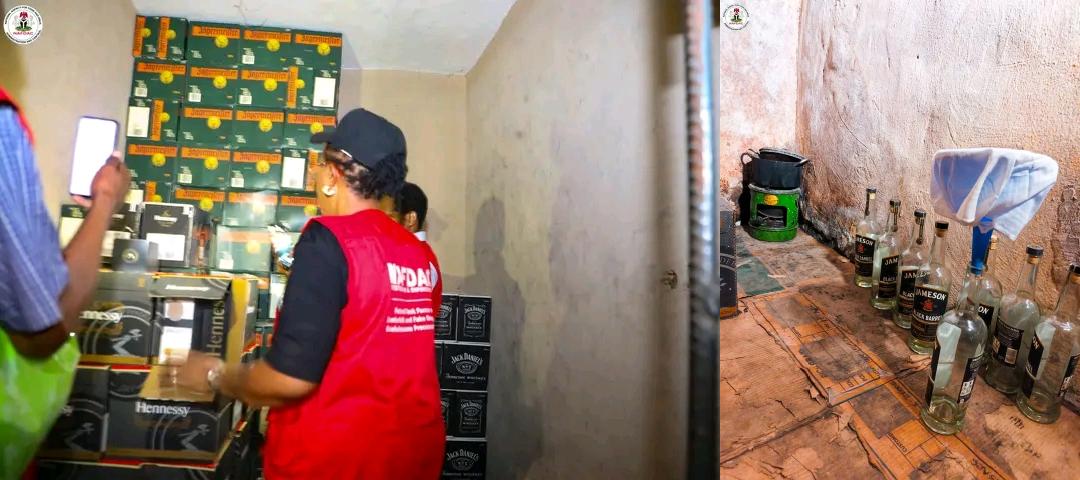
Operatives of the National Agency for Food and Drug Administration and Control (NAFDAC) say they uncovered a large-scale counterfeit alcohol operation at the International Trade Fair Complex in Lagos on Tuesday, October 13, 2026. The raid took place at Zamfara Plaza, BBA Trade Fair Complex, on the Badagry Expressway in Ojo. NAFDAC said the operation was hidden in makeshift parking stores and found more than 20 illegal stores. It said officers found suspects blending and counterfeiting popular alcohol brands, revalidating (changing or erasing expiry dates on) expired and unsafe drinks for resale, and stockpiling banned imported products. Two suspects were arrested, and products worth over ₦2 billion were seized and evacuated. These are NAFDAC’s claims. The suspects have not been named and no court has ruled on the case.
Reports add more detail. NAFDAC said the suspects used chemicals to remove expiry dates from wines, whiskies and energy drinks that were no longer fit for sale. An official also alleged that the revalidated drinks were supplied to bars and nightclubs through arrangements with some bar managers. That detail is an allegation, and we do not know which bars, if any, are involved.
The Same Complex Has Been Raided Before, and Fake Drinks Have Already Killed: Past Cases (Earlier Seizures and Deadly Poisonings)
This is not the first raid at this address. In April 2026, NAFDAC said it dismantled two illegal production outlets in Zamfara Plaza and on Lagos Island, recovering more than 1,800 cartons of counterfeit and adulterated alcohol worth about ₦350 million. Earlier in October, the agency seized alcoholic drinks worth an estimated ₦300 million in Lagos markets, which it said were banned sachet alcohol and drinks in PET bottles below 200 millilitres. It added that some traders were stockpiling the products as demand and prices rose.
Other states have seen the same pattern. In late 2023, NAFDAC reported a raid on an underground factory in Aba that produced counterfeit alcohol, with a reported ₦750 million worth of goods seized. In the last three quarters of 2024, over ₦500 million in fake drinks were reportedly seized in Lagos. Each raid shows a problem that returns.
The human cost is real. In September 2026, at least 48 people died and about 100 others were treated in Ondo State after drinking a locally brewed concoction suspected to contain methanol, according to the Associated Press. Officials said 182 people were believed to be affected, and police arrested 15 people. Lab tests found high methanol levels, and five victims were completely blinded, according to a separate report. That case involved a local brew, not the products in the Lagos raid, so we are not saying the two are connected. It shows what toxic alcohol can do.
Cheap Chemicals, Hidden Stores and Hungry Demand: What Keeps the Trade Alive (Causes of Counterfeit Alcohol)
Money is the first driver. Industry experts quoted in one report said economic pressure has helped the spread of adulterated drinks, and estimated that roughly 30 percent of alcoholic drinks in Nigeria are adulterated. That figure is an industry estimate, not an official count. The same report explains that counterfeiters cut costs by replacing ethanol with cheaper, toxic chemicals such as methanol, which has no colour or flavour and is hard to detect in a drink.
Hiding in plain sight is the second. Placing production inside makeshift parking stores in a busy trade complex makes it hard for buyers, and sometimes for regulators, to spot. NAFDAC said the raid relied on credible intelligence.
Demand is the third. When prices rise, some bars and buyers look for cheaper stock, and sellers fill the gap. NAFDAC’s own earlier warning about traders stockpiling banned products amid rising prices shows how a squeeze can feed illegal trade.
The fourth is repeat offences. That Zamfara Plaza was raided in April and again in October raises the question of whether earlier raids were enough to deter the trade there. We do not know whether the same people were involved.
A Gulp That Can Blind, Poison or Cheat: Effects on Health, Business and the Country (Consequences of Fake Drinks)
The first effect is on health. NAFDAC has warned that drinking adulterated alcohol can cause poisoning, organ damage and death. An earlier statement by its director-general listed nausea, vomiting, abdominal pain, drowsiness, dizziness, blue-tinged or pale skin, irregular or slow breathing, unconsciousness and death. It added that methanol may cause permanent blindness. Even a small amount can be harmful, and the report says as little as 25 millilitres of methanol can cause severe consequences.
The second effect is on trust. Customers cannot tell a real bottle from a refilled one, so honest bars and distributors may lose business when a scandal breaks. Brand owners suffer too, because buyers may blame the real company for a fake product.
The third effect is on money. A seizure valued at over ₦2 billion shows how large the trade is. Counterfeit sellers avoid taxes and the cost of meeting standards, which gives them an unfair edge over legal businesses. That reduces government revenue and may cost jobs in the legitimate drinks industry.
For the country, repeated scandals harm Nigeria’s image and strain its hospitals, as the Ondo poisoning showed. A weak grip on what is sold in the market puts every consumer at risk.
Protecting Your Glass and Your Business: Practical Steps for Buyers, Bars and Regulators (Possible Solutions)
Consumers can lower their risk. NAFDAC urges the public to buy only from authorised outlets and to report suspicious activity to the nearest NAFDAC office. Be careful with bottles that are unusually cheap, have damaged seals or labels, or look different from the usual packaging. These tips come from general consumer-safety practice and are not a guarantee, because counterfeits can look convincing.
Bars, clubs and shops should buy from licensed distributors and keep invoices, so they can show where their stock came from. A manager who buys from an unknown seller at a low price may end up facing both legal trouble and angry customers.
Regulators can keep up the pressure. Follow-up raids, publicly named prosecutions and tighter checks at trade complexes would raise the cost of cheating. Complex managers could also be asked to account for what is happening in the stalls they rent out. These are our suggestions.
Everyone can help by reporting. NAFDAC has asked the public to report suspected illegal manufacturing, revalidation or sales through its complaints line, 0800-1-NAFDAC (0800-1-623322). Anyone who feels sick, blind or confused after drinking should go to a hospital immediately and not wait.
Enforcement Must Be Followed by Consequences, and Vigilance Must Follow Enforcement: Our Closing Reflection (Responsibility in the Drinks Market)
We commend NAFDAC for the raid, and the fact that it was based on intelligence shows that the system can work. A seizure of this size may have kept dangerous products from reaching glasses.
But we believe a raid is only the start. The same complex was raided in April, and the Ondo deaths in September showed how deadly bad alcohol can be. If suspects are not prosecuted and markets are not watched, the trade will simply move or return.
We also remind readers that the suspects have not been named and have not been convicted. NAFDAC’s claims will have to be tested in court. In the meantime, we urge drinkers to buy carefully, bar owners to know their suppliers, and the authorities to follow through. We will update this story as the case develops.
Published by Ejoh Caleb