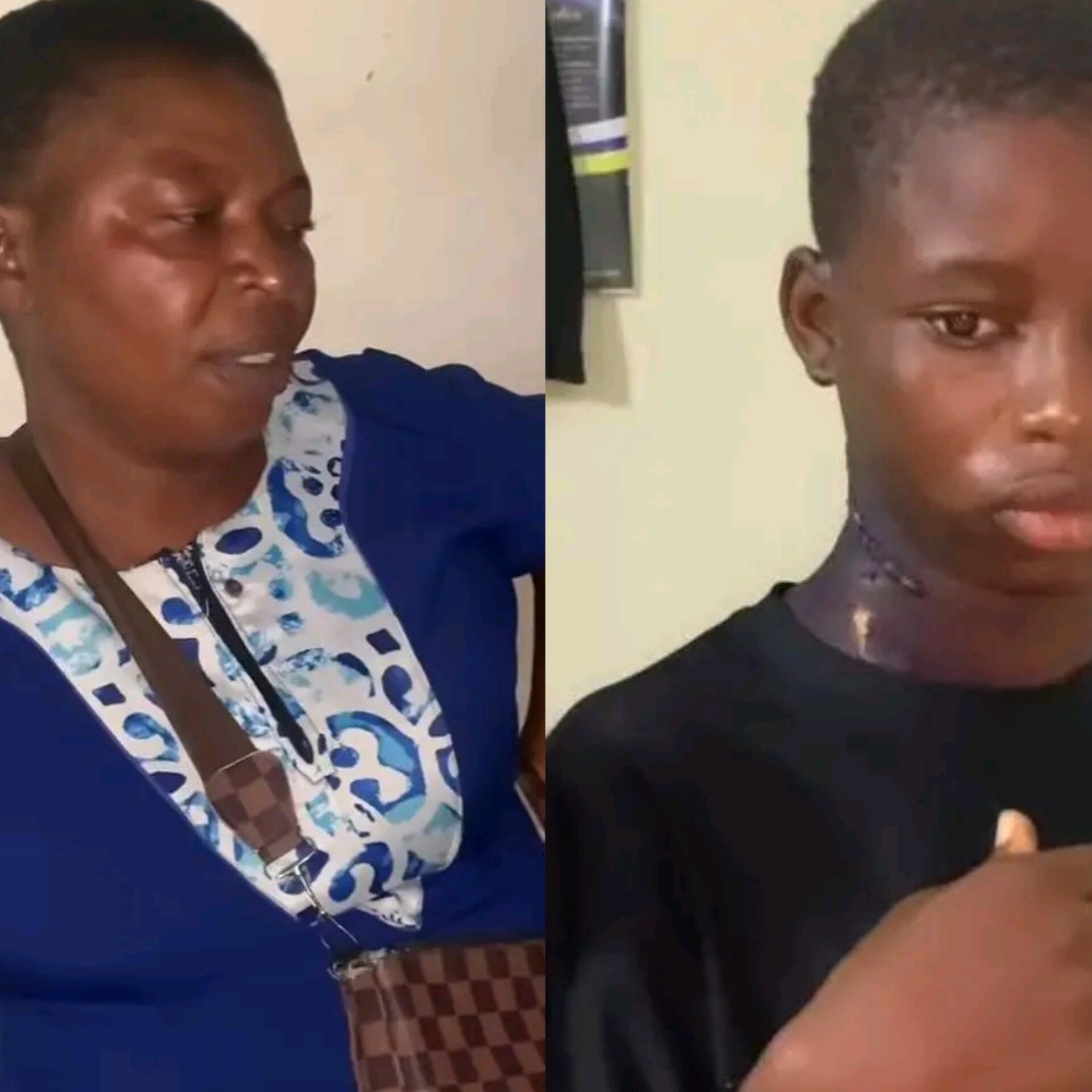
A Chief Magistrate’s Court in Imo State has sentenced Rose Okon to six months in prison for harming her 14-year-old niece, who was in her care. Chief Magistrate C.J. Nkwoada gave the ruling. The court also said Okon could pay a fine of ₦50,000 instead of going to jail. Okon pleaded guilty when the police brought her to court on a charge of assault.
Guilty Pleas, Mercy Appeals and the Limits of a Short Sentence (Plea of Allocution)
According to the charge sheet, the offence happened at about 6pm on September 19 at Umuneke, in Ngor Okpala. The police said Okon poured hot water on the girl’s head and body and caused her grievous harm, meaning very serious injury. The charge was brought under Section 355 of the Criminal Code, as it applies in Imo State. We are withholding the child’s name to protect her.
The prosecution counsel, Sampson Obodo, showed the court photographs of the girl’s injuries. He also tendered the statements that the complainant and the victim gave to the police. A statement from the Stand For Humanity Foundation, the group that started the case, was tendered too. After the conviction, the court asked Okon to make a “plea of allocution” (a chance for a convicted person to ask the court for mercy before sentence). She begged for mercy. Her lawyer, Innocent Onyekwere, also asked the judge to be lenient.
There are two sides to this ruling. In Okon’s favour, she pleaded guilty. This saved the court time and spared the child the pain of going through a long trial. Courts also often reward an early guilty plea. On the other side, many people will feel the punishment is too light for a child who was burned on the head and body. A fine of ₦50,000 means Okon may be able to avoid prison altogether. The reports do not say what led Okon to pour the water. They also do not say if she has paid the fine.
Citizens’ Groups as the Missing Link Between Abused Children and the Courts (Civil Society Advocacy)
The police did not start this case alone. Reports say Okon was arrested after the Stand For Humanity Foundation sent a petition to the police. The group’s president, Chidiebube Okeoma, said it would keep fighting against people who abuse children. He recalled that the group held awareness campaigns against child abuse in Imo State on July 4 and September 12, 2026.
This matters because many children suffer in silence. They depend on the very adults who hurt them. Neighbours, teachers, relatives and rights groups are often the only people who can speak for them. When such a group steps in, the abuse is no longer a “family matter.” It becomes a case that a court must look at.
Burns, Beatings and Broken Trust: Earlier Cases of Violence Against Children in Nigerian Homes
This case is not the first of its kind. In Lagos, a woman named Funmi Otitoloju from Ikorodu was sentenced to four years in jail for torturing her 12-year-old niece with a razor blade. Her niece had gone into neighbours’ homes without permission. A child protection worker helped the girl and took the matter to the police. The sentence in that case was much heavier than the one in Imo.
In Kano State, a magistrate court jailed a woman, Maimuna Ibrahim, for four months for pouring boiling water on her co-wife. The court also ordered her to pay ₦840,000 to cover the victim’s medical costs and other damages. Her lawyer said they would appeal. The victim in that case was an adult, but it shows how courts can add money for treatment to a jail term.
In 2022, a Lagos magistrate court heard the case of Endurance Sunday, a 22-year-old woman. She pleaded guilty to attacking her neighbour with hot water, and the neighbour had burns on her chest and other parts of the body. The case shows how often hot water is used as a weapon in quarrels, and how often courts see it.
A Strong Law on Paper, a Weak Shield in Practice (Child’s Rights Act)
Nigeria passed the Child’s Rights Act in 2003 to protect all children below 18. The law only works fully in a state after that state’s lawmakers pass it as a state law. This step is called “domestication” (turning a national law into a state law). Reports say about 24 states have done so, and a Vanguard report lists Imo among them.
Even so, the charge in this case came from the Criminal Code, not the Child’s Rights Act. We cannot say why from the reports. Still, it raises a fair question. If child abuse is mostly handled as an ordinary assault, the punishment may not match the special harm done to a child. Child protection experts have also complained about poor enforcement. A UNICEF child protection specialist, Sharon Oladiji, said the states that have not passed the Act often record the most child abuse cases. Another advocate, Kolawole Tosimi, said weak enforcement makes people lose faith in the law.
Anger, Stress and the Belief That Beating Is Discipline (Corporal Punishment)
The report does not tell us why Okon harmed the girl, so we cannot say what drove her. But experts say several common factors sit behind abuse of children in the home. Some adults believe that hurting a child is the right way to “train” them. This is called “corporal punishment” (physical punishment meant to correct a child). Others take out their stress, anger or money worries on the weakest person in the house.
Children who live with relatives face extra danger. They may be treated as helpers instead of children, and they often have no parent nearby to complain to. Many families also avoid the police because they want to protect “family honour.” A child advocate, Kemi Adenekan, has said that basic child abuse such as physical abuse remains largely unresolved.
Scars on Children and Cracks in the Nation (Long-Term Effects of Abuse)
For the child, the first damage is physical. Burns can cause pain, infection and permanent scars. The emotional harm may last even longer. A child who is hurt by a trusted adult can become fearful, withdrawn and slow in school. Some also grow up to believe that violence is normal.
The damage reaches the whole country. Children who suffer abuse may struggle to learn and later find it hard to earn a living. This weakens the future workforce of Nigeria. The government also spends money on hospitals, courts and child protection work. Light sentences may tell abusers that the risk is small. A country that fails to protect its children also harms its name among those who watch its human rights record.
Safer Homes and Firmer Courts: Steps to Protect Children (Prevention and Enforcement)
Courts and lawmakers should treat harm to a child as a special offence. States should use the Child’s Rights Act more often in such cases, and the remaining states should pass it. Judges should consider whether a fine option fits injuries to a child. Orders for compensation, such as the one in the Kano case, could help pay for treatment.
Reporting must be easy and safe. Neighbours, teachers and pastors should know whom to call when they see signs of abuse. Rights groups like Stand For Humanity should be supported, and the police should act fast on their petitions. Families also need education on gentle ways to discipline children. Relatives who take in a child should get advice and, where possible, support. Hospitals should report suspicious injuries to the police.
A Closing Verdict on Justice, Mercy and Our Duty to Children
We believe this case has one good side and one troubling side. The good side is that someone spoke up, the police acted, and a court convicted the woman. That is more than many abused children ever get. The troubling side is that a sentence that can be paid off with ₦50,000 may not match the pain of a child burned by hot water.
We do not say mercy has no place in court. We say a child’s safety must come first. Justice must be firm enough to protect the child and warn others. We urge the authorities to check on the girl’s recovery and make sure she is safe. We also urge every Nigerian to speak up when a child is in danger. A child cannot protect herself, so the adults around her must do it.
Published by Ejoh Caleb