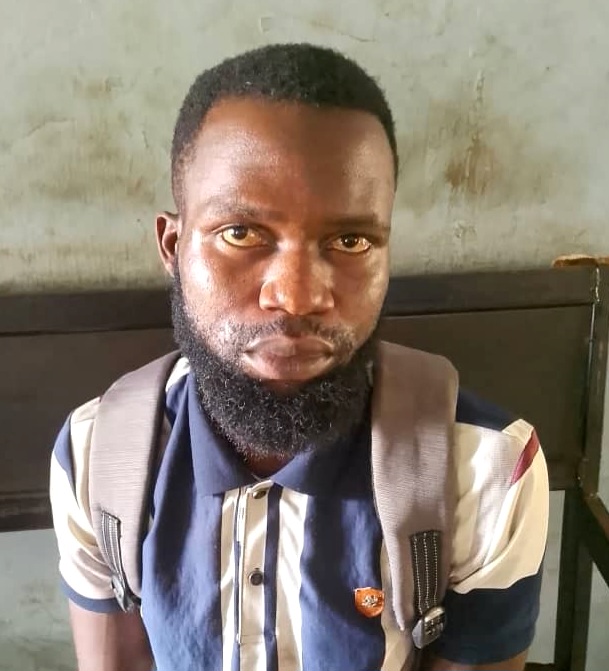
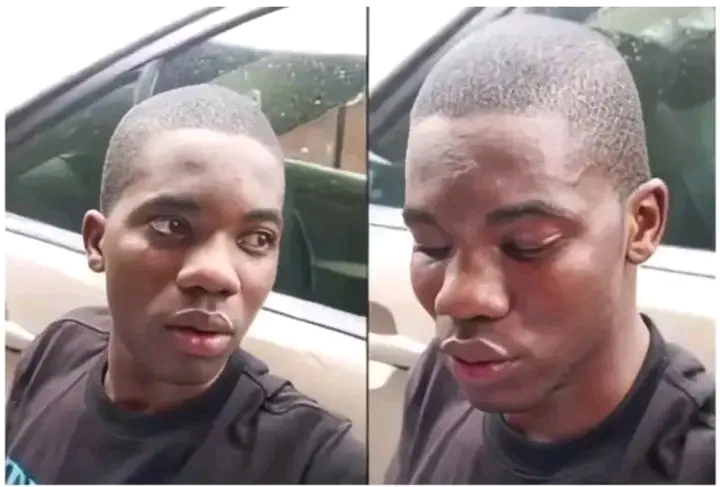
A man has reportedly been caught by street residents after allegedly withdrawing about ₦1.4 million from his mother’s bank account while she was battling a stroke. He allegedly used the money for betting.
What the video shows (a public confession over private family money)
In the video, the man is questioned by a group of people. He is reported to have admitted to making several withdrawals from his mother’s account on the same day, September 13. He reportedly moved the money into his own account and then into a BetKing betting account. The person questioning him was surprised that every withdrawal fell on one date, and the man confirmed it.
He is also seen reading figures from a document as he lists the amounts. The total came to about ₦1.4 million. Reports do not agree on how the individual amounts were split, so the exact breakdown is unclear.
A story that echoes across Nigeria (past cases of betting and stolen money)
Cases like this are not new. In May, Adeniyi Adewale of Akure, Ondo State, lost about $30,000 belonging to his employer on sports betting, according to TheCable. His family repaid the money by selling land and other property. The report says he later became mentally ill and his family went bankrupt.
Christianity Today also reported on Stephen Kolawole, a recovering gambling addict who bet half of his school fees and could not finish his studies. He kept asking his parents for money until they checked his bank statement and found the problem. These cases show a common pattern: the losses fall on the family as well as the gambler.
Easy money, weak rules (what drives the problem)
Betting sells the idea of quick money. For young people facing hard economic times, that idea is attractive. Betting sites are also easy to fund, since an account can be topped up straight from a bank account on a phone. That is how a large sum can move in one day.
Regulation is another gap. In November 2024, the Supreme Court struck down the National Lottery Act 2005. The court held that lotteries and sports betting are matters for state governments to regulate. This left the sector without one clear national regulator, and the report says loose rules can push young people further toward addiction.
Broken trust, drained savings, damaged health (effects of gambling harm)
For the family, the first loss is money meant for care. A parent recovering from a stroke needs funds for hospital bills, medicine and therapy. The second loss is trust, which is much harder to rebuild once a child has taken from a sick parent.
The harm also spreads. Researchers writing in the Cambridge journal BJPsych International argued that problem gambling in Nigeria could become a bigger public health problem than drug misuse. They also said it has not been researched enough. For the country, that means more debt, more broken homes and more strain on mental health services. It also weakens a young workforce that Nigeria needs.
Protecting families and helping gamblers (possible solutions)
Families can take simple steps. They can turn on bank alerts for large withdrawals, keep cards and PINs secure, and agree in advance who may access an ill relative’s account. Where someone shows signs of a gambling problem, early counselling and support groups can help. Banks can also flag repeated same-day withdrawals and transfers to betting platforms for a second check.
Government has a role too. State governments now hold the power to regulate betting. They should set clear age checks, spending limits and self-exclusion tools that let a person block themselves from betting sites. Public awareness campaigns can also warn young people about the real odds of winning.
Desperation is not a defence
We must be careful, because much of this story rests on a video and unverified claims. The man deserves a fair hearing, and the mother’s own wishes matter. If the money was taken without her consent, that could amount to an offence, depending on the facts. That is for the proper authorities to decide.
Still, the story points to a larger problem than one man. Betting is easy to start and hard to stop. It reaches into households that can least afford the loss. The case also reminds us that gambling harm often goes unseen until a family is already in crisis. If Nigeria wants fewer of these stories, families, banks and state governments must all act early, and not wait for another viral video.
Published by Ejoh Caleb