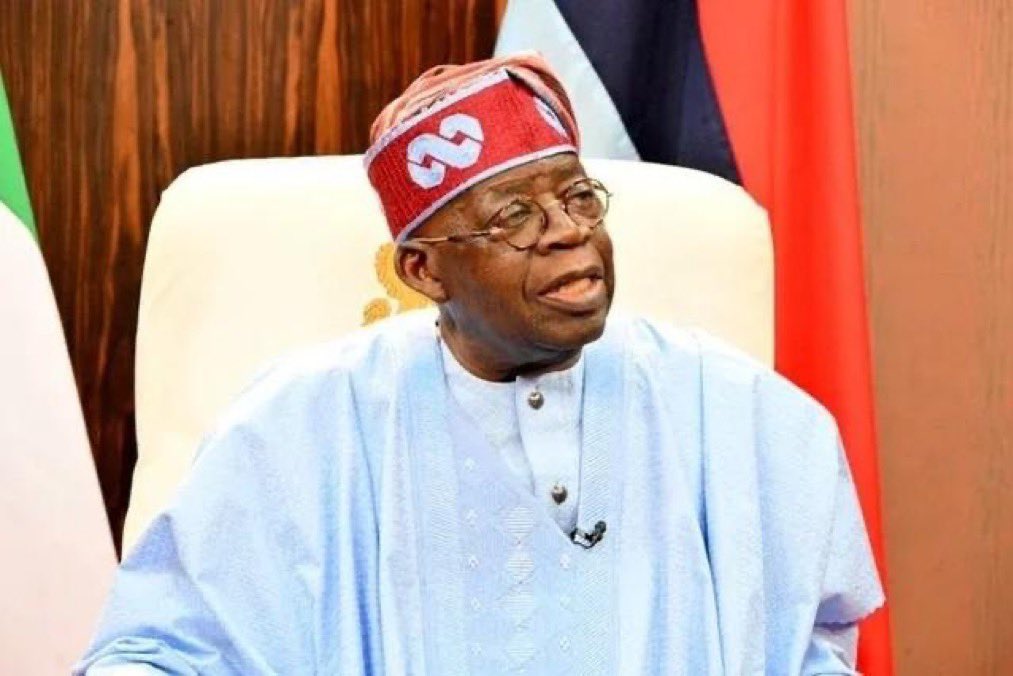
President Bola Tinubu has asked the Senate to approve an external borrowing plan for 2026–2027. External borrowing means money borrowed from lenders outside Nigeria. The plan totals $20.52 billion and €1.045 billion. Senate President Godswill Akpabio read the request at plenary on Tuesday, October 27.
The letter listed power, transport, agriculture, health, education, water supply, security, job creation and financial management reforms as areas the money would support. It said the projects had been picked after technical and economic assessments. Outlets put the naira value at about ₦29 trillion to ₦30 trillion at current rates.
What the Letter Says and What It Leaves Out (A Project Breakdown Means the Specific Plans, Costs and Lenders Behind a Loan)
The letter gives sectors but, according to one report, no project-by-project list and no names of lenders. Akpabio referred the request to the Senate committees on Local and Foreign Debts and on Appropriations, and gave them one week to report. He said parts of the plan had appeared in earlier budgets and in an external borrowing plan stretching from 2025 to 2027.
One report notes that no loan request from this administration has been rejected by the Senate so far. That is a fact about the past, not a prediction. The committees have yet to speak.
The Case for Borrowing: Infrastructure Gaps and the Cost of Reform
Tinubu’s side argues that Nigeria needs money for roads, power, hospitals and schools that its budget cannot fully cover. His letter says the reforms of his administration make external financing necessary, and that the aim is to create jobs, reduce poverty and improve food security.
Defenders of borrowing also say that long-lasting assets, such as power plants and rail lines, benefit future citizens who will use them. The Finance Ministry made a related point during an earlier request for about $21.5 billion. It said a rolling plan is a framework and not an automatic increase in debt. We did not find a ministry statement on this new request.
The Case Against: Timing, Openness and Fear of Misuse (A “Slush Fund” Means Money Used for Political Gain)
Opposition voices are loud. Atiku Abubakar, the African Democratic Congress (ADC) presidential candidate, said the request vindicates his October 12 warning about a loan of up to $20 billion tied to the Lagos–Calabar Coastal Highway. He urged lawmakers not to approve “a single dollar” until every project, contract, cost, contractor and repayment term is published.
The ADC campaign called the request reckless. In a separate statement, Atiku called it a “slush fund” for the election, a claim that has not been proven and that the government has not answered. Young Progressives Party candidate Peter Agada asked the National Assembly to delay the request until after the 2027 election. He noted that the debt stood at ₦166.79 trillion in June 2026.
Even some inside the Senate asked questions. One senator said on Channels Television that lawmakers should probe how earlier loans were used.
Comparing Presidents: Why Raw Numbers Can Mislead (Like-for-Like Means Comparing Things on the Same Basis)
Lists comparing how much each president borrowed are popular online. But they often mix naira amounts across years when the naira had very different values. A Guardian analysis found that Tinubu’s external debt rose by about $9.4 billion, from $42.5 billion in May 2023 to $51.9 billion in December 2025. It also found that the largest rise in external debt in the democratic era came between 2015 and 2023.
The same analysis says the naira value of external debt jumped from ₦19.6 trillion to ₦33.2 trillion between early and mid-2023, with little change in dollars. It says this reflected the unified exchange rate. It also notes that ₦23.9 trillion in “ways and means” advances, old Central Bank overdrafts from earlier years, were turned into regular government debt.
So the claim that one president borrowed more than another depends on which measure is used. Critics have also made broad claims without data. A Tribune report said there was no available data to support or refute Peter Obi’s claim that Tinubu had borrowed more than three earlier presidents combined.
Borrowing Before: Earlier Requests and Their Outcomes
This is not Tinubu’s first big request. In November 2023, he sought approval for $8.699 billion and €100 million under a plan first approved by the Federal Executive Council under former President Muhammadu Buhari.
Critics then, as now, raised concerns. A securities-firm executive said at the time that adding to foreign debt risked higher debt service costs. Debt service means the yearly payments on loans and interest. Supporters of borrowing answered that infrastructure spending was needed. The same debate keeps returning.
Heavy Bills Ahead: What Debt Means for Households, Budgets and the Nation
Total public debt stood at ₦166.79 trillion in June 2026, up from ₦87.38 trillion in June 2023, according to Debt Management Office data reported by RateCaptain. That does not mean the debt is unsustainable. But more debt means larger repayments each year, and money used for repayment cannot be used for schools or hospitals.
Debt in foreign currency adds a special risk. If the naira weakens, the naira cost of repayment rises. An analysis also notes that the government has not fully explained how much maturing debt is refinanced through new borrowing. For ordinary Nigerians, the effects show up in budgets, taxes and public services. If the money builds productive assets, the country can grow into the debt. If it does not, future governments will carry the burden.
Steps That Could Build Trust: Open Project Lists, Real Scrutiny and Clear Limits
Lawmakers can ask the government to publish the project list, costs, lenders, interest rates and repayment terms before approval. The committees can hold public hearings and invite experts from the Debt Management Office, the Central Bank and civil society. They can also set conditions, such as regular reports on how funds are used.
The government can help by answering critics with data, not slogans. Opposition figures can help by backing their claims with documents. Independent audits of existing loans would also help every side, because they would show what past borrowing built.
Borrowing With Eyes Open: Our Reading of a High-Stakes Request
We take no side in this contest. We note that both camps have a point. Nigeria does have large infrastructure needs. Voters also have every right to ask what $20 billion will buy, who will build it and how it will be repaid.
The timing adds weight to those questions. With an election a few months away, any large borrowing will face suspicion, whether or not it is justified. Claims about misuse remain unproven, and the government should be allowed to answer them.
The test is openness. We urge the Senate to demand full project details, to take its one-week review seriously and to publish what it finds. A loan approved in the light, with clear plans and clear limits, can be defended. A loan approved in a hurry will keep raising the same doubts.
Published by Ejoh Caleb