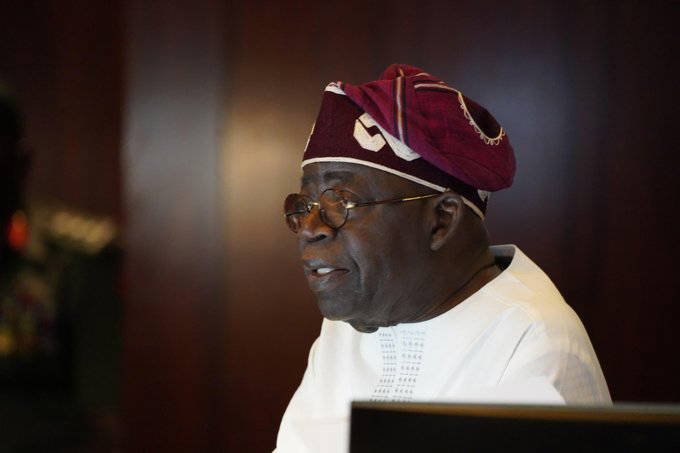
President Bola Tinubu has defended his proposed $21.7 billion external borrowing plan. He said the money would go into highways, electricity and ports that create jobs, lift growth and improve Nigerians’ lives. The defence came in an essay titled “From Reforms to Delivery: Our Infrastructure Investment and Growth Strategy”. It was released on Thursday, October 29, by presidential spokesman Bayo Onanuga.
Tinubu argued that borrowing should be judged by what it builds and what value it creates, not by the size of the loan. He said borrowing should fund productive projects that benefit future generations.
The President’s Case in His Own Numbers (Macroeconomic Stability Means Steady, Predictable Economic Conditions)
Tinubu said the reforms since May 2023 had restored stability. He cited real economic growth of 4.43 per cent in the second quarter of 2026, and inflation of 14.63 per cent in September, down from 20.98 per cent a year earlier. He also said foreign reserves stood at $55.1 billion on October 9, including about $46 billion in net reserves.
He said lower borrowing costs and a smaller country risk premium (the extra interest lenders charge because of perceived risk) showed growing investor trust. These claims come from the President’s own essay. Independent economists can check them against official data, and some of them may measure things differently.
The Projects Promised: Corridors, Jobs and a Trillion-Dollar Goal
The essay singled out the Lagos–Calabar Coastal Highway. Tinubu said it should cut logistics costs along its route by 15 to 20 per cent and could add up to two per cent to national output. Another report says he expects it to generate 250,000 jobs.
Tinubu also tied the borrowing to Nigeria’s ambition of a $1 trillion economy by 2030, and said health, education and training would support the physical projects. These are projections. Whether they come true depends on delivery, which he acknowledged in his own words by saying that securing finance is not the achievement.
The Finance Minister Adds Detail: A Plan, Not a Single Withdrawal (A Financing Framework Means a Menu of Possible Loans)
Finance Minister Taiwo Oyedele said on Wednesday that the proposal is a plan and does not mean all the money will be borrowed. He said it covers 46 projects across 11 sectors. He also said about $4.8 billion belongs to states, the Federal Capital Territory and agencies, not only to the federal government.
He described the plan as an investment, saying the debt-service-to-revenue ratio (the share of government income used just to repay loans and interest) fell from about 97 per cent to below 60 per cent. He also acknowledged that the high cost of living, especially food prices, remains a major concern.
The Doubters: Opposition and Economists Challenge the Math and the Motive
Opposition critics have been sharp. Atiku Abubakar, the African Democratic Congress (ADC) presidential candidate, called the request a “slush fund” for the election and urged lawmakers to reject it until full project details are published. His claim about motive is unproven, and the government has not accepted it. The camp of Oyo State Governor Seyi Makinde also frowned on the request, according to Tribune.
Economists spoke to Leadership newspaper with a different warning. Professor Bongo Adi of Lagos Business School said the debt-service ratio was already very high, and that the new loan could push it beyond 100 per cent. That directly conflicts with the minister’s figure of below 60 per cent. We cannot tell which is right from the reports. They may use different definitions of revenue or debt, and the basis should be made public.
Earlier Rounds of Borrowing and the Same Argument
This is not the first time the President has justified borrowing. In 2023, his government sought approval for $8.7 billion and €100 million. Critics then warned that adding foreign debt could raise repayment costs.
The World Bank has also approved large loans to Nigeria, including a $1.5 billion economic stabilisation programme, with part already disbursed. Government officials say such loans support reforms and services. Critics reply that Nigeria’s debt keeps rising and that earlier loans have not been fully explained. The pattern repeats each time a big request arrives.
The Stakes for Households and the Country: Growth Gains Against Repayment Burdens
If the projects work, the gains could be real. Better roads, steady power and efficient ports reduce business costs and can create jobs. Lower costs for traders could eventually lower prices for households.
But borrowed money must be repaid, mostly in foreign currency. A weaker naira would raise the naira cost. Money used to repay loans cannot be spent on hospitals or schools. If projects stall, are overpriced or deliver less than promised, future governments inherit the bill without the benefit. The test is not the headline number but the quality and speed of delivery.
What Would Strengthen Public Confidence: Open Contracts, Honest Numbers and Independent Checks
The government can publish the project list, lenders, interest rates, repayment terms and expected returns before the Senate votes. It can also explain how it calculates the debt-service ratio, so economists can test it. The National Assembly can hold public hearings and invite independent experts.
Opposition parties can help by backing their claims with documents, and by saying what they would do differently. After approval, regular public reports on spending and progress would show whether the promise of delivery is met.
Delivery Is the Verdict: Our Reading of a Debate That Will Outlast the Vote
We take no side between the government and its critics. The President is right that the question should be what the money builds. His critics are also right that voters have the right to see the details.
Both claims will be tested by the same thing, which is evidence. We urge the government to publish what it has promised to deliver. We urge the Senate to demand it. And we urge the opposition to be precise about what it opposes and why.
Nigerians will live with the outcome for years. They deserve to judge it by roads built, power supplied and jobs created, not by speeches on either side.
Published by Ejoh Caleb