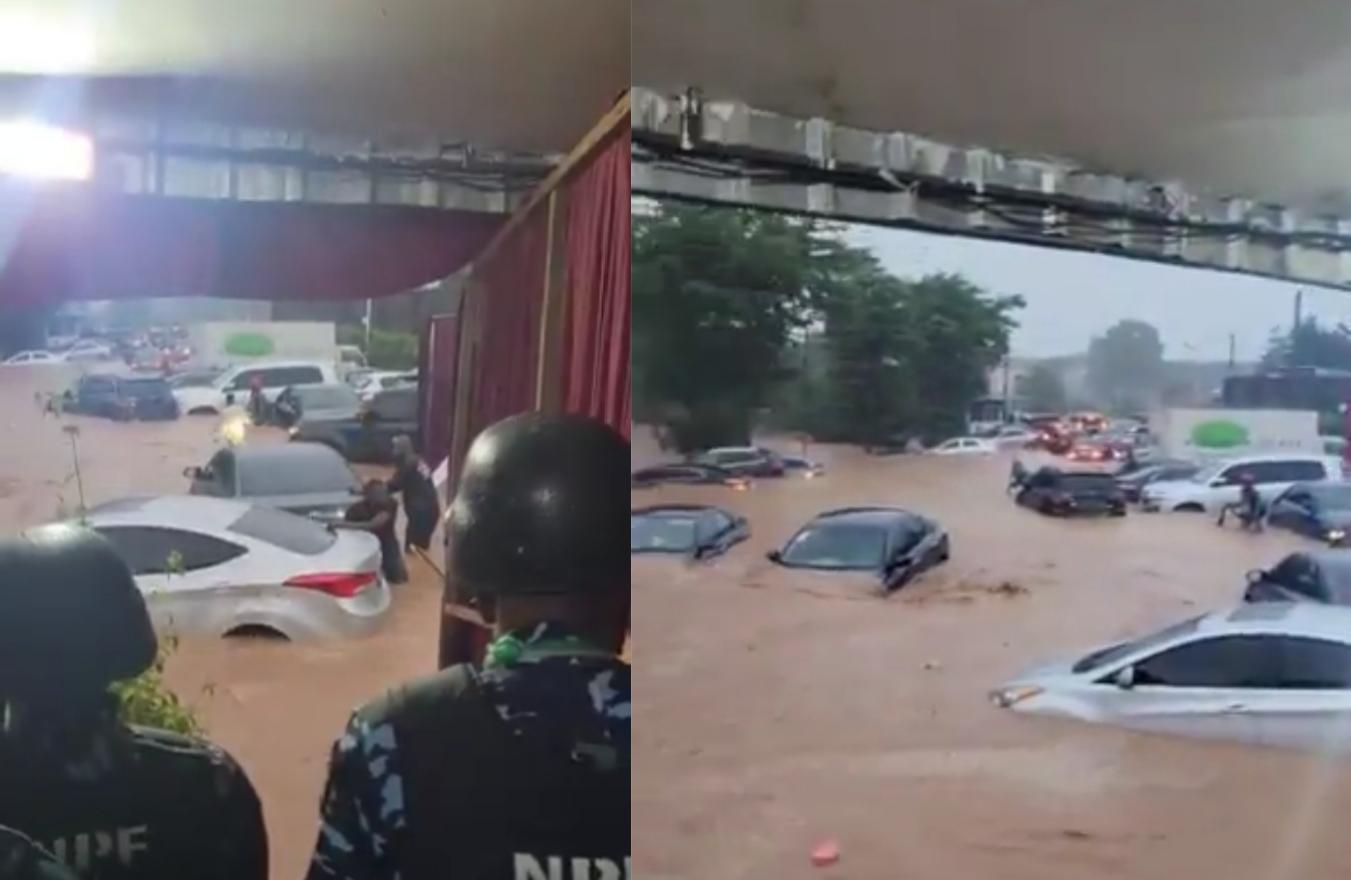
A heavy downpour flooded parts of Wuse 2 in Abuja, leaving several cars submerged in floodwater. Video circulating on social media shows vehicles trapped in the rising water as the rain overwhelmed the district’s drainage.
Wuse 2, one of Abuja’s busiest commercial and residential districts, joins a growing list of areas across the Federal Capital Territory (FCT) that have flooded this rainy season. Similar flooding was reported this same weekend around the Delight Event Centre in Gudu and the bridge linking Gaduwa and Durumi, as the downpour swept across multiple parts of the city.
Background: A Recurring Problem Across Abuja
Flooding has become a near-routine hazard in Abuja whenever heavy rain falls. Areas including Jabi Under Bridge, Utako, Wuse, Berger Junction, and Aminu Kano Crescent have repeatedly turned into waterlogged danger zones after rainfall, creating traffic chaos and putting motorists and pedestrians at risk. A commercial driver in Wuse, Musa Sani Aliyu, described the experience as frightening, noting that water sometimes rises to the middle of a car’s tyre and that drivers often cannot tell what obstacles are hidden beneath the floodwater.
The problem is not new. Abuja has recorded serious flood disasters for over a decade, including the 2011 flood that displaced over 1,000 residents in Gwagwalada, the 2017 flash floods that killed several people in Lokogoma and Galadimawa, and flooding that repeatedly hit Lugbe’s Trademore Estate, most notably in 2023, when houses, cars, and residents were submerged and trapped after a torrential downpour.
Why Abuja Keeps Flooding
Experts point to blocked drainages and illegal structures built along natural water channels as key drivers of the city’s recurring floods. Despite this, accountability over flood prevention spending remains a sore point for residents. Official records show the FCT received about ₦1.24 billion from the federal Ecological Fund, a special intervention meant to tackle problems like erosion and flooding, between June 2023 and December 2025 alone. Yet residents say roads still turn into rivers after nearly every major rainfall, raising the question of why that funding has not translated into visible drainage improvements.
Days before this latest flooding, the FCT Emergency Management Department (FEMD) had issued a public advisory warning of likely heavy rainfall across Abuja and neighbouring states, cautioning residents against driving into flooded areas and urging them to wait until floodwaters receded before attempting to cross. The warning echoed a forecast from the Nigerian Meteorological Agency (NiMet) predicting thunderstorms and heavy rain across Abuja and several neighbouring states.
How This Affects Nigeria
As the seat of Nigeria’s federal government, Abuja’s repeated flooding carries symbolic weight beyond the immediate damage to vehicles and property. It raises uncomfortable questions about urban planning and infrastructure spending in the very city meant to showcase national administrative competence. Beyond the capital itself, the pattern mirrors a wider national problem: cities across Nigeria continue to experience worsening flood damage during the rainy season, often blamed on poor drainage, unchecked construction, and inconsistent enforcement of urban planning rules, at a cost of millions of naira in vehicle and property damage nationwide every year.
Possible Solutions
Experts and residents have pointed to several fixes: clearing and maintaining blocked drains before the rainy season rather than after flooding occurs, removing illegal structures built along natural drainage channels, and ensuring that Ecological Fund allocations are spent transparently on visible, functional flood-control infrastructure. Faster public communication of NiMet and FEMD warnings, alongside stronger enforcement against driving into flooded roads, could also reduce the number of vehicles damaged or stranded each time heavy rain falls.
A Familiar Story, Told Again
Every rainy season, Abuja floods, and every rainy season, the questions are the same: where does the ecological funding go, and why does a city with the resources of a national capital still struggle to keep its roads passable after a storm? Until drainage infrastructure catches up with the funding meant to support it, residents of Wuse 2 and similar districts will keep watching their cars disappear under floodwater every time the rain falls heavily.
Published by Ejoh Caleb