
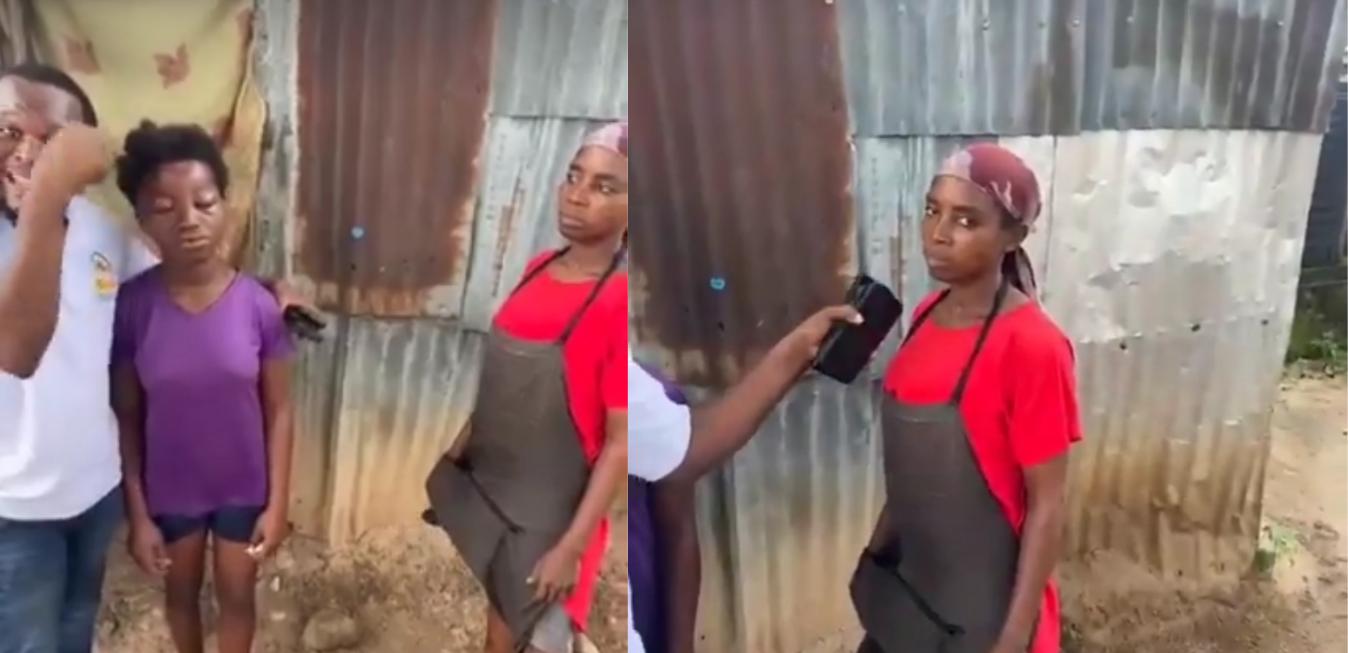
A video circulating online shows a woman who has reportedly been arrested in Imo State over the alleged assault of her 13-year-old maid. According to the video, the woman had sent the girl to the market to sell bitter leaf and, upset that the girl kept returning late, allegedly locked her inside the house and beat her with a cane. Security operatives are said to have forced their way into the apartment to rescue the girl. In the video, the woman is heard describing using a cane to punish the girl for returning late from the market.
Background: a recurring pattern in Imo State
This would not be an isolated case if confirmed. Imo State has recorded several similar incidents involving child domestic workers in the past year. In one case, police arrested a 35-year-old businesswoman for allegedly battering her 13-year-old house help after traders intervened to rescue the child at a market in Owerri. In another, more severe case, police arrested a woman accused of burning her six-year-old maid’s private area, an act the police command publicly condemned as “despicable.” A separate case in nearby Umuahia saw a woman arrested for attacking her 12-year-old niece, who lived with her as a domestic helper, with a knife after the child failed to complete a house chore.
Why this keeps happening — causes and effects
Child domestic work remains common in many Nigerian households, often involving children sent from rural areas or poorer relatives to live with better-off families in exchange for care, school fees, or a small stipend. Without close oversight, this arrangement can leave children isolated, unable to report abuse, and dependent entirely on the household that is mistreating them.
The effects extend well beyond each individual case:
Physical and psychological harm to children who have no adult outside the household to turn to for protection.
Erosion of trust in informal fostering and domestic help arrangements, which many poorer Nigerian families rely on for their children’s upbringing and education.
A national child protection gap. Repeated cases like this raise questions about how well Nigeria’s child rights laws are enforced at the state level, and whether households that take in child domestic workers face any real oversight at all.
Reputational cost for Nigeria on international children’s rights indices, where child labour and domestic abuse cases are closely tracked.
Possible solutions
Registration and monitoring of child domestic workers, so local authorities know which households have children living and working in them.
Community vigilance, similar to what appears to have happened here, where neighbours, traders, or community members step in and alert security operatives rather than looking away.
Faster, publicised prosecutions. When cases like this result in visible court outcomes, not just arrests, they act as a stronger deterrent than an arrest alone.
Support systems for children removed from abusive homes, including trauma care and safe, verified placement — since rescue is only the first step.
Rescued is not the same as safe
I think the most encouraging part of this story, if confirmed, is that someone intervened — security operatives forced their way in rather than letting this continue behind closed doors. But I keep coming back to how many similar cases Imo State alone has recorded in the past year. A rescue is a good ending to one bad day; it is not a solution to a pattern. Until there’s real oversight of who is caring for these children day to day, we’ll likely keep reporting on the next one.
Published by Ejoh Caleb