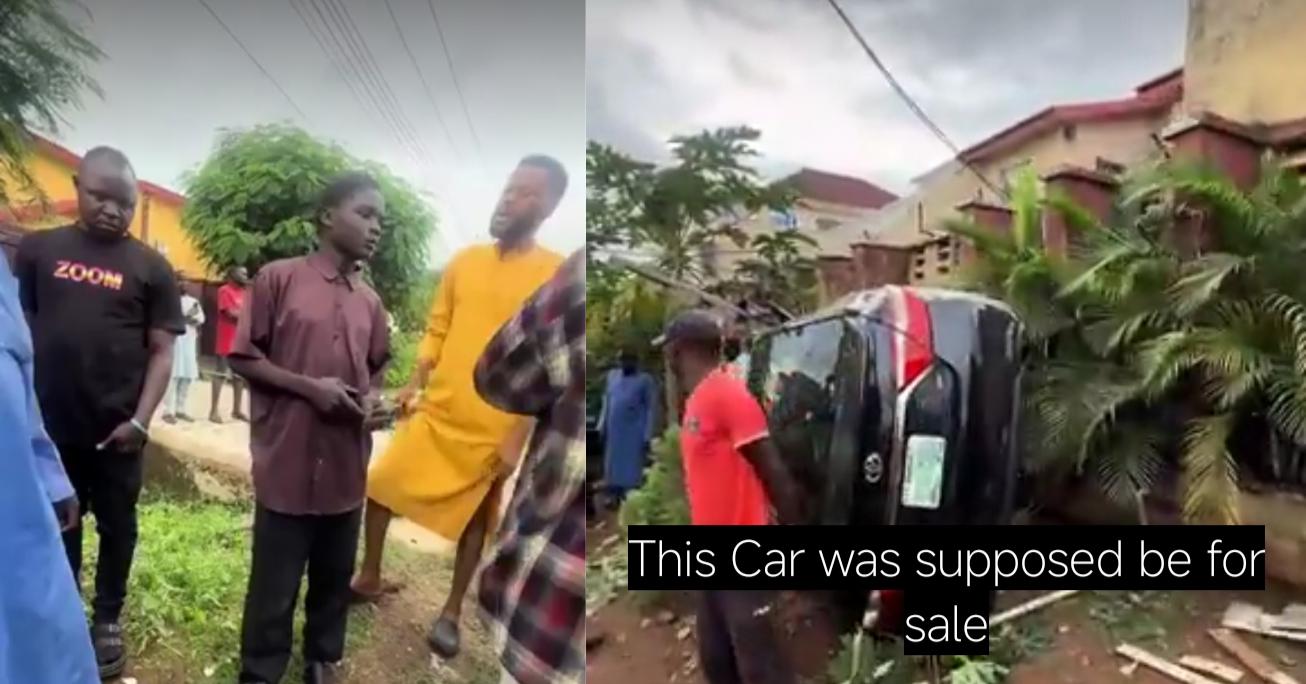
A young mechanic in Abuja crashed a customer’s car while driving it, after being asked only to change the vehicle’s engine oil.
According to the videos shared online, the car had been brought to the mechanic that morning solely for an oil change. While driving it, the mechanic reportedly lost control as the car swerved off the main road, went into a bush, knocked down a tree, and tumbled before coming to a stop. The crash left the front of the car badly damaged. In one of the videos, a crowd is seen gathering around the visibly frightened young mechanic, repeatedly demanding to know where his boss, referred to as his “oga,” was, and insisting that he call him immediately.
Not the First Time Nigerians Have Lost Control of Their Cars to Workers
Incidents involving vehicles being damaged, taken, or misused by workers entrusted with them are not new in Nigeria. In one case in Lagos, a car wash worker was arrested after he fled with a customer’s Toyota Venza that had only been dropped off to be washed, and was caught while attempting to drive it across the border into Benin Republic. In a separate incident at a dealership in Abuja, a man posing as a serious buyer drove off with a Mercedes-Benz during what was meant to be a supervised test drive, leaving the dealer without the car for three days before he was tracked down and arrested. While the mechanic’s case is different in that it appears to be an accident rather than theft, it adds to a familiar list of situations where Nigerian car owners have lost control of their vehicles the moment they were handed to someone else.
Why Mechanics End Up Driving Customers’ Cars Without Being Asked To
Basic services like an oil change often require a mechanic to briefly start or move a car, for example to warm up the engine or reposition it for easier access. In some workshops, this can turn into an unauthorised test drive, especially among younger or less experienced mechanics who may want to “feel” the car or show off to colleagues, without fully appreciating the risk of driving a vehicle that is not theirs, especially on Nigeria’s often unpredictable roads.
How These Incidents Affect Car Owners and the Wider Repair Industry
On a personal level, a customer who simply wanted routine maintenance can be left with a damaged car, unexpected repair costs, and the difficult task of proving what happened and who should pay for it, especially at informal roadside workshops with no written agreements or insurance in place.
On a wider level, incidents like this reinforce existing distrust between vehicle owners and informal mechanic workshops in Nigeria, an industry that many people already approach with caution due to past cases of parts being swapped or extra, unauthorised work being carried out on cars left in mechanics’ care.
What Could Help Prevent Situations Like This
Vehicle owners are often advised to stay with their car during simple services where possible, or to use registered workshops that carry insurance and keep records of the work done, rather than informal roadside mechanics. On the mechanics’ side, workshops could benefit from clear internal rules restricting who is allowed to drive a customer’s car and under what circumstances, reducing the chances of an unauthorised or unnecessary drive turning into an accident.
A Final Thought
A simple oil change should never end with a customer’s car in a ditch. What this incident really points to is how little formal structure exists around many roadside repair jobs in Nigeria, where trust is often extended based on familiarity or word of mouth rather than any real accountability. Until more of the repair industry moves toward documented, insured service arrangements, Nigerian car owners will keep taking a quiet risk every time they hand their keys to someone else, even for the smallest job.
Published by Ejoh Caleb