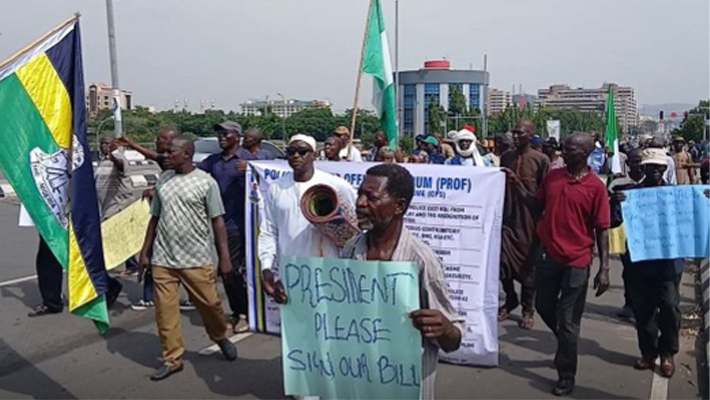

The Nigeria Labour Congress (NLC) has called on the Federal Government to urgently approve wage awards for workers, after petrol prices climbed to about ₦1,430 per litre in major cities, with even higher prices in harder-to-reach areas.
What the NLC Is Asking For
In a statement titled “Save the Situation Now,” issued September 16 by NLC President Joe Ajaero, the labour body demanded immediate wage awards, sufficient crude oil supply to local refineries priced in naira rather than dollars, and expansion of Nigeria’s fuel storage capacity.
Why Prices Are Climbing Again
Ajaero linked part of the increase to renewed conflict in the Gulf region, which has pushed up international oil prices. Dangote Refinery also raised its gantry price (what it charges distributors collecting fuel at its gate) by about 6% starting September 12, adding further pressure on pump prices.
How This Hits Households and the Wider Economy
Ajaero warned that higher transport costs will push up food prices, school fees, rent, and other essentials — deepening poverty for workers whose wages haven’t kept pace. Nationally, repeated fuel-price shocks strain an economy still working to stabilize after past subsidy removals, and add pressure on government to keep intervening rather than let structural reforms take hold.
A Familiar Cycle
This isn’t Nigeria’s first wage-award request tied to fuel costs — the Federal Government introduced a temporary ₦35,000 monthly wage award for federal workers in October 2023, after the petrol subsidy was removed. Three years later, similar pressures are prompting similar demands.
Possible Fixes on the Table
Immediate wage awards to cushion workers directly.
Naira-denominated crude supply to local refineries, to lower input costs.
Expanded storage capacity to buffer against global price shocks.
Targeted subsidies during emergencies, which Ajaero argues other oil-producing nations already use to protect citizens.
Our Honest Take on the Bigger Picture
Petrol prices in Nigeria don’t stay in the fuel tank — they show up in transport fares, market prices, and school fees within days. The bigger question is whether government responds with lasting fixes — more local refining, better reserves — or another temporary cash cushion that fades once the news cycle moves on.
Published by Ejoh Caleb