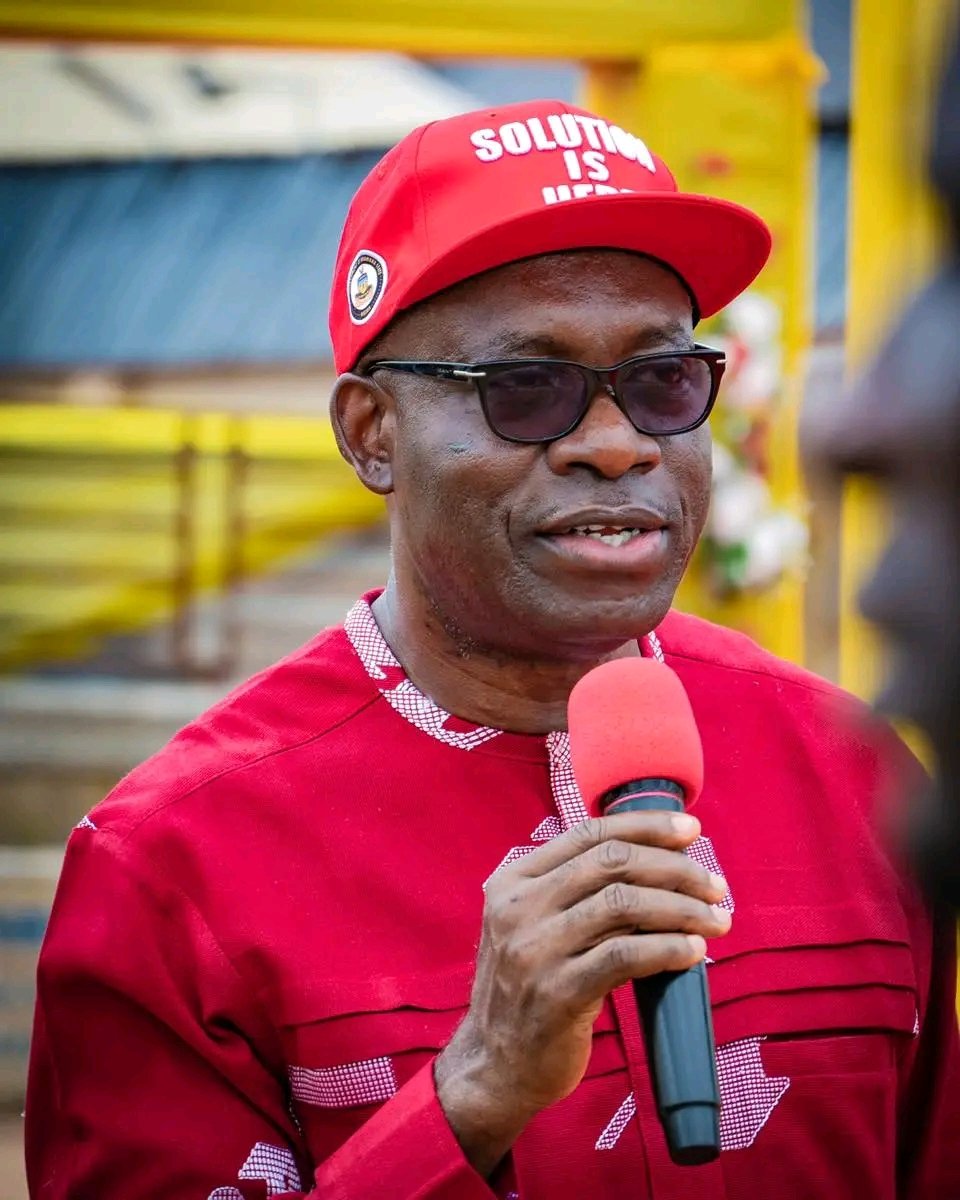
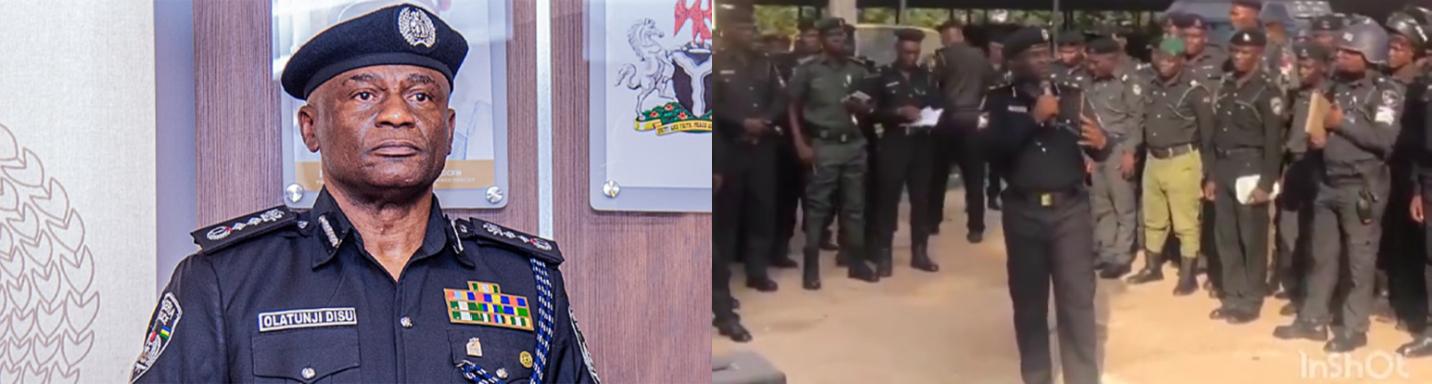
Nigeria’s Inspector-General of Police, Olatunji “Tunji” Disu, has issued a blunt warning to police officers over the continued killing of civilians by men in uniform, telling them plainly that the weapons they carry belong to the public they are meant to protect.
Addressing officers directly, Disu said: “I’m sure several of you are ashamed to wear the police uniform around town because of the killings, and I’m sure you feel bad about it. The weapons we carry were purchased with taxpayers’ money, and we are paid to protect members of the public. We are supposed to protect them, not kill them.”
The remarks add to a string of recent statements from the police chief on officer conduct and the use of force, at a time when public anger over killings by police has remained high.
This is not the first warning Disu has given his officers
Disu has repeatedly used public platforms this year to warn his own officers against misconduct. At a passing-out ceremony for retrained constables in Uyo, Akwa Ibom State, he declared: “Impunity ends now. Any officer who misuses his weapon, who kills a citizen without lawful justification, will be dismissed and prosecuted. Not transferred. Not queried. Not redeployed. No badge is a license to kill. No uniform is a shield from justice.”
His administration has also followed through with concrete action in at least one case: after officers were involved in a killing in Delta State, Disu ordered them withdrawn and transferred to Abuja for internal disciplinary proceedings, and a Force Disciplinary Committee recommended their dismissal and prosecution.
Recent cases that show this is not a one-off problem
Mene Ogidi, Effurun, Delta State (April 26, 2026): A 28-year-old man delivering a parcel was stopped, restrained on the ground, and shot dead at close range by an Assistant Superintendent of Police after being falsely accused over the parcel’s contents. The officer, Nuhu Usman, was later dismissed and is to be tried for murder.
Yehuza Umar, Oyo State (May 2, 2026): A man was shot dead by police during a stop-and-search operation, sparking protests. Rights activists alleged the stop was actually an attempt to extort money from him before he was killed.
Motorcyclist, Abakaliki, Ebonyi State (January 2026): Police operatives shot a private motorcyclist dead after he did not stop when ordered to. This came about 15 months after a similar case in the same city, where police from a “Crack Squad” shot a labourer dead and critically injured three others.
These cases, spread across different states within months of each other, show a recurring pattern rather than isolated incidents — which is part of why Disu’s warning to his officers has drawn so much attention.
Why police killings keep happening (the root causes)
Weak accountability. For years, officers accused of killing civilians were often simply transferred rather than punished, which sent a message that there would be no real consequences.
Poor firearms discipline. Officers are not always properly trained or monitored on when and how to use their weapons, despite clear rules like Force Order 237 that govern firearm use.
A culture of impunity. Some officers have come to see their uniform and weapon as tools of power over citizens, rather than tools to protect them.
Public distrust that discourages reporting. Many Nigerians do not report police misconduct because they doubt anything will be done about it, which allows patterns of abuse to continue unchecked.
How this affects ordinary people, and Nigeria as a country
For families who lose a loved one to a police killing, the pain is made worse by the fact that the person who was supposed to protect them is the one who took their life. Many victims’ families report years of frustration trying to get justice.
At the national level, killings by police damage Nigeria’s global image and public trust in law enforcement as an institution. This erosion of trust makes ordinary citizens less willing to cooperate with the police, which weakens the fight against real crime. It also affects how Nigeria’s human rights record is viewed internationally, with consequences for diplomacy and investment.
What can be done (possible solutions)
Consistent dismissal and prosecution, not just transfers, for officers found to have killed unlawfully — something Disu himself has now promised.
Independent oversight bodies with real power to investigate police killings, separate from the police force itself.
Better firearms training and psychological evaluation for officers, especially those on frontline duty.
Protection for whistleblowers and witnesses so that officers and citizens can report misconduct without fear of retaliation.
Public reporting of disciplinary outcomes, so Nigerians can see that promises like Disu’s are actually being kept.
Our thoughts
It says something serious about the state of policing in Nigeria when the country’s most senior police officer has to stand in front of his own men and tell them plainly that they should be ashamed. Words from the top matter, but they are not enough on their own. What will actually rebuild trust is what happens the next time an officer kills a civilian unlawfully — whether that officer is dismissed and prosecuted, or quietly transferred like so many before. Nigerians have heard strong words from police leadership before. This time, it is fair to judge Disu not by what he has said, but by what his Force does the next time it is tested.
Published by Ejoh Caleb