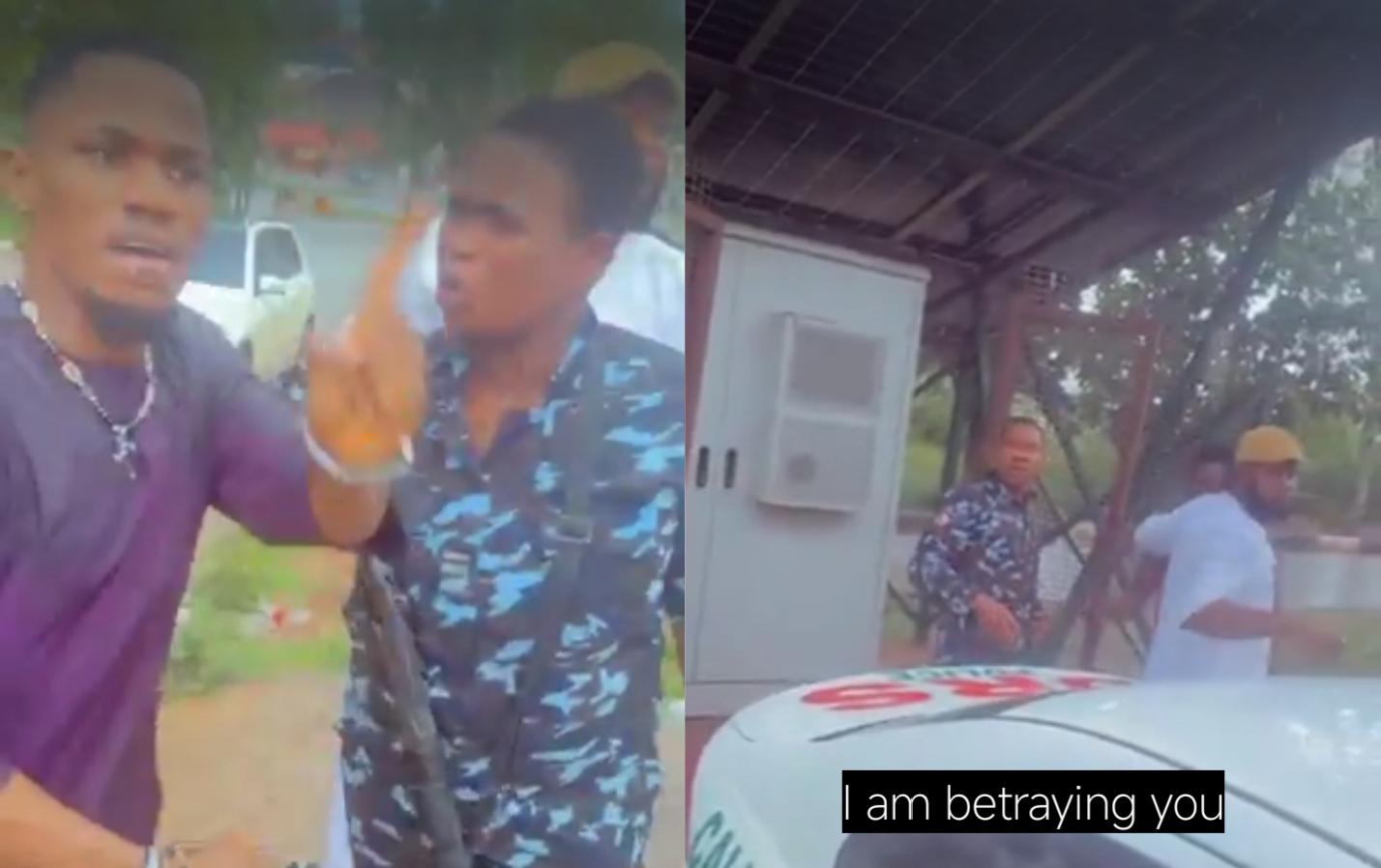
A group of young men in Enugu have accused police officers of causing an accident and then fleeing the scene instead of stopping to help. According to the young men, the officers forcefully tried to stop their vehicle while they were driving at full speed on the highway, which caused the accident. Instead of checking if anyone was hurt, the officers reportedly drove off. The young men said they chased the officers down, caught up with them, and demanded that they take responsibility for the damage done to their car.
As of the time of this report, the Enugu State Police Command has not issued a public statement responding to the young men’s account, so only one side of the story is currently available.
Not an Isolated Case: Enugu Has Seen Similar Tension Between Residents and Police Before
This is not the first time road-related incidents involving Enugu police have sparked public anger. Just last month, the Enugu State Police Command launched a manhunt for a commercial bus driver and his conductor after officers attempting to flag down their vehicle were allegedly assaulted, an incident that also led to a service rifle being snatched.
Around the same period, a police inspector in Enugu died in a hit-and-run accident that residents initially linked to a police convoy, before the command clarified that no evidence tied a convoy to the crash. Cases like this show how quickly road accidents involving police in Enugu can become sources of public suspicion and conflict, regardless of which side is at fault.
Why Citizens Are Choosing to Confront Officers Directly Instead of Reporting Them
Many Nigerians no longer trust that reporting an officer through official channels will lead to real consequences. Past cases where police accused of wrongdoing were transferred, quietly cleared, or simply never held accountable have made some citizens feel that confronting officers directly, or recording the encounter for social media, is the only way to get any form of justice or attention.
How Confrontations Like This Put Everyone at Risk (And What It Says About Nigeria’s Security System)
On a personal level, chasing down and confronting armed police officers is extremely dangerous, no matter how justified the anger is. Situations like this can escalate quickly and put both the civilians and the officers at risk of serious injury or worse.
On a national level, videos like this add to a growing pile of evidence that many Nigerians no longer see the police as an institution that protects them by default. When citizens feel they must chase down officers themselves to get accountability, it signals a breakdown in the normal channels meant to handle complaints against the police. This weakens public confidence in law enforcement as a whole and can discourage both local and international observers from trusting Nigeria’s security institutions.
What Can Be Done to Rebuild Trust Between Police and the Public
The police can respond faster and more transparently to viral accusations, the way the Enugu command has done in past incidents, instead of leaving the public with only one side of the story. Wider use of body cameras and dashboard cameras on patrol vehicles could also help settle disputes over what actually happened during an encounter. On the citizens’ side, safety should come first: recording an incident and reporting it through official channels or the media is safer than physically chasing down armed officers, even when frustration is justified.
The Bigger Picture
What stands out to me about this story is not just the accident itself, but how normal it has become for Nigerians to feel they have no choice but to chase down the very officers meant to protect them. That instinct does not come from nowhere; it comes from years of watching complaints against police go nowhere. At the same time, I worry about the danger of civilians confronting armed officers directly, because these situations can turn violent very quickly. The real fix here is not braver citizens willing to chase cars down the highway, it’s a police force whose officers know they will be held accountable whether or not a phone is recording them.
Published by Ejoh Caleb