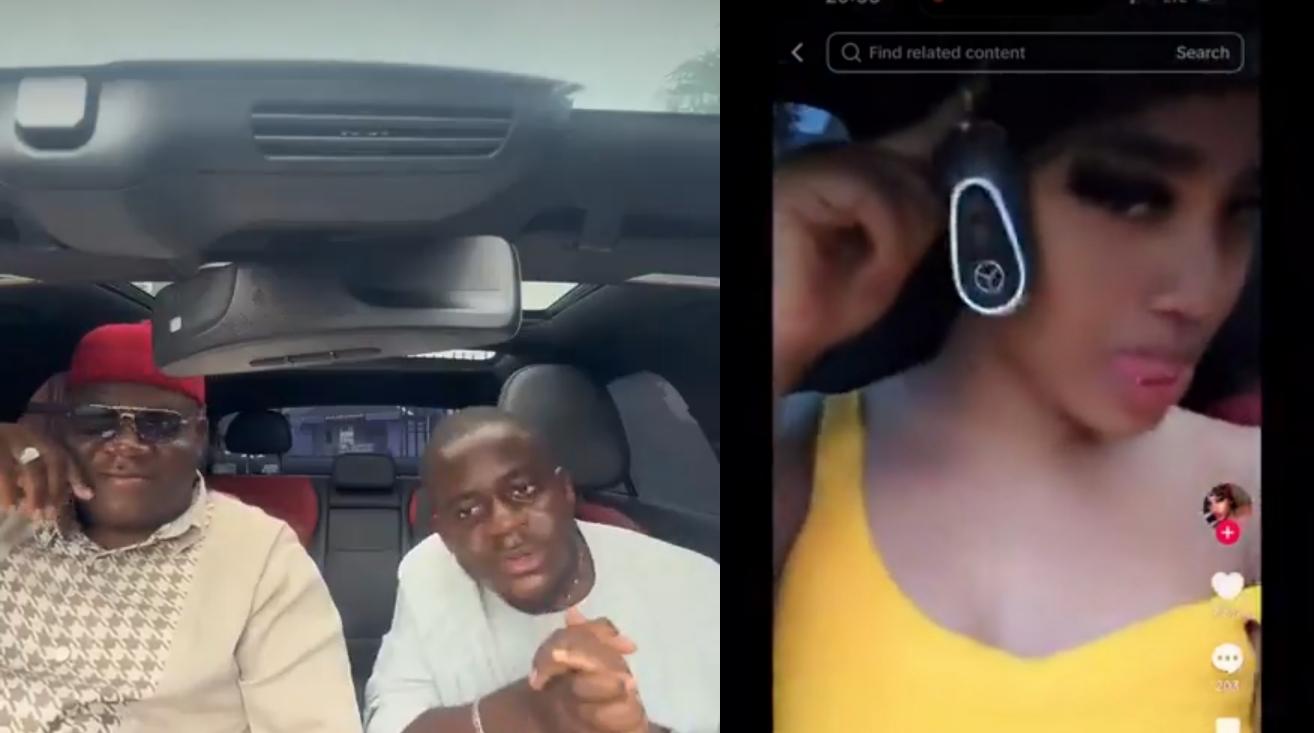
A Nigerian car dealer has come out to say that a viral video showing TikTok influencer Barbiie Nelly with a Mercedes-Benz worth over ₦80 million was not what it looked like. The dealer said the influencer never bought or received the car as a gift. She only came to inspect it, recorded videos with it, and later posted the clips online, claiming her boyfriend had gifted it to her.
A car dealer based in Port Harcourt also spoke out, saying the same influencer used a 2023 Mercedes-Benz C300, worth about ₦85 million, to stage a “Girlfriend’s Day” gift story that pressured other young women online.
Barbiie Nelly has since made her TikTok account private, and has not publicly responded to the dealers’ claims.
Not the First Time: Other Nigerian Influencers Have Faked Luxury for Clout
This is not the first case of a Nigerian influencer being accused of staging a luxury gift for attention. In 2022, a man accused former Big Brother Naija housemate Princess of staging a car gift, saying he witnessed her buying the car herself before she posted it online as a surprise present.
In 2025, a scandal involving influencer Sophia Egbueje and singers Burna Boy and Wizkid trended online after claims that a promised Lamborghini gift did not happen the way it was presented on social media.
Faking content for sympathy or admiration is not limited to gift videos either. Earlier this year, an online personality known as Blessing CEO was accused of faking a cancer diagnosis and altering a medical report to raise money from sympathetic Nigerians, after a hospital denied ever issuing her the document she shared.
Why Some Influencers Choose to Fake Wealth Online
Many influencers depend on views, followers, and engagement to earn money from brands. A video showing a “rich boyfriend” or an expensive gift tends to attract more attention than everyday content, so some creators stage these moments to grow their following quickly. Pressure to keep up with more successful influencers, and the desire to appear successful in a country where many people struggle financially, also push some people to fake a lifestyle they do not have.
How Fake Luxury Content Hurts Real Nigerians (And the Country’s Image)
On a personal level, staged gift videos can pressure other young people, especially women, to expect similar treatment from partners, or to feel like failures for not living the same lifestyle. Some viewers have also been misled into forming opinions about real people, like the boyfriend accused of buying the car, based on a story that was not true.
On a national level, cases like this add to the reputation Nigeria already struggles with online, where the country is associated with scams and dishonesty. Each new story of staged wealth or fake claims that goes viral internationally reinforces stereotypes about Nigerians as a whole, even though it is the actions of one individual. This can affect how Nigerian creators, businesses, and even everyday citizens are perceived and treated by people abroad.
What Can Be Done to Stop Staged Content From Spreading
Car dealerships and other businesses used as props in these videos can protect themselves by speaking out quickly, the way both dealers in this case did, instead of staying silent while their names are used to sell a false story. Social media platforms like TikTok could also do more to verify major “gift” or “surprise” claims that go viral before they reach millions of people. On the individual level, viewers should learn to treat viral wealth claims with healthy doubt until there is proof, rather than believing and spreading them immediately.
The Bigger Picture
This case is a reminder that a lot of what goes viral on Nigerian social media is not fully true. Influencers are under constant pressure to impress, and some will stage entire stories, down to filming inside a dealership, just to look successful online. What worries me most is not the lie itself, but how easily it could have worked if the dealers had stayed quiet. Nigerians online should learn to ask questions before reacting to flashy content, and platforms need to take more responsibility for the misinformation that spreads on them daily. Until then, it will keep being profitable to fake a life you do not actually live.
Published by Ejoh Caleb