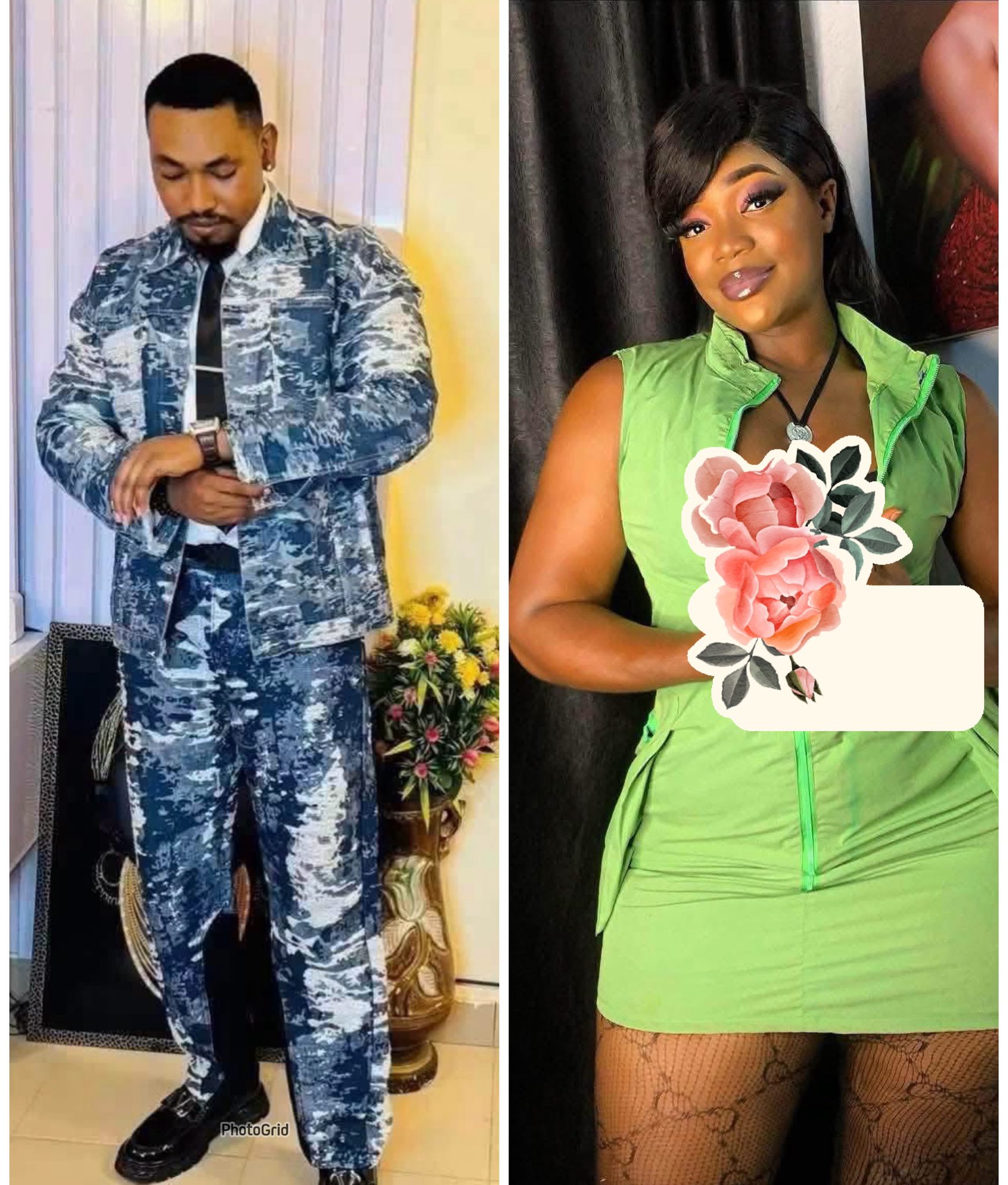
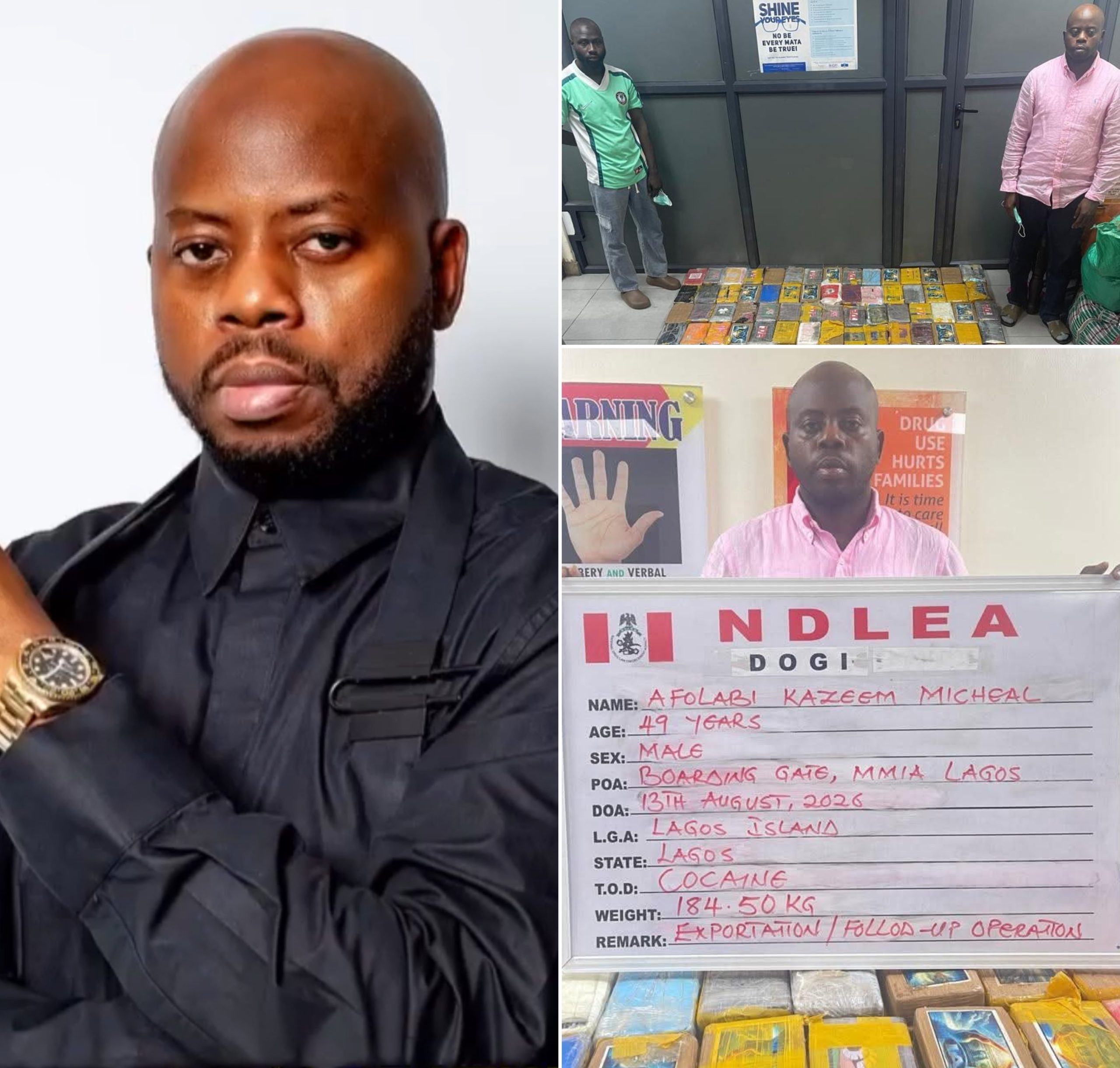
The National Drug Law Enforcement Agency (NDLEA) has arrested Lagos socialite and social media influencer Afolabi Kazeem Michael, popularly known as “KC Luxury,” describing him as the Nigerian “arrowhead” of an international cocaine trafficking cartel that used Nigeria as a transit hub to move drugs to the United Kingdom, other parts of Europe and Asia.
NDLEA Chairman, Brig. Gen. Mohamed Buba Marwa (retd.), told journalists in Lagos that operatives arrested Michael at the boarding gate of the Murtala Muhammed International Airport (MMIA) on the night of August 13, 2026, just as he attempted to board a business-class flight to Paris after learning that investigators were closing in on the network. “This cartel leader did not walk into our custody voluntarily,” Marwa said.
How the Bust Unfolded
The operation began with the interception of 184.50 kilogrammes of cocaine, valued at about $27.7 million (roughly ₦39 billion), which the NDLEA described as the largest cocaine seizure ever recorded from a courier company in Nigeria. The consignment had been concealed for export through a Lagos logistics company, and investigators say the cartel operated by hiding the true identities of consignors and moving proceeds through a chain of middlemen.
Working with the logistics company’s management, NDLEA operatives traced the shipment and first arrested Lawal Mujab Kehinde, a staff member of the firm who allegedly maintained a direct relationship with the cartel’s coordinator and was paid in cash to package and route the drugs. That arrest led investigators to Michael, who the agency said had built a public image as a dealer in gold, jewellery and luxury goods to disguise his role in a cocaine pipeline stretching from South America through Nigeria to the UK, Europe and Asia.
At the time of his arrest, Michael was found with €7,750, £2,800, ₦100,000 in cash and designer jewellery. A subsequent search of his residence on Banana Island, Ikoyi, one of Lagos’s most expensive neighbourhoods, turned up several exotic vehicles. Michael, 49, is known online for showing off a lavish lifestyle to close to 700,000 Instagram followers, including two Mercedes-Benz S680 Virgil Abloh Maybach vehicles he once said were worth about ₦800 million each.
A Familiar Playbook: Using Public Image to Mask Drug Trafficking
This is not the first time the NDLEA has uncovered a trafficking operation hidden behind a glamorous public front, or a suspect who tried to flee once an investigation closed in. In December 2025, the agency arrested a female drug kingpin with 23.50 kilogrammes of cocaine recovered from her children’s room in Lagos — a case that traced back to a couple first arrested in May 2024 while trying to cross into Ghana with 47.5 kilogrammes of cocaine, before a follow-up raid on their residence recovered an additional 10 kilogrammes.
In March 2026, the NDLEA arrested a drug kingpin, Reginald Peter Chidiebere, at MMIA after 13 years in hiding. He had first been arrested in 2013 over a cocaine shipment, was granted bail, and then jumped it and vanished until fresh intelligence caught up with him. Marwa also linked the KC Luxury case to other recent takedowns, including a Switzerland-based cartel that allegedly laundered millions of dollars through dark web marketplaces, and two Nigerian-Mexican methamphetamine syndicates that ran secret laboratories hidden in forests in Ogun and Oyo states.
Why Nigeria Keeps Attracting International Drug Cartels, and Who Pays for It
Investigators say cartels are drawn to Nigeria’s logistics and courier networks precisely because a legitimate-looking shipping company and a well-known public figure with a “clean” luxury-goods image provide cover that is harder for customs and screening systems to flag. Nigeria’s position as a transit hub between South America and markets in the UK, Europe and Asia adds to that appeal.
The effects reach beyond the individuals directly involved in trafficking. Every consignment that moves through Nigeria’s ports and courier networks undetected reinforces the country’s international reputation as a transit point for narcotics, a label that can affect how Nigerian travellers and businesses are screened at foreign airports and how seriously Nigerian institutions are treated in global trade and financial systems. Within the country, drug trafficking networks generate the kind of large, hidden cash flows that fuel corruption and can normalise crime among young Nigerians who see influencers openly display unexplained wealth without consequence, at least until an arrest like this one becomes public.
What the NDLEA and Others Say Needs to Happen
The NDLEA chairman said the scale of the seizure prompted the agency to immediately set up a Special Investigation Team to trace the network from couriers up to the masterminds behind it, rather than stopping at the first arrest. Investigations are continuing to determine the full source and intended destination of the cocaine, and the agency says more suspects linked to the network remain under investigation.
The agency has also pointed to its recent record of dismantling similar syndicates, including cartels using dark web marketplaces and clandestine drug laboratories, as evidence that sustained, intelligence-led tracing of networks — rather than one-off seizures — is what eventually exposes the people financing and coordinating these operations. Working directly with logistics and courier companies, as the NDLEA did in this case, was also central to identifying the suspects rather than relying on airport screening alone.
Behind the Filter
We think this case is a reminder that the glamorous lifestyles Nigerians see paraded on social media are not proof of anything, good or bad, about how that money was made. KC Luxury built an audience of hundreds of thousands of followers around a persona of wealth and taste, and for years that persona was apparently enough to keep questions away. What should stay with the public long after this story fades from the headlines is a simple caution: unexplained luxury is not aspiration, it is a question nobody has answered yet. Until Nigeria’s institutions get faster at asking that question, cartels will keep finding new faces willing to wear the disguise.
Published by Ejoh Caleb