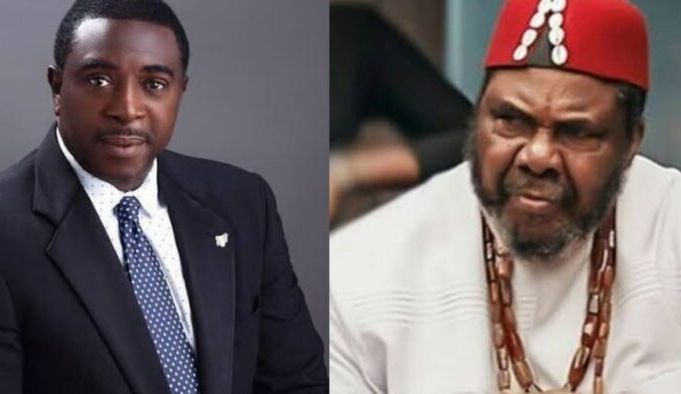

Singer Peter Okoye, known as Mr P, has made fresh claims against his brothers, Paul and Jude Okoye, alleging that more than $1.2 million in royalty payments were made without his knowledge. He said the discovery came after he tried to get a bank statement for their company, Northside Entertainment, only to find out he was no longer listed as a signatory (a person legally authorised to approve transactions) on the account. Prompt News reported that his findings pointed to financial records showing royalty payments from music aggregators that he said were distributed without his knowledge or consent.
The claim came in the third episode of a tell-all video series the former P-Square star has been releasing, in which he has continued to lay out his account of what happened within the family business behind one of Africa’s biggest music groups.
A feud that has run for nearly a decade
The rift between the Okoye brothers is not new. P-Square, made up of twins Peter and Paul, split in 2017 after years of disagreement, much of it reportedly tied to the role their elder brother, Jude, played as manager of the group. Paul later explained that the split followed a disagreement over Jude’s role as manager, and had little to do with music itself.
The brothers publicly reconciled in November 2021 to the delight of fans, but the peace did not last. Peter has since said the pair’s much-publicised reunion was never a genuine reconciliation, calling it a “fake reunion” that fell apart again over fresh disputes involving Jude. Around the same time, Jude was separately arraigned by the EFCC (Economic and Financial Crimes Commission, Nigeria’s anti-corruption and financial crimes agency) over an alleged $1 million theft case tied to Northside Entertainment, a matter still before a Lagos court. During that trial, Peter himself admitted under cross-examination that he was, in fact, a co-signatory on the company’s account, after earlier telling the court that Jude alone controlled it.
Why family-run entertainment businesses keep ending up in court
Disputes like this are common in Nigeria’s entertainment industry, where family members often run business affairs together informally, without clear written agreements on ownership, revenue sharing, or who controls company accounts. When trust breaks down, as it has repeatedly between the Okoye brothers, there is often no clean paper trail to settle who is owed what.
For the individuals involved, the effect is a public and painful family breakdown, playing out for millions of fans rather than behind closed doors. Money that should fund careers instead funds lawyers, and reputations built over decades take hits with every fresh allegation.
The effects reach beyond one family, too. High-profile, drawn-out disputes like this one feed a wider perception that Nigeria’s entertainment industry lacks strong structures for protecting artists’ earnings, which can discourage international partners, investors and streaming platforms from trusting local royalty systems. It also sends a cautionary signal to younger artists building businesses with relatives or close friends.
What could prevent the next dispute
Entertainment lawyers have long urged Nigerian artists, especially those in family or duo arrangements, to put clear, written agreements in place from the start, covering ownership splits, who can operate bank accounts, and how royalties from aggregators and streaming platforms are to be distributed and reported. Regular, independent audits of shared company accounts, agreed on by all parties in advance, could also catch disagreements early, before they become public allegations.
Stronger regulation and transparency from royalty collection bodies and music aggregators operating in Nigeria could further help by making it harder for payments to be redirected or withheld without every rights holder being informed.
The Bigger Picture
Behind the headlines and the tell-all videos is a familiar story: a family business that mixed blood ties with money and never fully separated the two. That is not unique to the Okoyes, it happens in families and companies across Nigeria every day. What makes this different is that it is playing out in public, one video at a time.
If there is a lesson here for other artists and business partners, family or not, it is this: love and trust are not a substitute for paperwork. The Okoye brothers built one of Africa’s biggest music legacies together. It would be a shame if the thing that finally divides that legacy for good is something as fixable as who gets to be a signatory on a bank account.
Published by Ejoh Caleb