
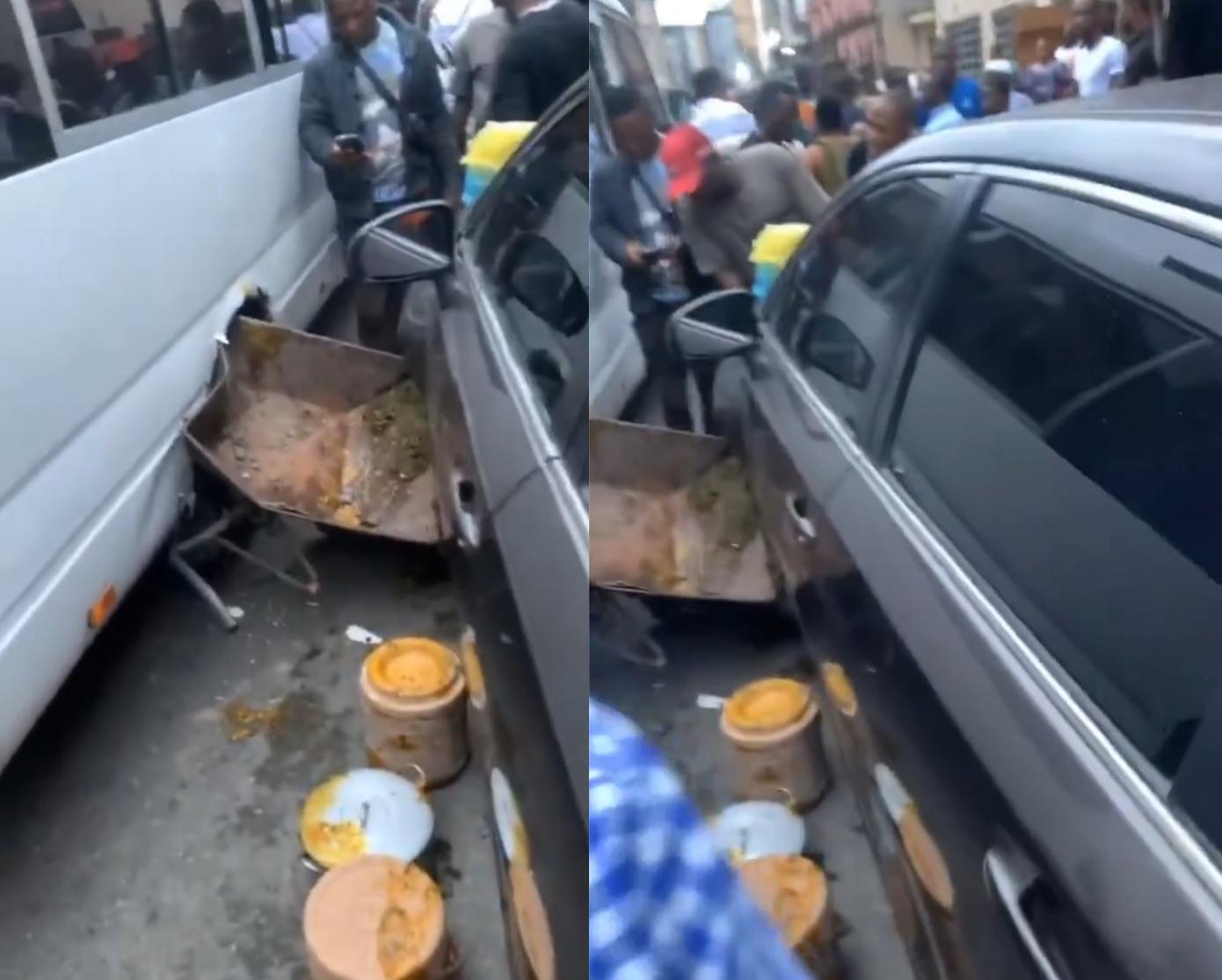
A commercial bus driver allegedly drove recklessly around the Tinubu Square/Idumota axis of Lagos Island on Monday morning and reportedly hit a woman selling food from a wheelbarrow. Details of the incident, including the extent of the woman’s injuries, the driver’s identity, and any response from law enforcement, have not yet been independently confirmed by other sources at the time of writing.
A Familiar Danger on Lagos Roads
Incidents involving reckless commercial drivers striking pedestrians, street traders and roadside workers are a recurring problem on Lagos roads. In one recent case, a female street sweeper working for the Lagos Waste Management Authority (LAWMA) was killed after a commercial bus driver struck her while reversing illegally. In another, a notorious commercial bus driver, known locally as a “danfo” driver, sped through a red light at the Bolade Intersection in Oshodi and rammed into a moving motorcycle, killing the passenger instantly. Roadside traders, who often work in narrow spaces close to moving traffic, are especially vulnerable in these kinds of incidents, since they typically have little room to escape an oncoming vehicle.
Why These Incidents Keep Happening, and Who Pays the Price
Nigerian commuters and safety advocates have long pointed to poor driver training, weak enforcement of traffic rules, and intense pressure on commercial drivers to complete as many trips as possible each day as key drivers of reckless driving in Lagos. Congested roads like those around Idumota and Tinubu Square, where street trading, foot traffic and vehicles compete for the same tight space, make the consequences of even a moment of recklessness especially severe.
For a street trader like the woman in this video, being hit while working can mean serious injury, lost income during recovery, and destroyed goods or equipment, on top of the physical trauma. For commuters and other road users, each new incident reinforces long-standing frustration with commercial bus drivers’ behaviour on Lagos roads, a frustration that has fueled public commentary on Lagos’s “danfo” driving culture for years. At a broader level, repeated incidents like this reflect ongoing challenges facing Lagos State’s traffic management systems, and add pressure on the Lagos State Traffic Management Authority (LASTMA) and police to strengthen enforcement in busy commercial areas where pedestrians and traders are most exposed.
What Could Make Lagos Roads Safer for Traders and Pedestrians
Stronger enforcement of traffic laws in high-density commercial areas like Idumota, including stricter penalties for reckless driving that endangers pedestrians, could help deter similar incidents. Physical measures, such as clearer separation between vehicle lanes and trading spaces, could also reduce the risk to street traders who have few other places to conduct their business in Lagos’s crowded commercial districts.
For drivers, additional training and stricter licensing requirements for commercial vehicle operators could help address some of the recklessness that has come to define parts of Lagos’s transport culture. Quick, visible action from LASTMA and the police when such incidents occur, including identifying and holding drivers accountable, can also reinforce that reckless driving carries real consequences.
A Trader Just Trying to Earn a Living, Caught in the Path of Recklessness
We think it’s worth remembering that behind every video like this is someone simply trying to make a living, in this case, a woman selling food to support herself or her family, put in danger by a moment of recklessness that wasn’t hers. Lagos’s traders work in some of the most exposed conditions in the city, often with no real protection from the traffic moving just inches from their stalls. We hope this incident, once more details emerge, prompts a real response from the relevant authorities, not just public outrage online that fades by the next news cycle. Until commercial driving in Lagos is held to a higher standard, we suspect stories like this will keep repeating, with different names and different corners of the city each time.
Published by Ejoh Caleb