
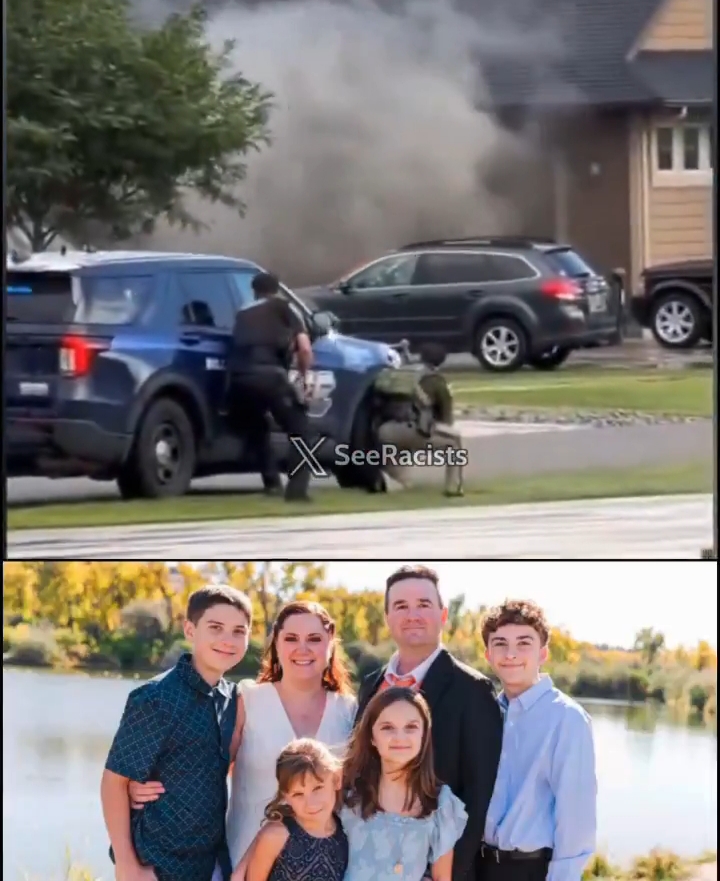
A man shot dead eight members of his own family, including four children, during a Sunday evening family dinner at a home outside Billings, Montana, in the United States. The gathering was a weekly tradition for the family.
Family members identified the shooter as 44-year-old Alan Smith. He had been living with his parents for years before they asked him to move out only a couple of weeks before the killings. He returned to the house on Sunday and opened fire.
Neighbours said they heard what sounded like fireworks just after 6 p.m., shortly before the house caught fire. Police confirmed eight people died, including a great-grandmother in her 90s who used a wheelchair and a 7-year-old girl. The dead spanned four generations of one blended family. Smith also died from a self-inflicted gunshot wound.
The house burned down to its foundation, which has slowed the police investigation. It sits in an area outside city limits that has no fire hydrants, and firefighters battled the blaze for hours before it was brought under control.
A video circulating from the scene shows footage related to the incident.
A Pattern That Keeps Repeating: Familicide (When Someone Kills Their Own Family) Is Not Rare
As painful as this is, it is not new. Experts have a name for it: familicide, which simply means a person killing multiple members of their own family in a short space of time. Cases like this happen more often than most people realise.
In January 2023, a man in Enoch, Utah, shot and killed eight family members, including five children, then killed himself. He had been investigated for domestic abuse years earlier, and his wife had filed for divorce just two weeks before he killed her and the rest of the family. The timing mirrors what happened in Billings: a man asked to leave, striking back weeks later.
In 2024, a father in Honolulu, Hawaii killed his wife and three children before killing himself, reportedly after financial troubles overwhelmed him. Even a century ago, in 1925, a man in Ohio shot eight members of his family while most of them slept.
This is not only an American problem. Nigeria has its own history of relatives and spouses killing one another. One count found that at least 49 husbands and wives were killed by their partners in Nigeria over just 15 months, with most of those deaths tied to domestic violence. Just last November, a Nigerian man in New Orleans was accused of stabbing his father to death and injuring his two sisters. Relatives said he had a history of mental illness but had never been violent before.
What Pushes A Person To This Point — And Who Pays The Price
Forensic psychologists who study these cases say family annihilators, as they are sometimes called, tend to fall into two groups. Some are deeply depressed and convince themselves they are “saving” their family from a cruel world before killing themselves. Others act out of a controlling, possessive mindset, treating their family as something they own rather than people with their own lives.
A sudden loss of control is often the trigger. Being forced out of the family home, a divorce, financial collapse, or another blow to a person’s sense of authority can push someone who is already struggling toward violence. Mental health professionals who study similar cases note that these killings rarely happen in a single moment. They usually follow a long build-up of distress that family members did not recognise as dangerous. Easy access to guns turns that distress into mass death. In the United States, murder-suicides involving guns happen nearly twice a day on average, and most are tied to family or intimate relationships.
The effects reach beyond the families involved. In the US, this tragedy has left an entire community in Billings grieving and reopened debates about how easily guns end up in the hands of people in crisis. For Nigeria, cases like this carry their own weight. Millions of Nigerians live abroad, including in American towns much like Billings, and stories like this raise fear among families with relatives overseas. They also hold up a mirror to Nigeria’s own struggles. Mental health problems are common but rarely diagnosed at home, and domestic violence is still often treated as a private family matter rather than a crime that deserves police attention.
Stopping The Next Tragedy: What Can Actually Help
There are no easy fixes, but experts and advocates point to a few steps that consistently make a difference. Family members and neighbours need to take sudden threats, angry outbursts, or a person losing their home or marriage seriously, rather than assuming it will pass. Access to mental health treatment matters too, especially for people who show signs of severe depression, paranoia, or an inability to control their anger.
In Nigeria specifically, legal advocates argue that domestic violence must be treated and prosecuted as a crime, not quietly settled between families, since offenders who go untreated can become more dangerous over time. Stronger enforcement of Nigeria’s domestic violence laws, more accessible mental health support, and community awareness about warning signs could help prevent similar tragedies from happening here, or from reaching Nigerian families living abroad.
Where This Leaves Us
Stories like this are hard to sit with because they strike at something we all trust: that home and family are supposed to be safe. What happened in Montana is a reminder that danger does not always come from strangers. Sometimes it grows quietly inside a home, in a person nobody wanted to believe was capable of this.
We think the lesson here is not just about America’s gun laws, as important as that debate is. It is also about how seriously we, as a society, take the small warning signs, a person spiralling after a painful loss, a family member who suddenly seems dangerous, before they turn deadly. Paying attention early, and getting people real help, costs far less than what comes after.
Published by Ejoh Caleb