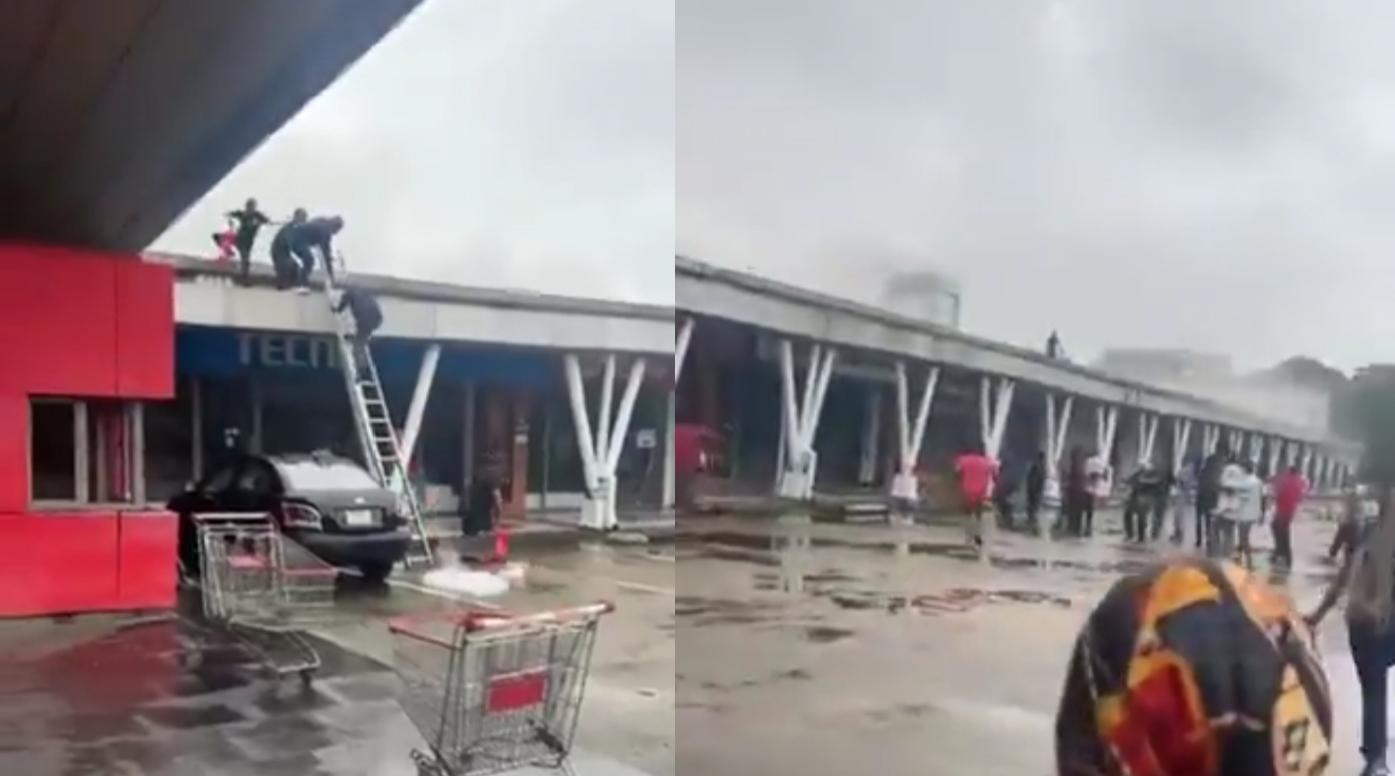
A fire broke out at the SPAR shopping mall in Calabar, Cross River State, on Saturday morning, with video showing bystanders and traders trying to put out the flames before they spread further through the complex.
An eyewitness, Lazarus Ukam, said the fire began after what he described as a minor gas or fuel explosion inside the mall, which then ignited and spread to other sections of the building.
Police, however, gave a different account of the likely cause. Cross River State Police spokesperson Sunday Eitokpah said the fire appeared to have started from an electrical fault, though he added that investigations were still ongoing.
As the fire spread, reports from the scene said only one fire service truck was initially deployed to fight the blaze, even as flames tore through a wing of the mall housing a pharmacy, a clothing store, a perfumery and a phone shop. Sources also said the mall’s own fire hydrant system had been overwhelmed.
Shop owners were seen in tears as they watched their goods and property burn. Police say several traders lost their goods and belongings, though no casualties have been reported so far.
Police also confirmed they deployed officers to the scene to stop suspected looters from taking advantage of the chaos to steal from affected shops.
A Recurring Story in Nigeria’s Markets and Malls
The scene in Calabar echoes a pattern that has played out in Nigerian markets repeatedly in recent years, often tracing back to the same root problems: too few firefighting resources and unreliable water supply.
An investigation into Lagos market fires found that traders at the Nigerian Army Shopping Arena in Oshodi suffered two separate fire incidents within the same year, in August and December 2025, with the cause of the first blaze never conclusively established. Traders at the time questioned official explanations, noting the area had not had steady electricity for a while before the fire.
Tejuosho Market in Yaba, Lagos, has also been hit by fire more than once, with traders again losing goods worth millions of naira and accusing the fire service of responding too slowly to contain the blaze.
What Is Fuelling These Fires, and Who Bears the Cost
The immediate cause of Saturday’s fire remains unclear, with conflicting accounts pointing to either a gas or fuel explosion or an electrical fault. What is clear is that once the fire started, the response struggled to keep pace, with only one fire truck initially battling a blaze that continued to spread.
This shortage of firefighting resources is not unique to Calabar. Investigations into similar fires elsewhere in Nigeria have repeatedly pointed to poor water supply, inadequate fire hydrants and limited firefighting equipment as recurring reasons why fires that could be contained quickly instead spread and destroy far more property. [https://fij.ng/article/investigation-no-water-no-hydrants-why-there-will-be-more-fire-accidents-in-lagos/]
For the traders and shop owners at SPAR Mall, the effects are immediate and personal: goods worth millions of naira destroyed, businesses disrupted, and livelihoods set back, often with little insurance or compensation to fall back on. [https://www.thestar.ng/fire-guts-spar-mall-in-calabar-destroys-goods-worth-millions/]
At the national level, incidents like this raise bigger questions about how prepared Nigerian cities are to protect commercial centres that support thousands of jobs and businesses. A country that continues to lose major markets and malls to fire, often fought with a single truck, faces real economic costs beyond the immediate scene, discouraging investment in retail spaces and shaking public confidence in emergency preparedness.
What Could Prevent the Next Mall Fire
Stronger investment in fire hydrant systems within large commercial buildings, tested and maintained regularly, could prevent hydrants from being overwhelmed the moment a fire breaks out, as reportedly happened in Calabar.
Ensuring fire services have enough working trucks and can deploy multiple units immediately to major commercial fires would reduce the risk of one truck being left to fight a fire that keeps spreading.
Faster, more transparent investigations into the cause of mall and market fires, communicated clearly to affected traders, could help rebuild trust and encourage better fire-safety practices going forward.
A Familiar Fire, and a Familiar Warning
We think what happened in Calabar is painfully familiar to anyone who has followed Nigeria’s recent history of market and mall fires. A shortage of firefighting resources keeps turning containable fires into major losses, and traders keep paying the price with their goods and their livelihoods.
We also believe this cannot keep being treated as an unavoidable accident. When investigations into similar fires elsewhere point to the same gaps, poor water supply, too few trucks, overwhelmed hydrants, then the problem is not just bad luck. It is a planning failure that Nigerian cities need to address before the next mall catches fire.
For the traders at SPAR Mall in Calabar, that conversation will offer little comfort today. But it is the only way to make sure fewer people join them in tears in front of their burnt-out shops tomorrow.
Published by Ejoh Caleb