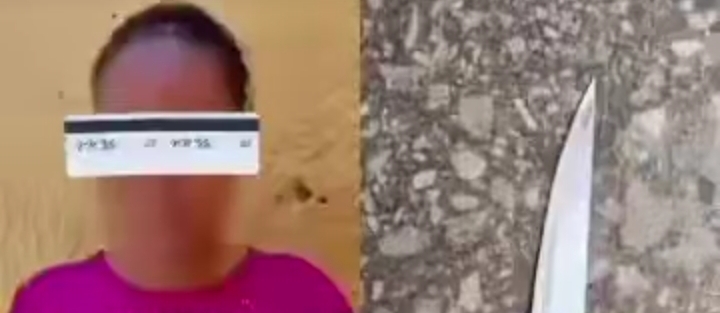

A lecturer at Nnamdi Azikiwe University (UNIZIK), Awka, Anambra State, was assaulted by a group of students on Saturday after a female student accused him of attempting to sexually molest her. The lecturer, from the Department of Chinese Studies, Faculty of Arts, was confronted on campus near the Chike Okoli Centre for Entrepreneurial Studies, and video of the incident has since spread widely on social media.
According to reports, the female student alleged the lecturer attempted to force her into a sexual act while she was in his office. She reportedly fled the office and raised an alarm, drawing the attention of other students, who then confronted and physically assaulted the lecturer. It has been noted that the lecturer was not given an opportunity to respond to the allegation before students took action against him.
UNIZIK’s Response
The university’s management has ordered an immediate investigation into the incident. In a statement, the Director of Information and Public Relations, Aloysius Attah, described the incident as unfortunate and strongly condemned the resort to violence and “jungle justice” under any circumstances, regardless of the allegation involved. Vice-Chancellor Ugochukwu Anyaehie reaffirmed the university’s zero-tolerance policy toward sexual misconduct, harassment, and other forms of inappropriate behaviour, while the institution pledged that further developments would be communicated in due course.
Background: A Pattern That Keeps Repeating at UNIZIK and Beyond
This is not the first time UNIZIK has faced allegations of this nature in recent months. In July 2026, a viral video appeared to show a lecturer at the university escaping through a window, partially clothed, after he was allegedly caught in a compromising situation with a female student. The National Association of Nigerian Students (NANS) demanded an immediate and transparent investigation into that incident, describing it as a serious breach of professional ethics if proven, and called on the university to strengthen its disciplinary framework for handling sexual misconduct cases.
The problem extends well beyond UNIZIK. A review of disciplinary actions found that at least 60 lecturers across Nigerian universities and polytechnics were suspended, dismissed, or prosecuted over sexual harassment and misconduct allegations between 2021 and July 2026 alone, despite growing zero-tolerance policies at many institutions. Recent cases include the suspension of a technologist at Paul University, Awka, in July 2026, and the earlier dismissal of lecturers at institutions including the University of Nigeria, Nsukka, and the Lagos State University of Science and Technology.
Some cases have gone further than institutional sanctions. A professor at Obafemi Awolowo University was sentenced to jail after being found guilty of demanding sex from a female student in exchange for improved grades, with the trial judge describing the practice as “too rampant” in Nigerian tertiary institutions. More recently, a professor at the University of Calabar was jailed for five years after being convicted of sexually harassing a student.
Why This Keeps Happening
Two problems appear to be feeding off each other in cases like this one. On one hand, sexual harassment and misconduct by lecturers against students remains widespread enough that dozens of cases surface every year, suggesting existing reporting channels and deterrents are not stopping the behaviour. On the other hand, students increasingly appear to be losing confidence that official disciplinary processes will act quickly or fairly, leading some to resort to direct physical confrontation instead of waiting for an investigation, even when the accused has not been formally found guilty of anything.
How This Affects Nigeria
Incidents like this damage trust on both sides of the classroom. Students who fear harassment may feel official channels move too slowly to protect them, while lecturers face the risk of mob violence based on unproven allegations, without any chance to respond before being physically attacked. At a national level, repeated incidents like this feed into a broader crisis of confidence in Nigeria’s higher education institutions, raising questions about whether universities are doing enough to prevent misconduct in the first place and whether students feel they have any safer alternative than confronting accused staff directly.
Possible Solutions
Universities need faster, more transparent, and more trusted reporting and investigation mechanisms so that students do not feel forced to take matters into their own hands. This includes independent panels that can act quickly on credible allegations, protection for students who report misconduct, and clear, well-publicised timelines so complainants know their case will not be buried. At the same time, institutions must continue to make clear, as UNIZIK has, that mob violence is not an acceptable response to allegations, however serious, since it denies the accused any chance at due process and can itself cause serious harm to an innocent person if the allegation later proves false.
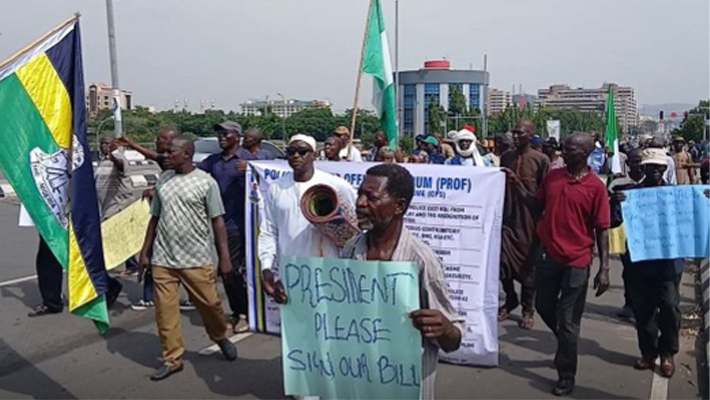
Stronger legislative action, including the sexual harassment bill currently before the House of Representatives seeking stiffer penalties for lecturers found guilty of harassment, could also help close the gap between how often these allegations occur and how rarely they result in real consequences.
A Justice System Nobody Trusts
What happened at UNIZIK reflects a deeper problem: neither students nor the public seem to trust that Nigerian universities will handle sexual misconduct allegations fairly and quickly. Until that trust is rebuilt, through visible, timely, and fair investigations, incidents like this will likely keep happening, with students taking justice into their own hands and the truth of what actually happened getting lost in the chaos of a viral video. Both the female student’s allegation and the lecturer’s right to a fair process deserve to be taken seriously, and only a credible investigation, not a mob, not a hashtag, can actually establish what happened here.
Published by Ejoh Caleb