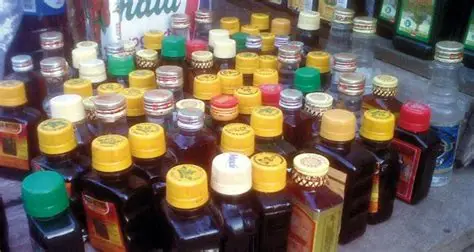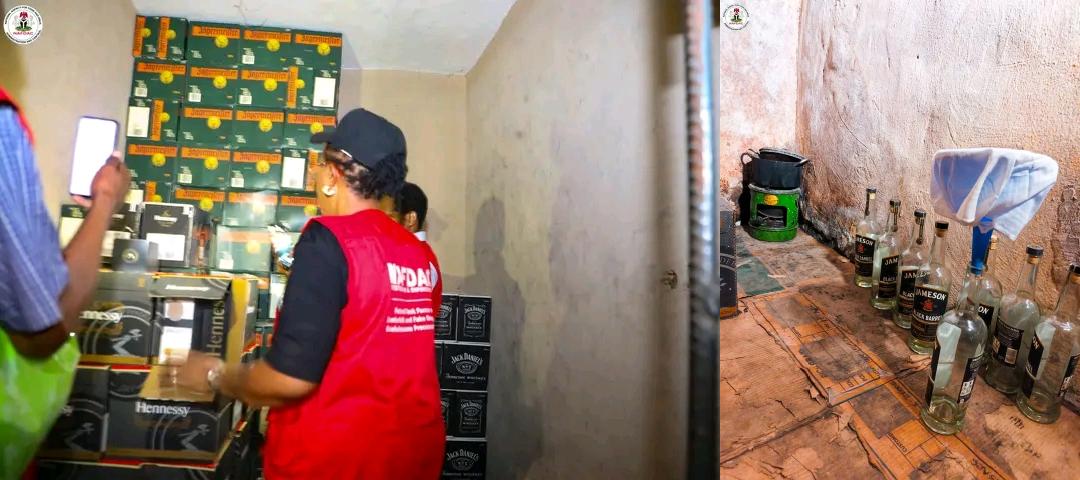
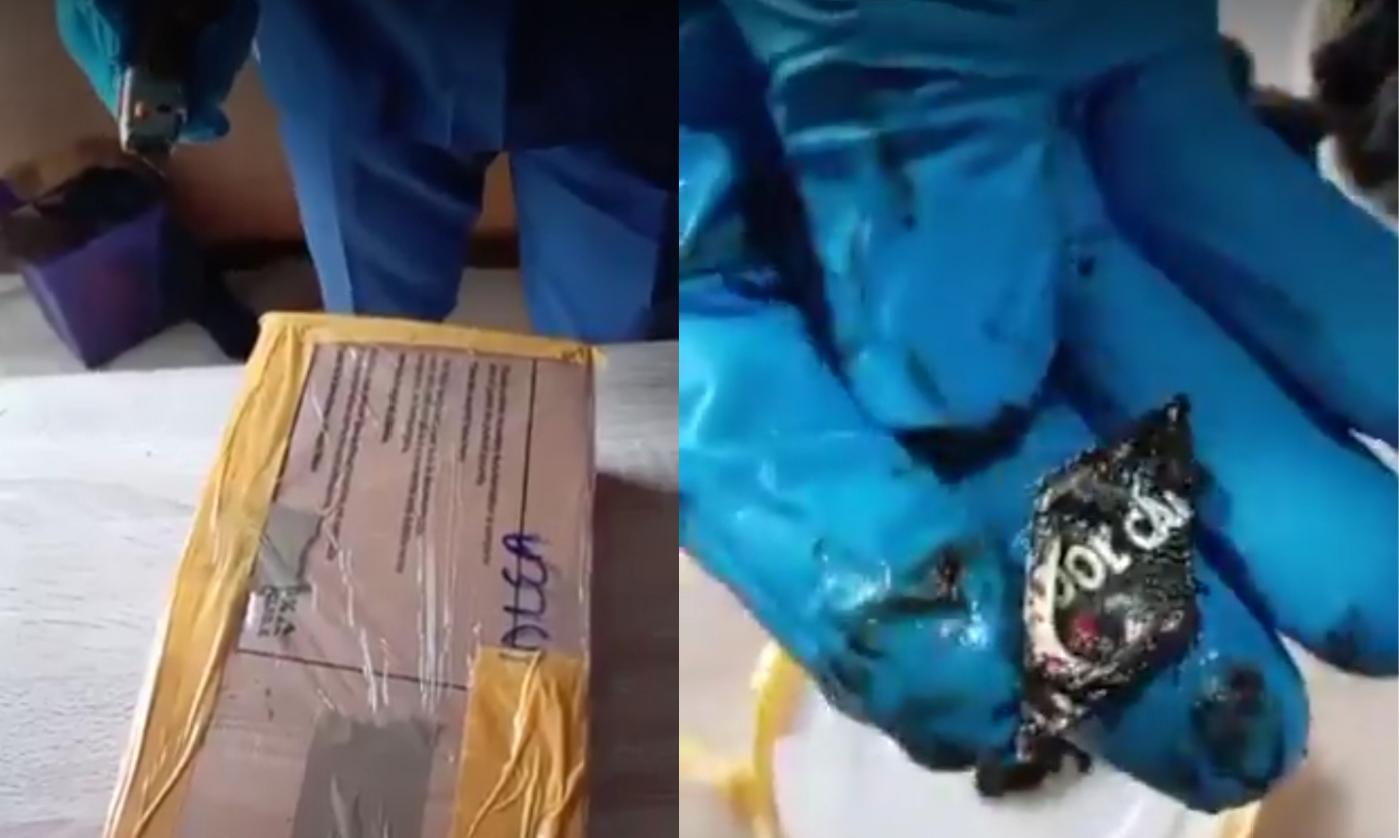
The National Drug Law Enforcement Agency (NDLEA), the federal agency responsible for fighting drug trafficking and abuse in Nigeria, says its operatives have uncovered tramadol pills (a strong prescription painkiller that is widely abused as a street drug) hidden inside containers of black soap, a popular local skincare product, in an attempt to smuggle them to the United Kingdom.
According to the agency, the concealment was discovered by NDLEA officers at a courier company in Lagos on July 22, during what it described as a routine interdiction operation. The agency’s Director of Media and Advocacy, Femi Babafemi, shared the discovery online, repeating a now-familiar warning to Nigerians: never accept a parcel or luggage from someone else without knowing exactly what is inside it.
A well-worn smuggling route, with new hiding spots
Hiding illegal drugs inside ordinary household products bound for the UK is not new for traffickers using Nigerian courier companies. In October 2025, NDLEA operatives at a Lagos courier firm intercepted three separate UK-bound shipments in a single sweep, including tramadol capsules hidden inside a Vitamin C container and other opioids disguised inside blocks of glass ceramics.
Just days before this latest black soap discovery, the same agency arrested a 55-year-old Lagos businessman accused of masterminding a plan to export cocaine hidden inside the walls of food cartons, also destined for the UK.
The scale of the wider problem is staggering. The NDLEA recently disclosed that it seized more than two billion tramadol pills in an 18-month period alone, as part of its ongoing effort to choke off supply routes running through Nigeria’s ports and free trade zones.
Why Nigeria keeps being used as a trafficking route
Nigeria’s ports and courier networks remain attractive to traffickers partly because of weak oversight and, according to some investigations, corruption among officials who are supposed to be checking shipments. One 2023 investigation found that a significant share of drug seizures at Lagos ports involved bribery, allowing illicit substances to slip through undetected.
Tramadol in particular is easy to source in Nigeria because it is often sold in pharmacies and open drug markets without a prescription, despite being a controlled substance. This makes it cheap and accessible for both local abuse and export by trafficking networks looking for high-value, low-bulk goods to smuggle abroad.
How this affects Nigerians and Nigeria as a country
For individuals caught up in these networks, whether as couriers, low-level operatives, or unknowing carriers, the consequences can include lengthy prison sentences abroad or at home. Families are frequently left to deal with the fallout, from legal costs to the stigma of having a relative involved in international drug trafficking.
At the national level, repeated seizures like this one reinforce Nigeria’s reputation as a hub for drug trafficking to Europe, which can lead to increased scrutiny of Nigerian travellers and packages at UK and European borders. This affects even ordinary, law-abiding Nigerians trying to travel, work, or send legitimate goods abroad. The wider drug crisis also carries a heavy economic cost: Nigeria’s National Bureau of Statistics estimates that drug abuse alone costs the country about $3.5 billion every year.
Possible solutions
Courier and logistics companies operating in Nigeria need stronger, standardised screening technology to detect concealed drugs before shipments leave the country.
Pharmacy regulation needs stricter enforcement, so that tramadol and similar controlled substances cannot be bought over the counter without a valid prescription.
The NDLEA and Nigeria Customs Service should be given more resources to root out corruption within their own ranks, since porous enforcement at the point of exit is a major part of the problem.
Nigerians should heed NDLEA’s repeated warning not to carry or ship parcels for other people without knowing the contents, since unsuspecting carriers can end up facing serious criminal charges abroad.
Continued international cooperation between Nigeria and destination countries like the UK can help intelligence agencies trace and dismantle the networks behind these shipments, rather than only catching individual couriers.
A balanced view: not everyone caught in these networks is a mastermind
While the operators who organise these trafficking networks deserve the full weight of the law, it is worth noting that some people caught transporting concealed drugs are low-level couriers or unsuspecting carriers who had no idea what they were moving. NDLEA’s own repeated warning about accepting parcels from others reflects this reality. A fair justice system should distinguish between the kingpins profiting from these operations and vulnerable individuals who may have been deceived or exploited into carrying the goods.
Our thoughts
What strikes me most about this case is how ordinary the concealment method was. Black soap is something many Nigerian households use and trust, and turning it into a drug smuggling tool says a lot about how creative and relentless trafficking networks have become. I think NDLEA deserves credit for catching this particular shipment, but one seizure will not fix a problem this deep. As long as tramadol remains easy to obtain without a prescription at home, and as long as there is money to be made moving it abroad, traffickers will keep finding new places to hide it, whether that is inside soap, vitamin bottles, or cartons of food. Nigeria needs to fight this on both ends: cutting off easy access to the drug locally, and closing the loopholes that let it leave the country in the first place.
Published by Ejoh Caleb