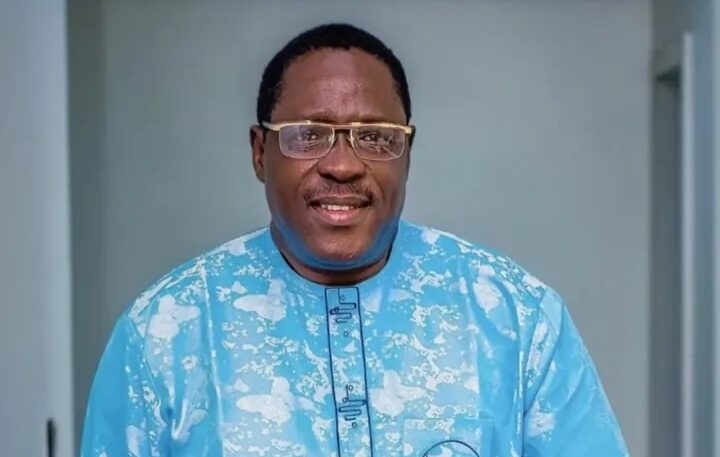
The family of veteran Nollywood actor Taiwo Hassan, popularly known as Ogogo, has denied viral social media reports claiming that the 66-year-old actor has died. His daughter, Lima Taiwo, dismissed the claims as fake news on Instagram, writing, “This is false!! This is false!!! THIS IS FAKE… PLEASE STOP SPREADING FAKE NEWS.”
The rumour reportedly started after a Facebook user falsely claimed that another of Ogogo’s daughters, Haleemah Taiwo, had announced his death, alleging he passed away after being turned away by several hospitals.
The false report came less than a day after Ogogo’s daughters, Lima and Kira, made emotional public appeals for help treating their father, who they say is battling stage-four cancer. Kira said doctors had told the family that the hospital currently managing Ogogo’s case could no longer administer chemotherapy because of how advanced the illness has become, and appealed for cancer specialists and hospitals willing to take on his treatment. Lima stressed that the family was not asking for money, only access to specialists: “If you know somebody that knows somebody that will be willing to treat him, anything, we’re willing to try anything.” She also said the family only learned how serious his condition was about three weeks before speaking out.
Why Fake Death Reports Keep Following Nigerian Celebrities
Ogogo is far from the first Nigerian entertainer to have his death falsely announced online. Veteran actor Pete Edochie has had to publicly deny death rumours repeatedly over the years, including as recently as February 2026, saying he has been “killed” by false reports about seven times. In that case, a social media user later admitted to fabricating the story and apologised.
Veteran actor and comedian Baba Suwe also had to personally deny reports of his death after a similar rumour spread on social media, describing it as “sad and uncalled for.” Nollywood star Ramsey Noah faced the same situation in 2017, after false reports claimed he had died while filming in Ghana.
These cases follow a familiar pattern: a single unverified social media post spreads faster than any correction, often reaching thousands of people within hours before the affected family or the celebrity themselves can respond.
How Fake News Adds to a Family’s Pain, and What It Costs the Public
For families already dealing with a loved one’s serious illness, a false death report adds a fresh layer of distress on top of an already painful situation. Ogogo’s family had just made a vulnerable public appeal for medical help when they were forced to also spend energy denying that he had died — a distraction from the actual, urgent task of finding him treatment.
There are also real risks in how the public reacts to health information shared during moments like this. A Nigerian doctor who reviewed the family’s public appeal cautioned against one specific request the family had made — for herbal remedies — warning that no herbal treatment exists for stage-four cancer and that such substances could damage other organs and waste valuable time. The same doctor explained that stage-four cancer means the disease has spread beyond where it started to other parts of the body, and encouraged the family to continue working with Ogogo’s existing medical team rather than pursuing unproven alternatives.
For the wider public, incidents like this show how quickly false information can spread in Nigeria before facts catch up, and how that same fast-moving information environment can carry both harmful rumours and, sometimes, genuinely useful medical guidance once experts step in to clarify.
What Can Be Done to Slow Down Celebrity Death Hoaxes
Media analysts who have tracked repeated cases like Pete Edochie’s suggest that the surest way to slow a death hoax is a fast, clear response directly from the family or verified accounts of the person involved, since unclear or delayed responses tend to let rumours spread further. Fact-checking accounts and journalists cross-checking claims against credible outlets before sharing them, as happened in Pete Edochie’s case, can also help slow a hoax before it reaches its widest audience.
On the medical side, doctors have also called for public awareness that a stage-four cancer diagnosis does not automatically mean a hospital has “given up” on a patient, since palliative care — treatment focused on comfort and quality of life — is a recognised part of cancer care rather than an abandonment of treatment.
Our Closing Thought
We think the loudest lesson from Ogogo’s situation is not really about him — it is about how little space Nigerians online leave for families to process a health crisis before rumour takes over the story. A family that was still absorbing devastating news about their father found itself, within a day, also fighting to prove he was alive. As Ogogo’s family continues to search for treatment, the public’s role should be simple: verify before sharing, and give the family room to focus on what actually matters right now — his care.
Published by Ejoh Caleb