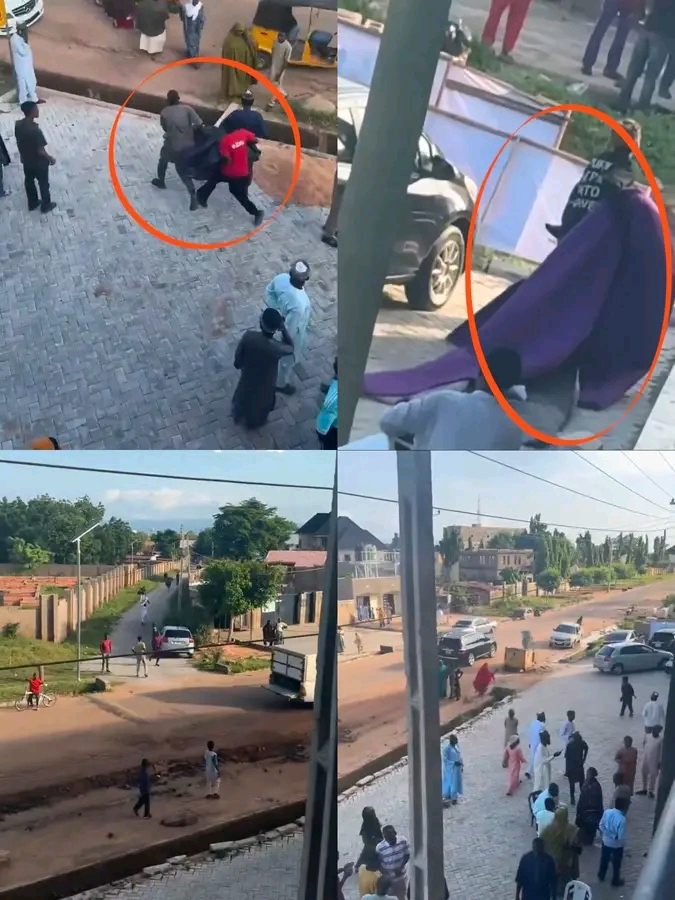

A man has been caught on video after a crowd accused him of using a fake bank transfer receipt (a screenshot or printout meant to prove that money has been sent, which fraudsters can now fake convincingly) to pay for items from a sales girl.
In the video, the man is seen begging the crowd to calm down as onlookers repeatedly demanded he “show us the transfer receipt you previously showed the sales girl.” When asked how much he was supposed to pay, the sales girl said the amount was ₦32,000.
These are allegations made by those present at the scene, as captured in the video, and have not been independently verified.
A Scam That Keeps Repeating Across Nigeria
Fake transfer receipts, sometimes called “fake alerts,” have become one of the most common tricks used against small traders and vendors across Nigeria. In several recent cases that went viral, a skincare vendor exposed a customer who had sent a fake ₦35,000 transfer receipt for a birthday order. In another case, a Lagos jewellery vendor narrowly avoided losing ₦1.5 million after a long-time customer used a similar trick involving a faked refund receipt.
Experts who track this trend say the scam works because it exploits trust: vendors release goods as soon as they see what looks like a bank alert on a phone screen, without confirming that the money has actually entered their account.
Why This Keeps Happening, and Who Ends Up Paying the Price
A few things make this scam so common in Nigerian markets and shops:
Convincing fake tools: Apps and edited screenshots can now copy a bank’s exact alert format, making it hard to tell a fake from a real one at a glance.
Pressure to close a sale quickly: Busy vendors, especially those serving many customers at once, often release goods without pausing to confirm the credit alert on their own banking app.
Low awareness among small traders: Many sellers still trust a customer’s phone screen instead of checking their own account balance or waiting for a genuine SMS or app alert.
Weak, slow reporting systems: Victims often do not know exactly where to report the incident quickly enough to have a fraudulent transaction reversed or a suspect traced.
The direct effect falls on the trader, who loses goods and income. But this kind of fraud also has a wider, national cost: it feeds growing distrust in Nigeria’s digital payment system at a time when the country is pushing for more Nigerians to embrace cashless transactions. Every viral fake-alert video makes small business owners more hesitant to accept transfers at all, which slows down the very financial inclusion that mobile banking is meant to support.
Possible Solutions
Vendors should always confirm a payment directly from their own bank app or account alert, never from a screenshot or message shown on the customer’s phone.
Businesses can enable instant SMS or app alerts for every incoming payment so that a missing alert becomes an immediate red flag.
Markets and shopping complexes could organise basic digital fraud-awareness training for traders, similar to safety trainings already common in some markets.
Anyone who receives a fake transfer should report the case to the bank immediately, and to the Nigeria Police Force or the Economic and Financial Crimes Commission (EFCC), since obtaining goods by false pretence is a criminal offence that can attract fines or imprisonment on conviction.
Crowds who catch a suspect in the act, as happened here, should hand the person over to the police rather than take matters into their own hands, so that any punishment follows the law.
Our Take
What stands out to me in this video is not just one man’s alleged trick, but how normal this kind of scam has become in Nigerian markets. When a crowd can recognise the pattern instantly and know exactly what question to ask, it tells you traders are already living on guard against this every day. The real fix isn’t public shaming in the market square, as satisfying as it might feel in the moment; it’s vendors building the simple habit of checking their own bank alert before releasing anything, and the police actually following through when cases like this are reported to them.
Published by Ejoh Caleb