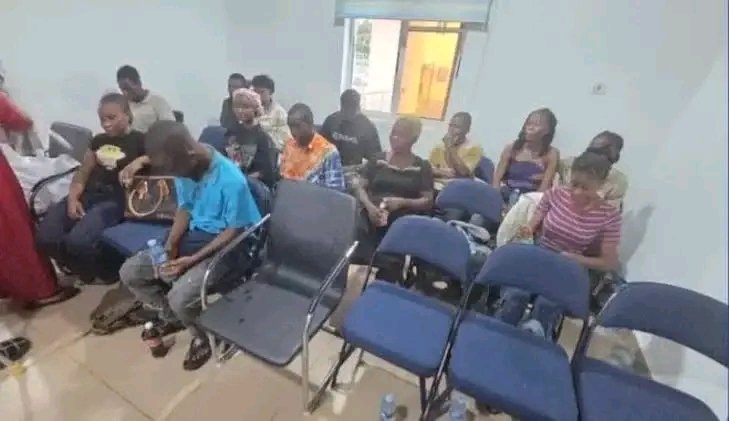

Security operatives in Rivers State have reportedly apprehended suspected “one-chance” robbers, a term used in Nigeria for criminals who pose as commercial drivers or passengers to rob, assault or kidnap unsuspecting commuters inside moving vehicles.
The reported arrest adds to a string of similar operations the Rivers State Police Command has carried out against one-chance syndicates in Port Harcourt and its surrounding areas in recent months.
A Crackdown That Has Been Building for Months
Rivers State has recorded repeated one-chance arrests this year as police intensify what the Commissioner of Police has called an “onslaught” against the crime. In July 2026, police arrested two suspected syndicate members, Uche Samuel and Nkechi Amadi, after their vehicle veered off the road and got stuck in a ditch while attempting to abduct a female passenger along the Rumuosi-Rumuekini axis of Port Harcourt.
Just over a week ago, a similar scene played out at Rumuosi Junction, where three suspected one-chance robbers were apprehended after a trapped passenger raised the alarm and one victim was thrown from the moving minibus. Residents chased the gang’s vehicle down and set it ablaze before police from the Choba Division arrived to take the suspects into custody.
In August, the Commissioner of Police, CP Olugbenga Adepoju, also disclosed that the command’s June-to-August operations had turned up several one-chance suspects among a wider list of arrests covering kidnapping, armed robbery and cultism cases across the state.
Why One-Chance Crime Persists, and Who Bears the Risk
One-chance robbery persists partly because it exploits the ordinary trust commuters place in commercial transport. Criminals disguise themselves as legitimate drivers or fellow passengers, making it difficult for victims to spot danger before they are already trapped inside a moving vehicle.
Police have pointed to weak intelligence gathering as part of the problem, arguing that a faster, more proactive response to the many resident complaints about known danger routes, such as areas around the University of Port Harcourt and Eleme, could prevent syndicates from operating as long as they do.
For victims, the effects can be severe, ranging from theft and assault to abduction and, in some past cases nationally, death. In January 2026, a similar one-chance syndicate in Abuja was linked to the murder of a lawyer who unknowingly boarded their vehicle along the Kubwa Expressway.
The crime has also fuelled a dangerous public response. Frustrated residents who catch suspected one-chance robbers have sometimes resorted to mob violence, including setting vehicles and suspects on fire, prompting Nigeria’s Inspector General of Police to formally direct state commands, including Rivers, to begin arresting and prosecuting people involved in jungle justice.
At the national level, the persistence of one-chance crime in a major commercial hub like Port Harcourt undermines public confidence in everyday transportation, forcing commuters across the country to treat ordinary bus and taxi rides with suspicion rather than routine trust.
What Could Reduce One-Chance Robbery Cases
Rivers State has proposed requiring all commercial vehicles, including buses and taxis, to be painted in official state colours, making it easier for passengers and police to identify legitimate operators and spot suspicious vehicles.
Faster, intelligence-led responses to resident complaints about known danger routes could help police intercept syndicates before they strike again, rather than reacting only after an incident occurs.
Public education campaigns encouraging commuters to hand suspects over to police rather than resorting to mob action could reduce the jungle justice incidents that have followed some one-chance arrests.
Vigilance That Should Not Have to Come From Passengers Alone
We think it is encouraging that suspected one-chance robbers keep getting caught, whether by police operations or alert residents. But we also think it says something troubling that so many of these arrests still depend on victims fighting back, vehicles crashing, or bystanders intervening, rather than on police catching syndicates before they strike.
We believe lasting safety on Rivers State’s roads will require more than crackdowns after the fact. It will need the kind of proactive, intelligence-driven policing officials keep promising, paired with practical steps like vehicle identification, so that commuters can trust an ordinary bus ride again without wondering if it is their “one chance” to become a victim.
Until then, every viral video of an apprehended one-chance gang is a reminder of how much danger still rides quietly through Port Harcourt’s streets.
Published by Ejoh Caleb