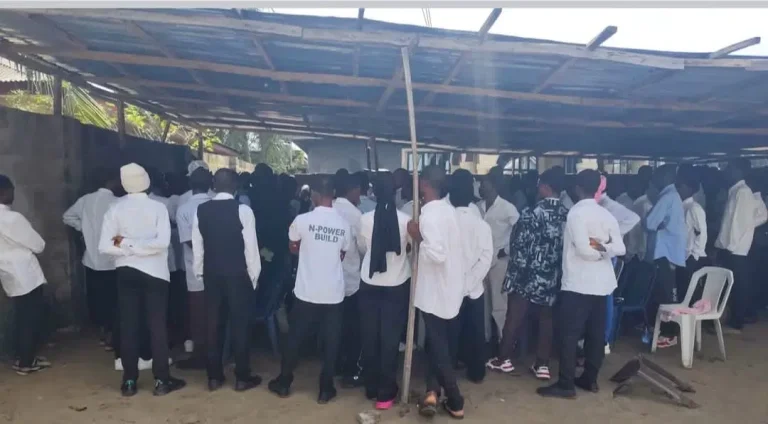
Suspected political thugs reportedly attacked a rally of the Nigeria Democratic Congress (NDC) in Asaba, Delta State, on Saturday, November 7, 2026. A campaign vehicle was damaged, and supporters ran for safety.
Videos show people fleeing the venue. Some supporters reportedly lost phones and other belongings, and others were hurt in the confusion. A voice heard in one clip said the supporters had come peacefully and “did not come to fight anybody”. The vehicle that was damaged carried posters of Victor Ochei, an NDC Senate aspirant.
What Is Reported and What Is Not (Unverified Means Not Yet Confirmed by Officials)
Reports say that after the attack, a suspected attacker was severely beaten by a crowd shortly before security operatives arrived. They also say several suspects fled after being overpowered by angry supporters. One caption says a captured suspect was questioned about who sent him. We have not seen a report confirming that, or any answer he gave.
No one has said who the attackers were, who sent them or how many were involved. The reports say their identities and political affiliations have not been independently established. We also have no official count of the injured, no statement from the Delta police and no reply from the APC or the state government.
A Second Act of Violence: The Beating of a Suspect (Mob Justice Means a Crowd Punishing a Suspect Without a Trial)
The video of the beating raises its own problem. Whatever the man is accused of, beating him is unlawful. A crowd cannot decide guilt, and a beaten suspect may not live to answer questions about who sent him.
The same pattern appeared in Delta in September. During a political rally in Uvwie Local Government Area, police said they rescued a man, Collins Egbara, from a mob and took him to hospital. They also recovered an AK-47 rifle from an old building nearby, and said the investigation would decide whether he was linked to it. Supporters at the scene told a different story about how the rifle reached police, and the police dismissed their version. When a crowd takes over, the facts get lost.
Delta’s Troubled Campaign Trail: Earlier Clashes Involving Both Sides
This is not the first violent incident in the state this season. In September, NDC supporters said suspected thugs disrupted their march in Effurun, and the Delta government condemned the violence and ordered an investigation.
Violence has also touched the other side. In August, a video showed Governor Sheriff Oborevwori’s protocol aide being assaulted with dangerous weapons during a political meeting. Ovie Omo-Agege linked it to political thuggery. The Delta APC called his claim a “concocted narrative”, and the state government dismissed suggestions of state-sponsored intimidation.
NDC governorship candidate Chris Iyovwaye also said thugs blocked him from entering a town hall in his Aghalokpe community. The Delta APC rejected the claim as false and demanded evidence. The Delta Information Commissioner, Charles Aniagwu, has urged security agencies to identify and prosecute those responsible for the reported violence. The accounts conflict, but the trend is clear: several incidents, few public findings.
Why Rallies Turn Violent: Rivalry, Hired Muscle and a Culture of Retaliation (Retaliation Means Hitting Back After Being Hurt)
Competition in Delta is intense, and party supporters are close together. A rally is a place where rival groups may meet by chance or by design. A few people who feel entitled to control a space, or who are paid to cause trouble, can start a fight that spreads.
Revenge adds to the problem. When one side is attacked, its supporters may feel entitled to hit back at anyone they believe is responsible. That can turn a victim into a perpetrator in minutes. Weak consequences for earlier incidents also teach people that violence is cheap.
What It Costs Voters and the Country: Fear, Silence and a Shaky Election
For ordinary people, a rally should be a place to listen and decide. If they fear for their safety, many will stay home, and fewer voices will be heard. Traders, children and bystanders near rally grounds can be hurt too.
The national cost is large. With a January 2027 election ahead, repeated clashes in a major state can weaken public trust and give the impression that elections are won by force. They can also deter investors and observers who watch Nigeria’s stability. A beaten suspect also reduces the chance of finding the sponsors, who may be the people the public most wants to know about.
Breaking the Cycle: Quick Police Notices, Neutral Security and Handing Suspects to Officers
Police have already said parties should notify them of rallies in time to arrange security, after the September clash. Parties can comply, and police can respond by publishing clear rally calendars and guarding every party equally.
When a suspect is caught, supporters should hold him safely and call officers at once. That keeps evidence and keeps the suspect alive to answer questions. Party leaders should say in public that their members must not take the law into their own hands. Police should also publish what they find on every incident, including who sent any attackers.
Votes Should Be Won by Ideas, Not Fists: Our Reading of a Troubled Saturday
We condemn the attack on the rally, and we condemn the beating of the suspect. Both are wrong, and both make the next clash more likely.
We do not know who sent the attackers, and we do not accuse any party without proof. The APC has rejected similar claims before, and the Delta government has condemned violence in general terms. We hope they will now join the call for a full investigation.
We urge the police to identify the attackers and show whether any sponsor exists. We urge the NDC, the APC and every other party to tell their supporters to keep the peace. Delta’s voters deserve to hear every candidate in safety, and they deserve an election decided by ideas.
Published by Ejoh Caleb