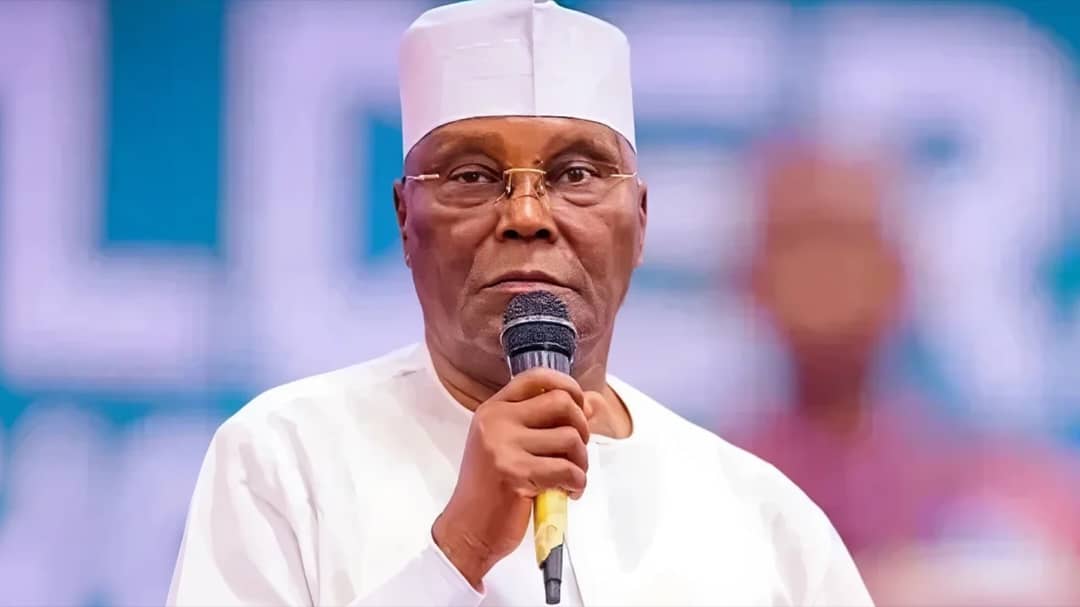
Atiku Abubakar, presidential candidate of the African Democratic Congress (ADC), has declared that he will not contest for president again if he loses the 2027 election. He made the statement during a Hausa-language interview.
Asked directly whether he would try again after 2027 if he lost, Atiku gave a firm answer. “No, I have said it before, right from this election, I will not contest again,” he said.
He also used the interview to appeal to Nigerians holding Permanent Voter Cards (PVCs, the official cards Nigerians use to vote) to come out and vote in 2027, and to stay at their polling units afterward to make sure their votes are properly counted.
A Candidate Who Has Chased the Presidency for Decades
Atiku’s declaration marks a possible end point to one of the longest-running ambitions in Nigerian politics. He has attempted to become president multiple times before, running unsuccessfully in 1993, 2007, 2011, 2015, 2019 and 2023 under different political parties. [https://kolaking.substack.com/p/apc-promises-heavy-defeat-as-atiku]
He is not new to declaring an election his “last.” In an April 2026 interview, Atiku was asked whether the 2027 race would be his final shot at the presidency, given his age and the number of times he has run. He answered, “Certainly yes. Because the stakes are higher, because I believe that will be my last outing. So that’s incontrovertible.”
His party, the ADC, described the latest declaration as emotionally significant for voters, noting that his political career has spanned “most of Nigeria’s democratic era,” moving between parties including the PDP, AC and now the ADC.
Why This Statement Matters, and What It Could Mean for Nigeria
Atiku’s declaration appears designed to raise the emotional stakes of the 2027 election for his supporters. By framing the race as his last, his campaign is asking voters to see 2027 not as just another election, but as a final, decisive chance to judge him on his record rather than campaign promises.
The statement also comes as questions persist about opposition unity ahead of 2027. Critics from rival parties have previously dismissed Atiku’s repeated presidential bids, with one opposition figure calling a fresh Atiku run “the most laughable news” of its time.
At the national level, Atiku’s declaration adds to a broader conversation about generational change in Nigerian politics. Many of Nigeria’s leading political figures, including Atiku, have remained dominant for decades, and some Nigerians have long called for younger leadership to emerge. If Atiku’s 2027 run truly is his last, it could open the field for new candidates within the opposition ahead of future elections, regardless of the outcome this time.
What Could Follow After 2027
If Atiku wins in 2027, his declaration would matter less, since he would be focused on governing rather than future campaigns.
If he loses and keeps his word, the opposition landscape could shift quickly, with other politicians positioning themselves to lead the ADC or a similar coalition into the next election cycle.
Nigerians and political observers are also likely to watch closely to see whether this declaration holds, given that Atiku has described previous elections in similarly final terms before returning to contest again.
A Promise Nigerians Have Heard Before
We think Atiku’s declaration deserves attention, but also a healthy dose of caution. He has hinted at finality before, in April this year, only to keep the door open, and Nigerian politics has a long history of politicians walking back retirement promises once tempers cool.
Still, we believe there is something worth taking seriously here. After decades of trying, tying his political future so directly to the outcome of one election is a bigger commitment than most Nigerian politicians make in public. If he means it this time, 2027 becomes more than a contest between candidates; it becomes a test of whether Nigerians believe his long career deserves one final chance, or whether it is time for the opposition to look elsewhere.
Whatever happens, Nigerians will remember what he said on this one.
Published by Ejoh Caleb