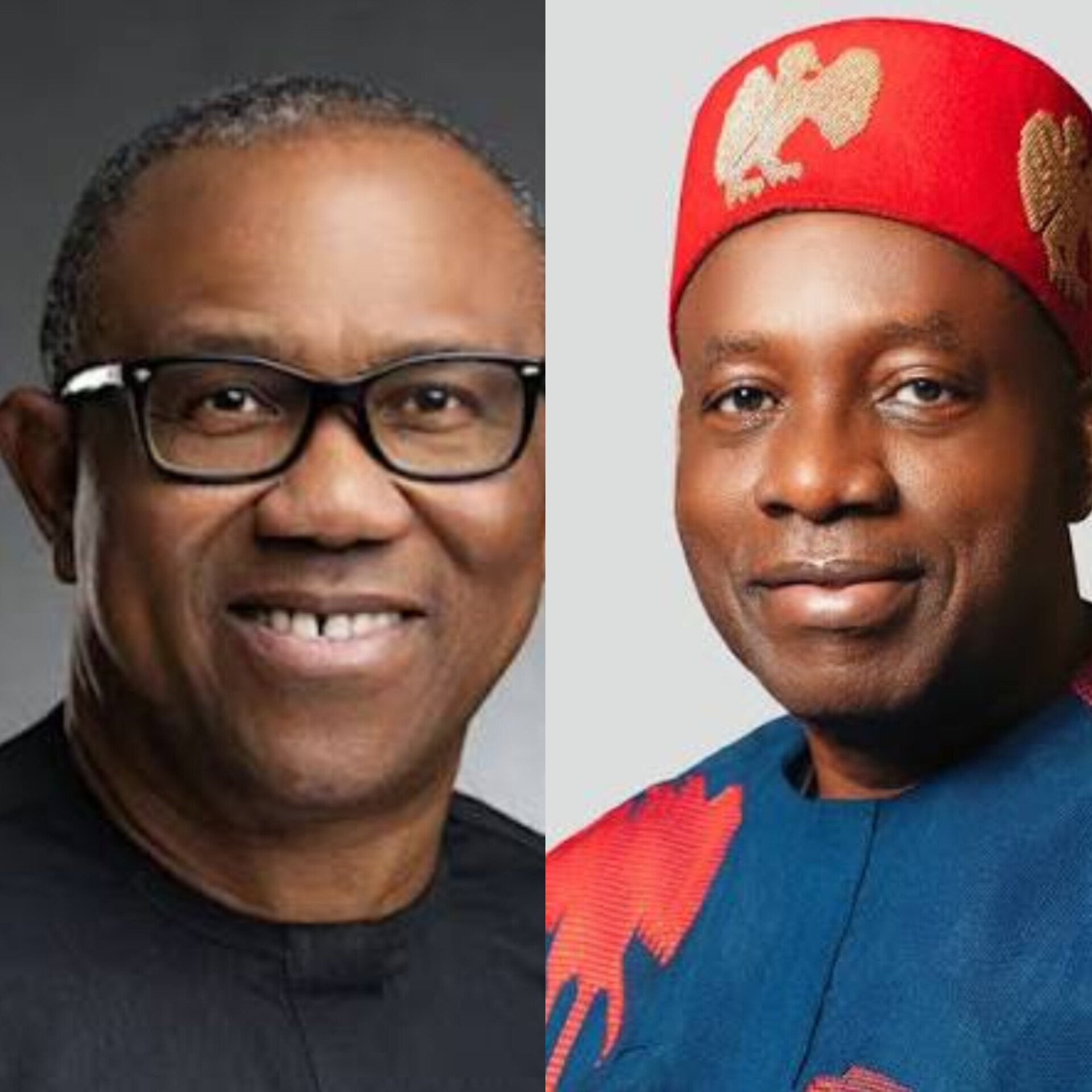
Former Anambra State Governor Peter Obi has strongly denied that his administration left any unpaid debt behind when he left office, after the current state government said it is still repaying loans taken during his tenure.
Reacting to a claim by Anambra’s Commissioner for Finance, Izuchukwu Okafor, that the state is still servicing loans inherited from the administrations of Obi and his successor, Willie Obiano, Obi said: “I left office as Governor nearly 13 years ago. On the day I left office, I was not owing any salaries, pensions, gratuities or any money that the Anambra State Government was supposed to pay. I did not owe a single supplier or contractor. If you find even one person I owed, I will end my 2027 campaign today.”
Okafor had made the claim during the Voice of Ndi Anambra podcast, a programme run by the state government’s New Media team, saying repayments for loans taken under past administrations, including Obi’s, are still being deducted from Anambra’s monthly allocation from the federal government. He said the state’s overall debt had fallen by more than 83 percent since Governor Chukwuma Soludo took office, and that the current administration had not borrowed from any commercial bank.
Not the First Round: A Fight That Keeps Resurfacing
This is not the first time Obi’s financial record as governor has come under public dispute. In 2015, shortly after Obiano took over from Obi, his administration claimed it had inherited about N185.1 billion in liabilities, a figure Obi’s camp rejected at the time, insisting he left the state with significant cash and investments and no outstanding debt. The two camps also disagreed over how much cash Obi actually handed over, with Obiano’s side putting the figure far lower than the roughly N75 billion Obi said he left behind.
A similar pattern is playing out in Benue State, where Governor Hyacinth Alia’s administration has accused his predecessor, Samuel Ortom, of leaving behind billions of naira in debts, salary arrears, pension liabilities and abandoned projects, a claim Ortom’s camp has strongly rejected. In both Anambra and Benue, successor governments accuse the outgoing administration of leaving hidden liabilities, while the former governors insist their handover records were clean.
What Keeps These Disputes Alive, and Why They Matter Beyond Anambra
Disputes like this tend to resurface because Nigerian states rarely carry out an independent, publicly available audit at the point of handover between one governor and the next. Instead, each side tends to rely on its own version of events, whether that is a handover document from the outgoing governor or budget and allocation records from the incoming one. Without a neutral, agreed-upon account, both sides can keep repeating their own version for years, as has happened with Anambra’s debt since 2015.
For Anambra specifically, the disagreement is not just academic. Commissioner Okafor said some of the loans are structured so that repayments are deducted directly from the state’s share of the Federation Account Allocation Committee (FAAC) funds, meaning money is taken off the top before it reaches the state treasury, regardless of who is right about who borrowed it.
Nationally, this kind of dispute feeds into a wider pattern across Nigeria, where a change of governor is often followed by public disagreement over the true state of a government’s finances. That makes it harder for citizens in any state to judge how their money was actually managed, and it turns basic financial accountability into a recurring political contest rather than a settled record. With Obi now running for president in 2027 and Soludo’s allies making the claims, the timing also means the dispute is playing out inside an active national political contest, not just a local budget argument.
What the Public Record Actually Shows
Independent debt records kept by Nigeria’s Debt Management Office do show that Anambra carried both domestic and external debt obligations around the time Obi’s tenure ended, though this does not on its own settle the question of whether Obi personally left unpaid salaries, pensions or contractor debts, which is the specific claim he is denying. Obi, for his part, has said his administration cleared more than N35 billion in historical gratuities and arrears that had built up before he became governor, and that any project-linked loans were tied to specific, ongoing developments rather than general state debt.
A More Reliable Way to Settle These Fights
An independent handover audit, carried out by a neutral body and published for the public at the point every governor leaves office, would go a long way toward ending disputes like this one. If Anambra’s government believes specific loans remain tied to Obi’s tenure, naming the exact facilities, lenders and outstanding balances would let the claim be checked against the Debt Management Office’s own records rather than argued about on a podcast or in a viral video. Obi, in turn, has already invited that kind of scrutiny by publicly challenging anyone to produce evidence of a person he owed.
A Question We Think Nigerians Deserve a Straight Answer To
We think this dispute says less about one governor’s competence and more about how Nigeria handles the handover of power at the state level. Two administrations can each insist they are telling the truth for over a decade simply because no one ever produced a record both sides accept. That should not be normal in a country where the same argument is now playing out in more than one state at once.
We are not in a position to say who is right between Obi and Soludo’s government, and we do not think anyone reading this should take Obi’s challenge, or the commissioner’s claim, as the final word. What we do believe is that Nigerians following the 2027 race deserve more than dueling video statements. If the Anambra government has the loan records it says it has, publishing them would settle this in a way that neither side’s public statements can.
Published by Ejoh Caleb