
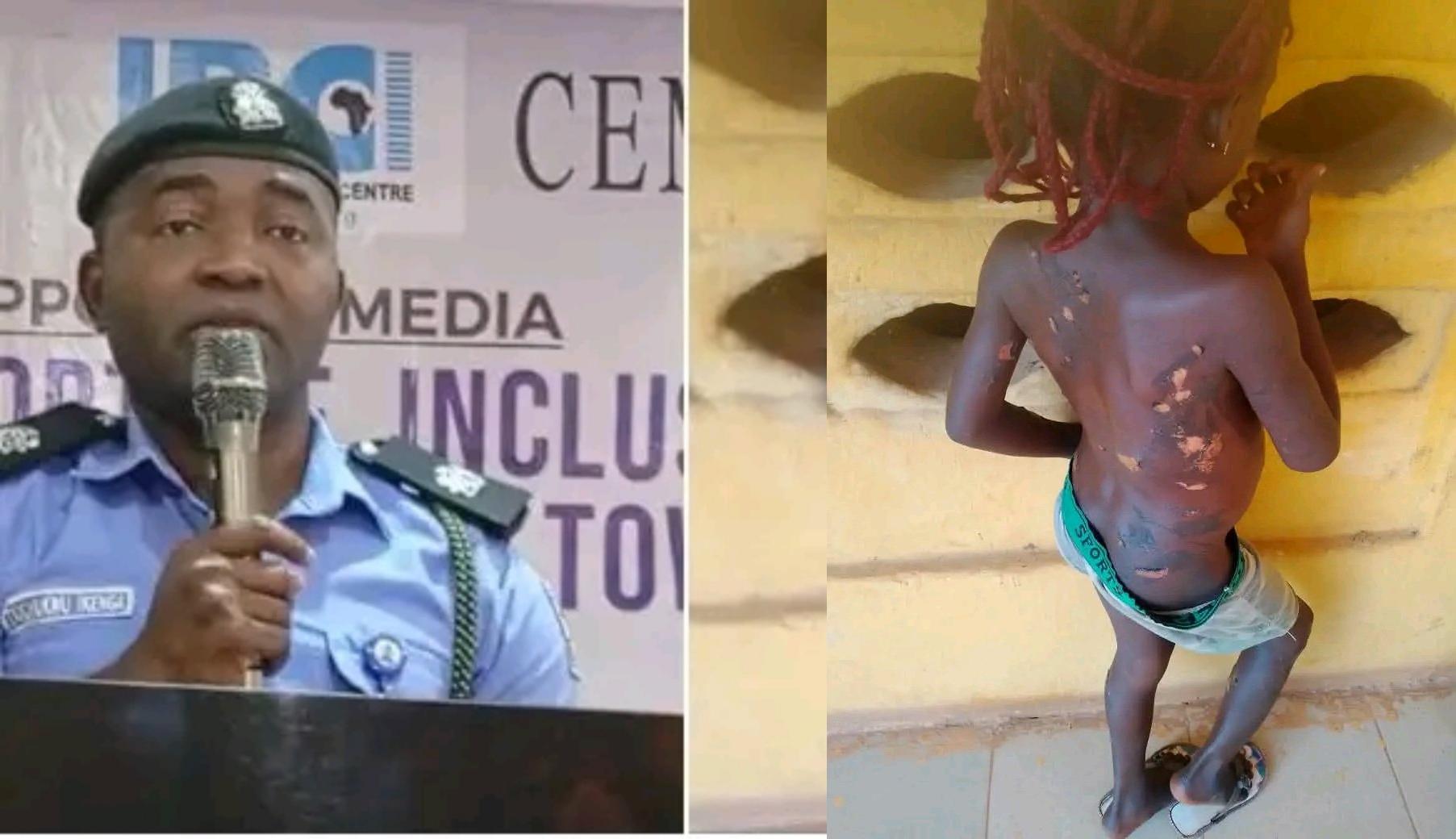
Security operatives in Anambra State have arrested a 32-year-old woman, Ogechi Ofoma, over the alleged brutal abuse of her seven-year-old daughter, Oluebube Ofoma, in Obosi, Idemili North Local Government Area of the state.
The child was rescued on Sunday, September 13, 2026, following the intervention of security personnel from Ibollo Community, Awada-Obosi, and concerned residents, after the alleged abuse was discovered. The Police Public Relations Officer (PPRO) of the Anambra State Police Command, SP Tochukwu Ikenga, disclosed this in a statement issued on Monday, saying the Command received the report the evening before, concerning alleged child abuse and severe bodily injuries involving the seven-year-old girl.
According to the police, preliminary information indicates the child was allegedly subjected to severe physical abuse, including injuries reportedly inflicted with a hot knife, after her mother accused her of taking meat from a cooking pot. Ikenga said the Command strongly condemned the alleged abuse and reaffirmed its resolve to ensure that those responsible are brought to justice. The suspect is currently in custody at the Awada Police Station pending further investigation, following her arrest in collaboration with the Anambra State Ministry of Women Affairs and Social Welfare. Commissioner of Police Nnanna Ama has begun working with the state Commissioner for Women Affairs and Social Welfare to ensure the child receives urgent medical attention, protection, and other welfare support.
A Painful Echo: Another Nigerian Child Nearly Lost to Domestic Abuse This Year
This case is not an isolated one. In January 2026, a child rights group, the Advocates for Children and Vulnerable Persons Network, called on the Lagos State Ministry of Youth and Social Development to urgently intervene for another seven-year-old girl, identified only as Oladunjoye, allegedly brutalised by her biological father and stepmother. That child suffered injuries severe enough to leave her with speech impairment and multiple lacerations, requiring over three months of hospital treatment, with advocates warning she could not safely return to live with her parents.
Cases involving caregivers inflicting burn-related injuries on children over accusations of theft, particularly of food, have also surfaced repeatedly in Nigerian reporting in recent years, suggesting this is not a single tragic aberration but part of a recognisable, recurring pattern of extreme physical punishment escalating into abuse within Nigerian homes.
How Ordinary Discipline Turns Into Torture, and the Lifelong Toll It Takes
Corporal punishment remains widely accepted in many Nigerian households as a normal part of child-rearing, and the line between physical discipline and abuse is not always clearly understood or enforced. In cases like this one, an accusation as minor as a child taking food can, according to the allegations, escalate into severe, deliberate harm, especially in the absence of outside intervention or accountability for a caregiver’s actions behind closed doors.
For a child, the effects of this kind of abuse extend far beyond the physical injuries treated in hospital. Survivors of severe childhood abuse often carry lasting psychological trauma, and in cases like the Lagos precedent, physical injuries alone can affect a child’s speech and development for years afterward. Nationally, cases like this test whether Nigeria’s child protection systems, including state ministries of women affairs and social welfare, can move quickly enough to protect children before harm becomes life-threatening, and whether communities and neighbours are being equipped and encouraged to intervene the way Ibollo Community’s residents did here.
From Rescue to Response: How Authorities Are Handling This Case So Far
This case shows some of what timely intervention can look like: community security personnel and residents acted quickly once the alleged abuse was discovered, the police responded and made an arrest within a day, and state welfare officials were brought in immediately to support the child’s medical care and protection, rather than the matter being left solely to police custody of the suspect.
That said, the case is still in its early stages, with the mother currently held pending further investigation and no formal charges yet publicly confirmed. How the case proceeds through Nigeria’s Child Rights Act and Violence Against Persons (Prohibition) Act framework, and whether the child receives sustained, rather than one-time, welfare support, will determine whether this becomes a model of an effective response or another case where initial urgency fades once media attention moves on.
What It Would Take to Catch Abuse Like This Before a Child Is Nearly Killed
Community-level vigilance clearly worked here, but it depended on residents noticing and acting, rather than on any systematic check that might have caught the abuse earlier. Expanding accessible, well-known reporting channels for suspected child abuse, and public awareness campaigns making clear that severe physical punishment is not discipline but a crime, could help more cases surface before injuries become this serious.
Consistent post-rescue support also matters. Cases like the Lagos precedent, where a child needed months of hospital care and could not safely return home, show that rescue is only the first step; sustained shelter, counselling, and monitoring are often needed long after a case leaves the headlines. Stronger coordination between police, state social welfare ministries, and child rights organisations, formalised beyond individual cases, would help ensure that support continues even after public attention fades.
Our Call for a Child Who Should Never Have Been Harmed This Way
We are relieved that Oluebube was rescued, and we commend the Ibollo Community residents and security personnel whose quick action likely saved her from further harm. Their intervention is exactly the kind of community vigilance that should be recognised and encouraged.
We also believe no accusation, however framed, should ever have led to a child being harmed the way police allege happened here. We hope the investigation moves swiftly and transparently, that the child receives the sustained medical and psychological support she needs, and that this case results in real accountability rather than becoming another headline that fades once the initial outrage passes.
Published by Ejoh Caleb