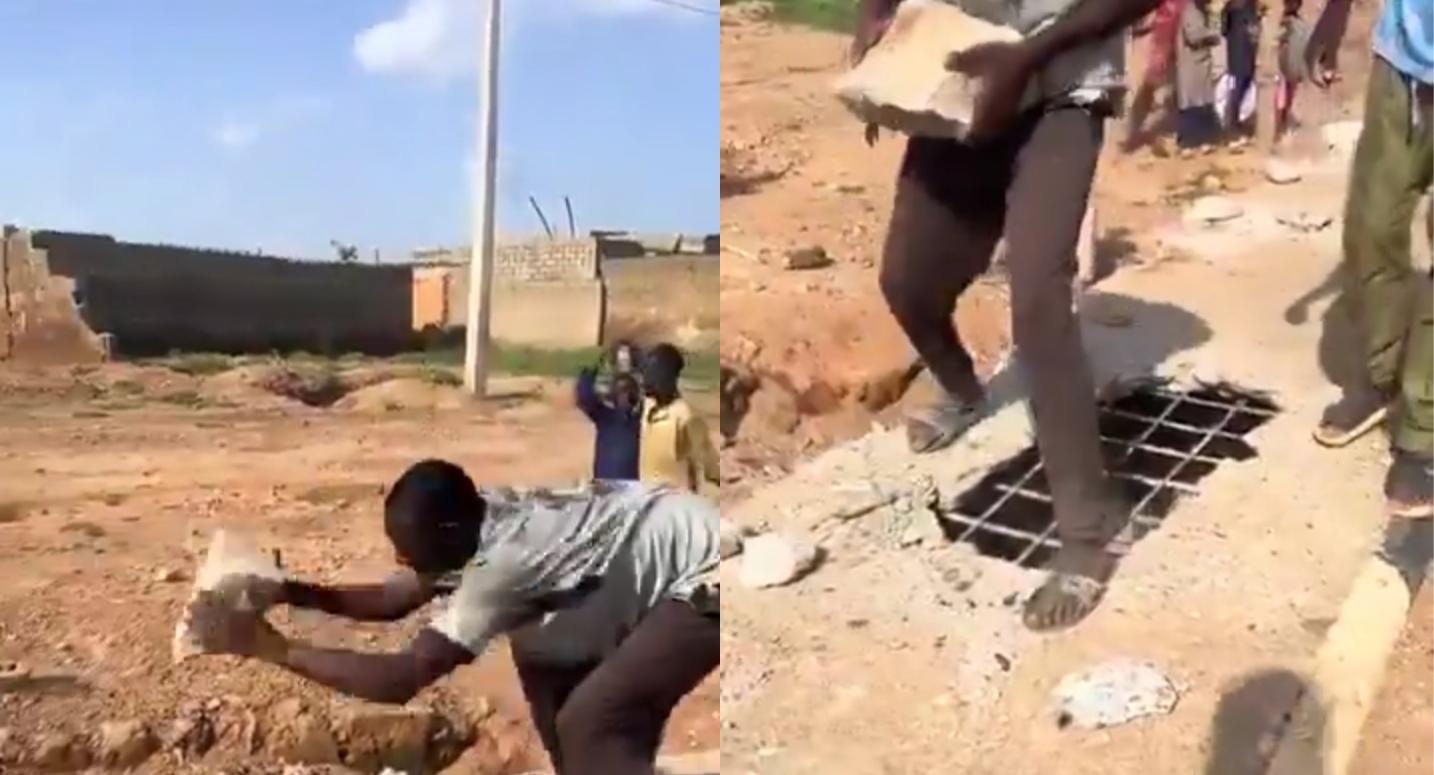
A video circulating online shows youths in Northern Nigeria openly destroying public infrastructure in broad daylight, breaking apart structures to extract iron rods that are then sold as scrap metal.
The footage adds to a growing wave of similar videos exposing how vandals across the country are stripping bridges, railways and other public assets of their metal reinforcement, often working in plain sight with little apparent fear of consequences.
A Northern Nigeria Problem With a National Pattern
This kind of vandalism has become a documented and recurring problem in Northern Nigeria specifically. In May 2026, the Nigeria Security and Civil Defence Corps (NSCDC) arrested 12 suspects in Kaduna State after a viral video showed extensive destruction of the newly laid Kaduna-Kano railway tracks and older rail lines across the region. Investigators said the stolen rail components, along with NNPC pipelines and Water Board installations, were compressed into scrap at a Kaduna facility before being shipped to Aba, Abia State, to be melted down into nails and iron rods.
Just weeks before this latest video surfaced, Kaduna State authorities inspected the Rabah-Rigasa Bridge, connecting Kaduna North to the Igabi Local Government Area, and documented extensive structural damage after vandals systematically stripped the bridge of its metal components. The state government’s works commissioner described the act as economic sabotage and promised a zero-tolerance, multi-agency crackdown on both vandals and the scrap dealers who buy from them.
The problem is not confined to the North. In Lagos, a viral video in August 2026 showed scavengers breaking into the concrete pillars of a bridge linking Alakija to FESTAC Town and removing the embedded reinforcing steel bars, prompting Governor Babajide Sanwo-Olu to order an investigation and the eventual arrest of 27 suspects. In Abuja, police separately arrested 50 suspects in January 2025 over the theft and vandalism of manhole covers and other public infrastructure.
Why This Keeps Happening, and What It Threatens
The driving force behind this vandalism is a straightforward, if dangerous, economic one: unemployed and underemployed young people can earn quick cash by selling scrap metal, and public infrastructure offers a large, often poorly guarded supply of it.
Weak enforcement makes the practice easier to sustain. Researchers who interviewed scrap pickers found that vandals can operate largely without consequence, encouraging the trade to grow rather than shrink over time.
An unregulated scrap metal market also plays a central role, since vandals need buyers willing to purchase stolen rail tracks, bridge reinforcement and pipeline materials without asking hard questions about where they came from.
The immediate danger is structural. Iron rods removed from bridges and railways are not scrap; they are load-bearing components holding up structures that carry vehicles, trains and pedestrians every day. Commentators have warned that a weakened bridge may show no visible sign of danger until it fails altogether.
At the national level, this vandalism has already contributed to fatal consequences. A cargo train derailed near Jaji in Kaduna State after its track sleepers and accessories were vandalised, an incident that killed the train driver. Beyond the direct safety risk, officials describe the wider pattern as a form of economic sabotage, since government must repeatedly spend scarce public funds repairing infrastructure that should only need to be built once.
Possible Ways to Stop the Iron Rod Raids
Tighter regulation of Nigeria’s scrap metal industry, including requiring dealers to verify the source of materials before purchase, could cut off the market that makes stealing structural iron rods profitable in the first place.
Stronger physical security and regular monitoring of vulnerable infrastructure, especially newly built bridges and railway lines, could catch vandalism early, before structural damage becomes severe.
Addressing the underlying unemployment that pushes young people toward vandalism, through skills training or job creation programmes, could reduce how many people see stripping public infrastructure as a viable way to earn a living.
A Warning Buried in Broad Daylight
We think the boldness on display in this video, youths dismantling public infrastructure openly, in daylight, without fear, should worry Nigerians more than the act itself. It suggests those responsible do not expect to be caught or punished, and recent history in Kaduna, Lagos and Abuja shows that fear is often justified.
We also believe this is not simply a crime story; it is a warning about what happens when youth unemployment, weak enforcement and an unregulated scrap trade are allowed to combine. Every arrest announced after a viral video is a response to damage already done. Nigeria needs to get ahead of the next video, not just react to it.
The infrastructure being sold off piece by piece was built to serve everyone. Once it fails, everyone will share the cost.
Published by Ejoh Caleb