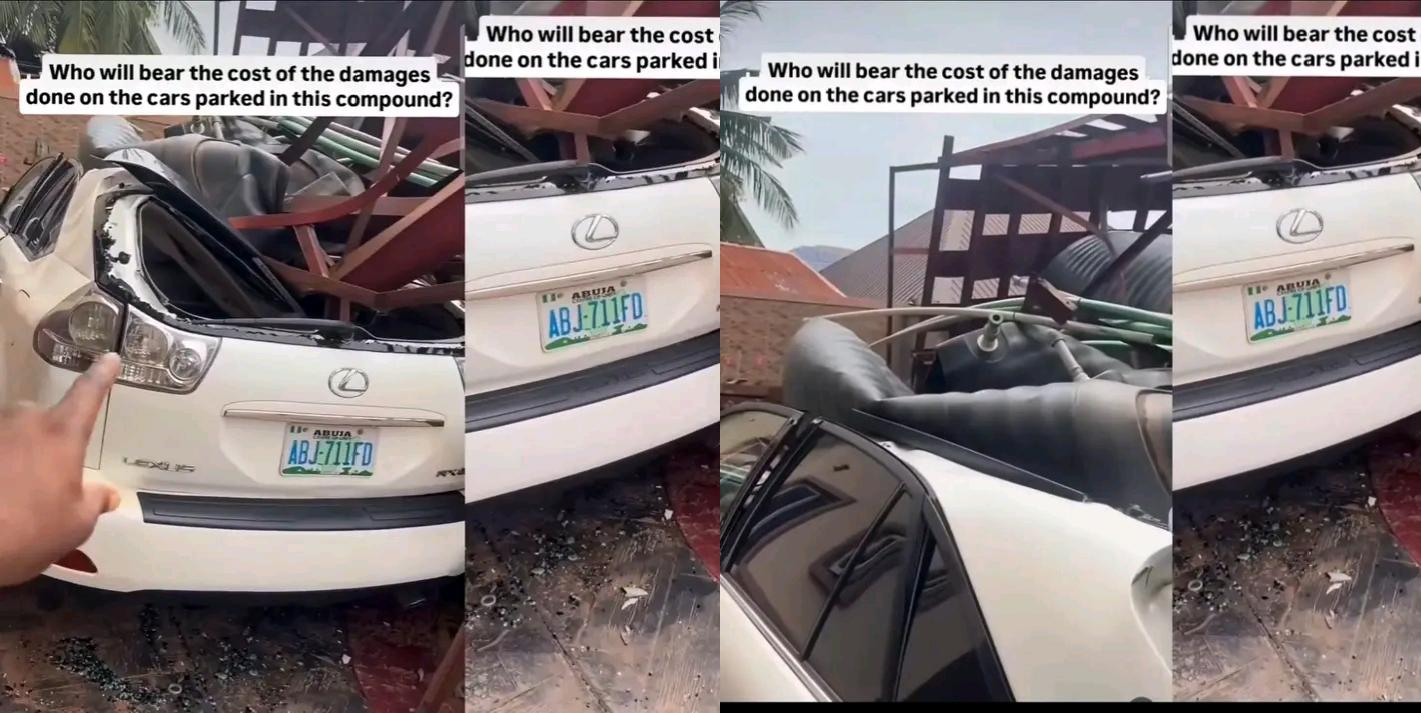
A resident of an apartment compound in Enugu State has cried out after an overhead water tank collapsed and fell on several cars parked inside. The video shows the damage and the resident’s distress.
A separate tragedy earlier this month (the Awgu case)
This is not the same incident as the Nenwenta tragedy in Awgu Local Government Area, which has been widely reported. On September 18, 2026, at about 5:45 a.m., a heavy concrete water tank attached to an uncompleted building collapsed onto a neighbouring bungalow in Umuike-Aja Village. Police confirmed that five members of one family died: a man, his wife, his mother and two of their children. Other reports gave different death tolls, ranging from four to six, so the exact number should be checked.
What followed in the Awgu case (the response and the questions)
The Enugu State Police Command spokesperson, SP Daniel Ndukwe, said the Commissioner of Police, Mamman Giwa, ordered a full investigation. The police detained the owner of the uncompleted building for questioning and warned the public against substandard construction. They urged property owners to hire qualified professionals and follow approved safety standards.
Residents and a local lawmaker blamed heavy rain and a landslide that damaged the base of the tank, and said emergency workers struggled to reach the area because the landslide had cut off the road. We found no report of charges or a court case in that matter, so how it ends is not yet known. It shows that tank collapses are taken seriously by the police when lives are lost, and that causes can be disputed between weather and construction.
What can make a raised tank fall (general causes, not confirmed here)
We do not know what happened in this compound. In general, an overhead tank can fail because the stand or tower is weak or badly built, because the supports have rusted or cracked over time, because the tank was filled beyond what the structure can carry, or because heavy rain, erosion or ground movement has damaged the base. The police in the Awgu case urged owners to use qualified professionals and to follow safety standards, which points to construction quality as a common concern.
Whatever the cause here, parking cars beneath or beside an elevated tank carries risk, and few residents are told how safe the structure is.
Cars crushed, questions of responsibility (effects)
For the car owners, the loss is immediate and costly. Many Nigerian motorists carry only third-party insurance, which may cover damage to other people’s property but not to their own car. Comprehensive cover is different, but we do not know whether any of the owners here have it. Repair or replacement can be a serious blow to a family or a business that depends on a vehicle.
There is also a safety side. The tank could have fallen on people instead of cars. For residents, the shock is also about trust in the building where they live.
At the wider level, the case raises a question about who checks that the structures holding water above our heads are safe, and who pays when they fail.
What affected residents can do (practical steps)
Residents can document the damage with photographs and videos, keep receipts and repair estimates, and write to the landlord or building manager describing what happened. They can report to the police and check the terms of any insurance policy. If the landlord refuses to take responsibility, a lawyer can advise whether a claim is possible. Responsibility depends on the facts, such as who owned and maintained the tank and the tenancy agreement, and we cannot say who is liable here.
Safer buildings and clearer duties (possible solutions)
Landlords and building managers should have tank stands and towers inspected by qualified engineers, repair rust and cracks early, and avoid placing parking directly under elevated tanks. Tenants can ask about inspections before they rent and report visible damage. State building control agencies can step up checks on both new and old buildings, and publish simple guidance for owners. Residents should also be told where it is safe to park.
A warning that came too late for some (our view)
We feel for the resident who is counting the cost, and we are glad if no one was hurt. Cars can be repaired or replaced, but lives cannot. The Awgu tragedy earlier this month shows how much worse a tank collapse can be.
We do not yet know why this tank fell, and we avoid blaming anyone without evidence. But every such incident should lead to an inspection of the structure and a clear answer about responsibility. Landlords, builders and state authorities all have a part to play. If they check supports and follow safety rules now, fewer families will have to cry out later.
Published by Ejoh Caleb