A Nigerian man previously convicted of terrorism-related offences in Scotland has been deported from Ireland to Nigeria, after briefly becoming the first person in the Irish state ever prosecuted for physically obstructing his own deportation.
What happened
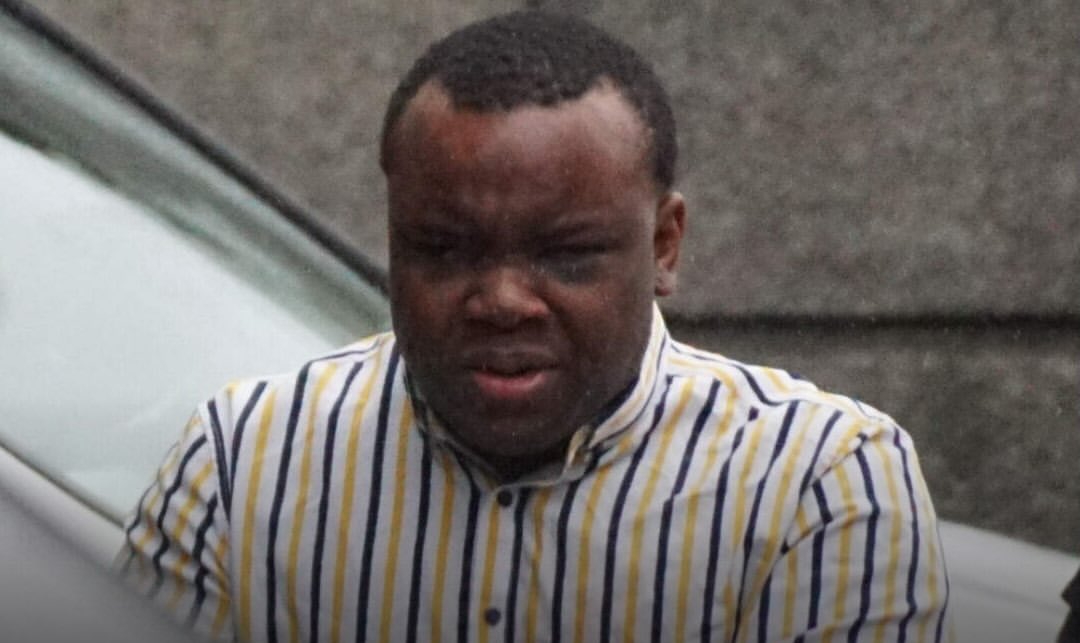
Sam Okwuoha, 28, was among six Nigerian nationals removed from Ireland on a chartered flight that left Dublin Airport at 7:40am on July 28, 2026. The flight landed in Rome just after 10:30am local time, where the group joined a Joint Return Operation run by Frontex, the European Border and Coast Guard Agency, before continuing on to Lagos, arriving around 9pm Irish time. Ireland’s Department of Justice confirmed the men were accompanied by Garda officers, medical staff, an interpreter and an independent human rights observer, and that the operation cost at least €76,895. Five of the six deportees had a combined total of 35 criminal convictions between them.
This was not Ireland’s first attempt to remove Okwuoha. A deportation order had been signed against him in January 2026, but when officers from the Garda National Immigration Bureau (GNIB) tried to carry it out at Dublin Airport on March 6, the removal had to be abandoned because of his resistance. He was subsequently charged in what a GNIB detective described in court as the first-ever prosecution of its kind in the state, and was held in custody, first at Mountjoy and later Cloverhill prison, while the case proceeded.
Throughout the proceedings, Okwuoha maintained that gardaí had the wrong man, insisting he was “one of decuplets” — ten children born from the same pregnancy — and that officers had mistaken him for one of his brothers. The detective leading the case told the court investigators were “100 per cent confident” they had the right person. A judge later ordered a psychiatric report to assess his fitness for trial. In the end, prosecutors withdrew the obstruction charge entirely after confirming Okwuoha had already been deported, before the case reached trial.
Background: a conviction rooted in rejected advances
Okwuoha’s presence on Ireland’s deportation list traces back to a 2023 conviction in Scotland. As a Master’s student in international energy studies at the University of Dundee, he was found guilty on seven charges after a campaign of threats against university staff and students between late 2021 and mid-2022. The court heard the threats began after a female fellow student rejected his romantic advances, and that he then turned his attention to staff who had suspended him from his course.
Emails read at trial included threats to bomb the university on behalf of ISIS, unleash a “deadly virus,” and behead police officers, with one message warning that “9/11 will be a joke compared to what will happen.” He was jailed for 40 months, and sentencing sheriff William Wood told him his presence in the UK was “not conducive to the public good,” ordering his deportation once his sentence was served. Even at sentencing, Okwuoha maintained he had been “forced to stand in for” a brother and was not the person named on the indictment — the same defence he would later raise in Ireland.
Why this case matters beyond one individual
This case sits at the intersection of several issues Ireland, the UK, and Nigeria are all grappling with:
Cross-border enforcement gaps. Okwuoha’s ability to move from a UK deportation order to residence in Ireland highlights how enforcement of one country’s removal order doesn’t automatically prevent someone from relocating within the wider European area.
The cost and complexity of contested removals. A single, resisted deportation attempt led to months of legal proceedings, a psychiatric evaluation, and prolonged detention — all before the person was ultimately removed anyway, on a flight that itself cost tens of thousands of euros.
Nigeria’s growing profile in European removal statistics. This operation was one of several charter deportation flights to Nigeria in 2026 alone, with Irish officials confirming more are planned through the year. Each case adds to broader public debate in Nigeria about how returning nationals, especially those with criminal convictions abroad, are received and monitored.
Unusual legal defences testing new laws. Okwuoha’s prosecution was Ireland’s first attempt to enforce the specific obstruction provision used against him, and its withdrawal after his removal leaves untested how future similar cases might be handled.
What happens from here
Reintegration and monitoring on return. Nigerian authorities generally do not routinely publicise how convicted deportees are received, tracked, or supported on arrival, an area often raised by policy analysts as needing more transparency.
Clarity on obstruction charges. Since the case never reached trial, Irish courts still lack a tested precedent on how “obstruction of deportation” charges should be handled when resistance takes unconventional forms.
Continued scrutiny of the cost of enforcement. With Irish deportation numbers rising sharply, questions about the cost-effectiveness of charter operations versus commercial removals are likely to keep surfacing in public debate.
A costly, drawn-out ending to a case that began with a lie about love
I think what stands out most about this story isn’t the “decuplet” defence, memorable as it is — it’s how far a single case can stretch once someone is determined to resist the system rather than work within it. Okwuoha’s threats in Dundee were serious enough to warrant real prison time and a deportation order on their own. What followed in Ireland was almost a separate saga: months in custody, a psychiatric evaluation, a legal first for the state, and ultimately a very expensive flight that achieved what could have happened months earlier. If there’s a lesson in the cost and chaos of this case, it’s that resisting removal rarely changes the outcome — it just makes the process longer and more expensive for everyone involved.
Published by Ejoh Caleb