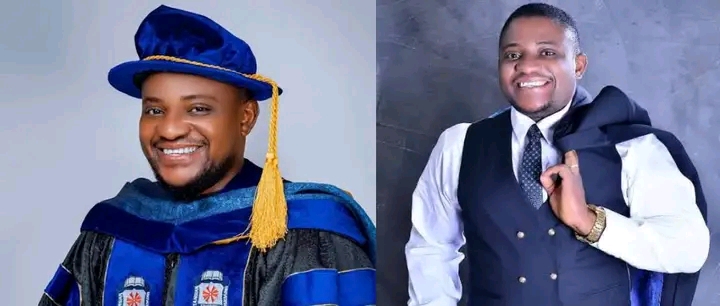
The management of Abia State University (ABSU) has suspended a lecturer in the Department of Economics, Faculty of Economics and Management Sciences, Professor Nnamdi Nwaeze, with immediate effect.
The suspension followed posts Nwaeze made on his Facebook page, in which he alleged that some professors at the university earn less than ₦400,000 monthly. He also claimed that the cumulative earnings of some commercial tricycle operators, popularly known as Keke riders, were higher than the salaries some professors at the institution take home.
Reacting to the posts, ABSU management said Nwaeze’s comments were “inimical to the interests of the institution.” The suspension statement was signed by Chijioke Nwogu, the university’s Public Relations Officer and Deputy Registrar, who said an investigative panel has been constituted to examine the matter further.
Nwaeze, a Professor of Development Economics, previously served as Director of ABSU’s Information and Communication Services (ICS) unit for five years before stepping down from that role earlier in 2026. He has not yet publicly responded to the suspension.
A Claim That Isn’t as Far-Fetched as It Sounds
Nwaeze’s specific figure is not out of line with what Nigeria’s own academic union has said about professorial pay nationally. ASUU President Emmanuel Osodeke revealed in 2024 that he personally earns ₦420,000 per month despite being a professor for 15 years, and argued that Nigerian lecturers cannot compete globally without better pay. Osodeke also disclosed that 84 ASUU members died between May and August 2024 alone, attributing the deaths to economic hardship and unpaid salaries, including lingering arrears tied to the union’s 2022 strike.
ABSU’s own staff have a documented history of salary difficulties. During the 2022 ASUU national strike, the university’s staff salary arrears reportedly stretched to several months, with the university’s revenue structure, reliant heavily on internally generated funds rather than steady government subvention, cited as a core reason salaries could not always be paid on schedule.
Nigerian Academics Have Faced Suspension Over What They Said Before
Nwaeze’s suspension is not without precedent. Nigerian lecturers have previously faced serious institutional consequences specifically over public remarks and commentary, not just misconduct in the classroom.
The clearest parallel involves Augustine Nwagbara, a Nigerian professor of English who was on a visiting sabbatical at the University of Education, Winneba, in Ghana. In 2019, a video went viral showing Nwagbara making comments the Ghanaian university described as “unsavoury, unethical and damning” about the country and its education system, and urging a group of people to use Nigerian media to reshape reporting about Nigerians living in Ghana. The university dismissed him within days of the video surfacing, saying his remarks were “full of factual inaccuracies,” and Ghanaian police went further, arresting him on suspicion of inciting the Nigerian community against Ghana, before he was granted bail. Nwagbara maintained the video was a private discussion mischaracterised by the media, not a public condemnation of Ghana, and the University of Lagos chapter of ASUU publicly condemned his dismissal and called for his safety. He later said the ordeal left him unwilling to ever return to Ghana.
A starker, longer-running case is that of Inih Ebong, an associate professor in the Department of Theatre Arts at the University of Uyo, whose appointment was terminated in 2002. Ebong’s dismissal followed a running battle with the university’s then vice-chancellor and registrar, who reportedly saw him as “a thorn in their flesh” for speaking up regularly against alleged maladministration and corruption at the institution. The university went further than dismissal alone, publishing a public disclaimer against him in national newspapers shortly after his sack, apparently to discourage other institutions from hiring him. Despite winning a string of legal victories, including National Industrial Court and Court of Appeal rulings ordering his reinstatement, four successive vice-chancellors refused to comply. Ebong, weighed down by illness including a cardiac failure diagnosis, spent over two decades fighting for reinstatement before he died still pursuing the case.
ABSU itself has also acted against staff on other grounds in recent months. In May 2026, the university suspended a senior lecturer in its Department of Mass Communication, Kingsley Izuogu, over allegations of extortion, harassment of students, and credential forgery, allegations Izuogu has denied. That case, unlike Nwaeze’s, centred on alleged misconduct toward students rather than public remarks, but it shows ABSU management has been willing to suspend senior academics on short notice more than once this year.
Together, these cases suggest that while Nigerian universities do act against misconduct of various kinds, the Nwagbara and Ebong cases in particular show that public commentary seen as damaging to an institution’s reputation, whether about a foreign host country or the institution’s own governance, has repeatedly drawn some of the harshest and most consequential responses, sometimes disproportionate to any actual harm caused by the remarks themselves.
Why a Case Like This Resonates
The pay disparity claim taps into a well-documented grievance. Nwaeze’s specific comparison, professors earning less than commercial tricycle riders, is a vivid illustration of a funding crisis Nigerian academic unions have been raising publicly for years, which is part of why it appears to have struck a nerve with university management.
Institutions often prioritise reputational control over public debate. ABSU’s characterisation of the post as “inimical to the interests of the institution” suggests the university’s concern was less about factual accuracy and more about the reputational impact of a professor publicly airing internal pay grievances.
Suspension can chill wider institutional criticism. When academics see a colleague suspended for a social media post about pay, even one grounded in a widely acknowledged national problem, it can discourage others from speaking publicly about legitimate concerns.
Nigerian courts have previously sided with sanctioned academics. As the Ebong case shows, institutional discipline against a critical lecturer does not always hold up under judicial scrutiny, though enforcement of favourable rulings has proven to be its own separate battle.
The effects of this suspension are likely to be felt beyond Nwaeze himself.
For ABSU academic staff, the suspension may send a chilling signal about the risks of publicly discussing pay and welfare conditions, potentially discouraging colleagues from raising similar concerns even through official union channels.
For public understanding of academic pay, cases like this, however they are resolved, keep pressure on the broader national conversation about how Nigeria compensates its university lecturers relative to the qualifications and responsibilities the role demands.
For ABSU’s institutional reputation, a suspension over a pay-related social media post is likely to draw scrutiny of its own, given how closely it touches on issues, underfunding and salary shortfalls, that the wider Nigerian university system is already grappling with publicly.
What Might Help Going Forward
A transparent, timely investigative process. Since ABSU says a panel has been set up, publishing the panel’s findings and reasoning once concluded would help the public assess whether the suspension was proportionate to the conduct in question.
Clearer institutional guidelines on public commentary. Universities could benefit from clearly communicated policies distinguishing legitimate public interest commentary on pay and welfare from conduct that genuinely damages institutional interests, so staff know where the line sits before, not after, a suspension.
Channels for airing pay grievances without reputational risk. Strengthening internal or union-based channels for staff to raise concerns about compensation could reduce the pressure that leads academics to air grievances on public platforms in the first place.
National movement on the underlying pay issue. Since Nwaeze’s claim echoes ASUU’s own repeated statements about professorial pay, continued pressure for the implementation of agreed salary structures may do more to resolve the underlying tension than disciplinary action against individual academics.
Where We Land
We think it’s hard to look at this suspension without noticing that the number at its centre, professors earning under ₦400,000 a month, is not some outlandish claim invented by Nwaeze. It is close to what ASUU’s own national president has said about his own pay. That doesn’t necessarily mean Nwaeze’s post was the ideal way to raise the issue, universities can reasonably expect some care from senior staff members speaking publicly about internal matters, but it does mean ABSU’s swift suspension risks looking like an institution more concerned with managing its image than reckoning with a funding crisis it, and Nigerian public universities generally, have struggled to solve for years.
The Inih Ebong case is a sobering reminder of how badly these situations can end for the academic involved when an institution digs in. We hope ABSU’s investigative panel treats this with more proportion, and more attention to the substance of what Nwaeze actually said, than that history suggests is guaranteed.
Published by Ejoh Caleb