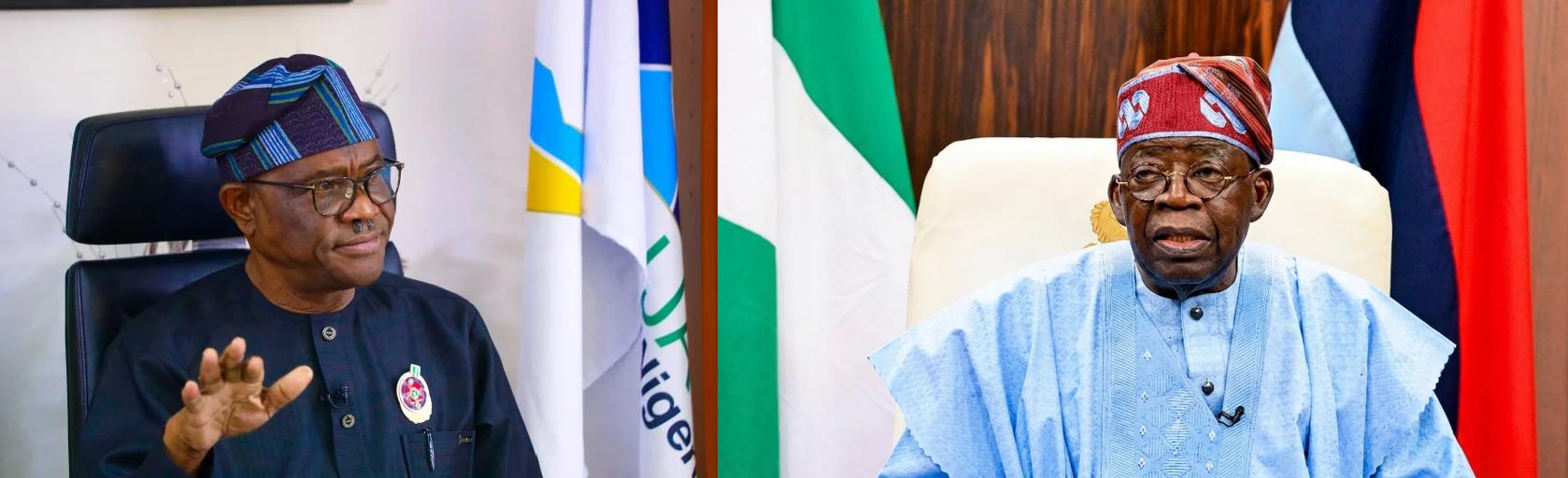
The Minister of the Federal Capital Territory (FCT), Nyesom Wike, has declared that the opposition stands no chance of defeating President Bola Tinubu in the 2027 presidential election. Speaking directly to former Vice President Atiku Abubakar and former Labour Party candidate Peter Obi, Wike said they “should just start crying” because no opposition can win against Tinubu in 2027.
Wike made the comments while addressing journalists, describing the current opposition as “depleted” — and even claimed credit for weakening it. “Maybe one day when they put their acts together… but not this depleted opposition that I have helped to deplete,” he said.
The remarks build on comments Wike made earlier this week, in which he described the opposition as “crippled and depleted” and predicted that 2027 would be Tinubu’s easiest election yet. He argued that removing a sitting government requires “a strong, vibrant opposition that has spent over four years planning,” which he says the current opposition lacks. He also dismissed claims that opposition parties won recent governorship elections despite the federal government’s interference, saying critics “don’t know what a federal might is.”
Why Wike Is Attacking the People He Used to Fight Alongside
Wike’s confidence did not come from nowhere. He was one of five PDP governors — known as the “G5” — who refused to support Atiku’s 2023 presidential bid after falling out with him and the party leadership. That decision is widely believed to have cost the PDP votes in key states and helped Tinubu win the presidency. Since then, Wike has remained in the PDP on paper while working openly to help Tinubu’s re-election, even as opposition parties accuse him of being sent to destroy the PDP from within.
This is not the first time a ruling party or its allies have sounded this certain about victory before Nigerians voted otherwise. Ahead of the 2015 election, many in the PDP and its allies were confident that President Goodluck Jonathan could not lose, given the party’s 16-year hold on power and control of federal resources. One well-known forecast even predicted a Jonathan landslide. Jonathan lost to Muhammadu Buhari of the APC, ending PDP’s dominance and forcing the party to admit the result was an “unprecedented setback.” It is a reminder that confidence from the ruling party does not always match what happens at the ballot box.
Wike himself has repeatedly predicted opposition defeat before. He has told Atiku directly that he has “no prospects” of becoming a presidential candidate again, and has dismissed the emerging opposition coalition led by the African Democratic Congress (ADC) as lacking real support among Nigerians.
What Is Driving the Opposition’s Weakness, and Who Feels the Effects
Several factors explain why Wike feels free to speak this way. The PDP has been in open crisis since 2023, with senior members defecting and internal fights over who should lead the party into 2027. At the same time, Atiku and Obi — the two biggest opposition figures — have struggled to agree on a single platform, with tension flaring between their supporters over who should fly the flag for the ADC coalition. Without one strong, united party or candidate, opposition votes risk being split the way they were in 2023.
For the political class, the effect is a widening gap between the ruling APC and an opposition that spends more time fighting itself than challenging government policy. Opposition figures have pushed back hard on Wike’s comments, accusing him of acting as the president’s “hatchet man” working to dismantle rival parties.
For Nigeria as a country, the stakes are bigger than one minister’s taunts. A weak, disorganised opposition makes it harder to hold any government accountable between elections, since ruling parties face less pressure to perform when they believe victory is already guaranteed. It also risks damaging public trust in the fairness of elections: when opposition supporters believe the contest is already decided by “federal might” rather than votes, some may simply stop participating, which weakens democracy for everyone. President Tinubu himself has had to publicly defend the Independent National Electoral Commission (INEC — Nigeria’s election body) as neutral, after opposition figures raised doubts about whether 2027 can be free and fair.
Can Nigeria’s Opposition Turn Things Around Before 2027?
Political analysts and opposition figures themselves have pointed to what would need to change. Atiku has urged the ADC coalition to build a genuinely “potent” and united front rather than a loose alliance of individuals with competing ambitions. Resolving the leadership tension between Atiku and Obi — rather than letting their supporters clash publicly — is widely seen as a first step toward presenting one credible challenger instead of splitting the anti-APC vote.
Beyond the opposition’s own house, Nigeria’s democracy would also benefit from INEC and security agencies being seen to act neutrally, so that election outcomes are decided by votes rather than disputes over “federal might.” Civil society groups and election observers have consistently called for this kind of visible neutrality as a way to rebuild public confidence in the electoral process regardless of which party is in power.
Reading Between the Lines
We think Wike’s “start crying” comment says more about the ruling party’s political strategy than it does about what will actually happen in 2027. Confident predictions from those in power are not new in Nigerian politics, and history — including the PDP’s own loss in 2015 — shows they do not always hold up. What should worry Nigerians more than Wike’s taunts is the state of the opposition itself: a coalition still arguing over who should lead it, more than a year to go before the polls. Until Atiku, Obi and other opposition figures resolve that question, Wike’s confidence may keep looking justified — not because Tinubu cannot be beaten, but because no one has yet built a campaign strong enough to test that claim.
Published by Ejoh Caleb