
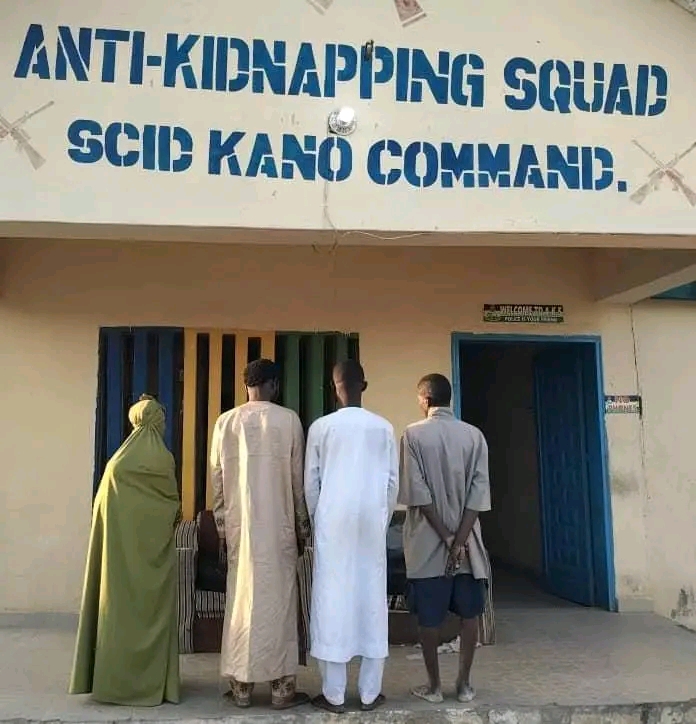
The Kano State Police Command has arrested a 20-year-old woman, Hajiya Rukayya Auwal, and three other suspects over the alleged abduction and murder of a 14-year-old boy, Mahmoud Auwal. Police say she is the co-wife of the boy’s mother. They allege that she planned to remove her husband’s four children from his other wife, so that her only son would inherit his father’s property. Police spokesman CSP Abdullahi Haruna Kiyawa announced this on Tuesday, November 17, 2026. None of the suspects has been convicted, and a court has not yet heard the case.
What Police Say Happened and What Has Not Been Tested in Court
According to the police statement, the boy’s mother reported his abduction on April 29, 2026, from Sheka Quarters in Kano. The Anti-Kidnapping Squad took up the case. On November 3, officers arrested the first suspect, Muhammad Musa Isma’il, aged 20. Police say he confessed to luring the boy on April 20, and he named Abubakar Muhammad Isah, 27, and Auwal Muhammad, 26, as accomplices. Police say the three men admitted that they conspired to kill the boy and left his body, which officers later recovered.
Police say further investigation pointed to Ms Auwal, described as living in Mararaba, Nasarawa State, as the alleged mastermind. A separate statement from police headquarters says she paid the men ₦4.5 million. Police also allege that she hired others to attack Mr Isma’il in Mararaba, to stop him from talking about the crime. The Commissioner of Police, Ibrahim Adamu Bakori, condemned the killing and promised the family that justice would be done.
A confession made to police is not the same as a conviction. A court must decide whether it was freely given and whether other evidence supports it. We have not heard from Ms Auwal or her lawyer. The gap between the April 20 date and the April 29 report is not explained in the reports.
Earlier Cases Show How Courts Test Evidence in Child and Family Killings
Kano has dealt with child murders before. In December 2021, five-year-old Hanifa Abubakar was abducted by the proprietor of her school. He confessed to police in January 2022. In July 2022 the Kano High Court sentenced him and an accomplice to death, and in late 2025 the Court of Appeal upheld the sentence. That case shows how a police confession was followed by a full trial and appeals. It is not the same as this case.
Disputes within polygamous households have also reached courts and police stations. In May 2025, Kaduna police arrested a woman over the death of her co-wife’s three-month-old son. In January 2026, a Kano High Court discharged and acquitted a woman charged with murdering her co-wife. That acquittal is a reminder that arrest is not guilt. A Kano police report also described the arrest of a nephew and three others over the killing of a woman and six children in an alleged inheritance plot. We could not confirm its date or outcome. These cases are different from each other. Most families, polygamous or not, live without such violence.
Property, Fear and Weak Safeguards: What Can Turn a Family Dispute Deadly
If the police account is true, the alleged motive was property. Inheritance can bring out bitter rivalry when people believe that one child, or one branch of a family, will lose out. A dispute becomes more dangerous when a person decides to remove others rather than argue the case in court or before elders.
Other factors may also matter. Hired helpers can make a crime easier to carry out and harder to trace. Delays in missing-child investigations can leave families waiting for months, as seems to have happened here. Police said it took until November to arrest the first suspect, about seven months after the report. We do not know why, and we make no claim about the police’s conduct.
The Wider Cost to Children, Families and Public Trust
A child’s death is the greatest loss. A mother has lost her son, and three other children may have been at risk. The family now faces a second shock, because the person accused is part of it. Court proceedings could also split relatives further.
The case matters beyond one household. Parents across the country worry about child safety, and cases of abduction and hired killings deepen that fear. Police praised for solving a months-old case raise public hope. Delays in other cases reduce trust in the system. Families need to know that inheritance disputes can be settled lawfully.
Protecting Children and Respecting Rights: Weighing Public Anger Against Due Process
The public is understandably angry. Supporters of firm action say that people who plot to kill children must face the full law. They also say tough, public follow-up would help deter similar crimes.
But due process matters most in serious cases. Ms Auwal is a young woman accused of an extreme crime, and she is entitled to a fair trial with legal help. We should avoid sweeping claims about co-wives, polygamy or women, because the case concerns specific people and specific evidence. Children in all family types also need protection, including the other children police say were targeted. Care should be taken so that those children are not harmed again by public attention.
Practical Steps for Safer Homes and Faster Justice
Police can share the facts they are able to, and the prosecution can bring the case to court without delay. The surviving children should get protection and counselling. Families can keep clear records of property, and parents can write wills that follow the law. Elders and religious leaders can help settle inheritance questions before they turn into conflict.
Authorities can also improve how missing-child reports are handled, with quick searches and good records. The public can help by giving police accurate information and by avoiding rumours. Anyone who knows of a plot to harm a child should report it at once.
Justice for a Child Must Be Fair, Thorough and Free From Hate
We grieve with Mahmoud’s family. A 14-year-old boy has died, and that is a loss no explanation can ease.
We also want justice that holds up. The suspects are accused, not convicted. We hope the courts will examine the evidence carefully, and that the truth will be told in full. A fair process is the best honour we can give to a child who cannot speak for himself. It is also the best protection for other children in our homes and communities.
Published by Ejoh Caleb