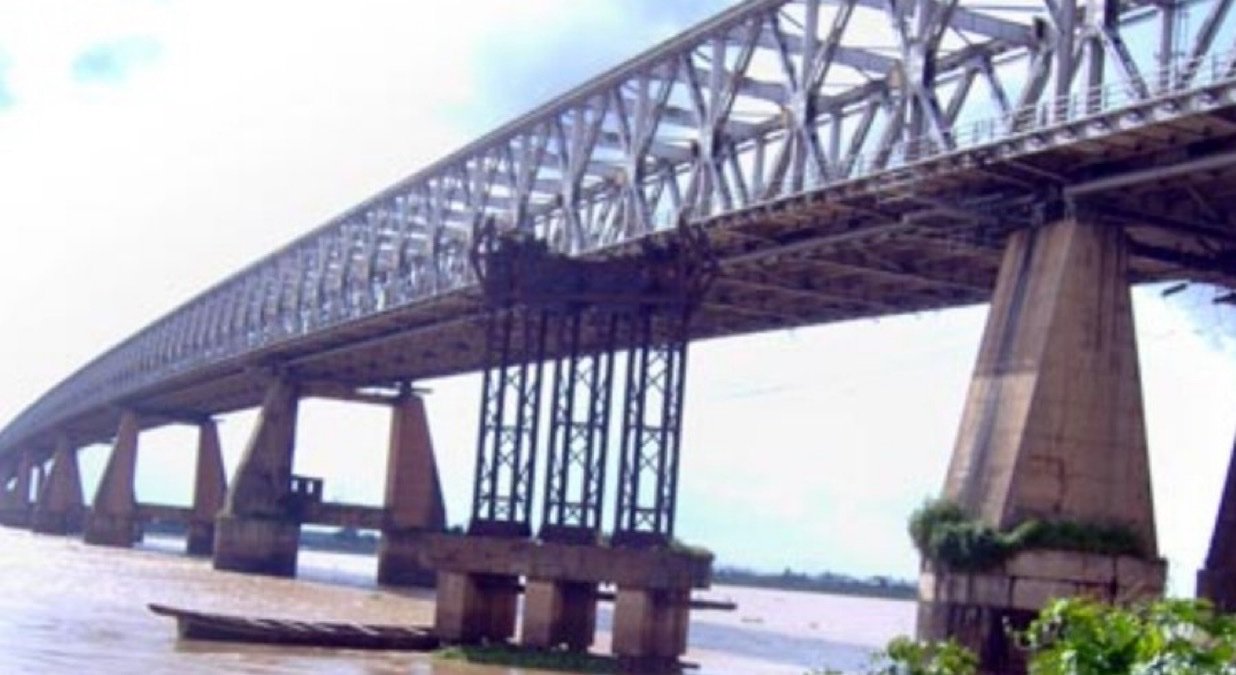
The First Niger Bridge in Onitsha, Anambra State, will be completely closed to traffic from Monday, September 7, 2026, until Monday, September 21, 2026, to allow emergency repairs. The bridge links Anambra State to Delta State and is one of only two road crossings over the River Niger in that corridor.
The announcement came from the Federal Ministry of Works’ Anambra State Field Headquarters. In a statement signed by the Acting Federal Controller of Works, Timothy Emenike, the ministry said the closure was necessary because of the deteriorated condition of the bridge’s carriageway surface and damage to parts of the bridge caused by vandalism, including missing expansion-joint steelwork and stolen nuts and bolts.
During his working visit to Anambra State, Minister of Works David Umahi reportedly inspected the bridge and found sections where vandals had stripped away bolts and iron rods, then ordered emergency repairs to begin immediately. The contractor handling the wider Onitsha–Enugu road project, Messrs SKECC, has been directed to carry out the work, which includes milling off the damaged asphalt and laying a new road surface, alongside installing solar-powered streetlights and CCTV cameras to help deter further theft.
Motorists travelling between Anambra and Delta States have been directed to use the Second Niger Bridge, through Obosi towards Asaba, for the full two weeks. The ministry said traffic diversion signs, safety barriers, and traffic-control personnel would be deployed to guide road users, and it apologised for the inconvenience the closure will cause businesses and travellers.
A Bridge Worn Down by Age and by Theft
The First Niger Bridge is not just any road crossing. It was built in the mid-1960s and has carried traders, families, and heavy trucks between Onitsha and Asaba for 60 years. Minister Umahi did not hide his frustration during his inspection, describing the theft of the bridge’s steel components as a national problem rather than a party-political one.
This kind of damage has a troubling precedent elsewhere in Nigeria. Lagos’s Third Mainland Bridge, the country’s busiest, has been closed for repairs multiple times since 2018, partly because of ageing structures and partly because of vandalism, with items like LED road lights, railings, and solar lights repeatedly stolen even after fresh repairs were completed. Even the much newer Second Niger Bridge, the very route motorists are now being told to use, was reportedly stripped of some of its metal expansion joints, railings, and other fittings soon after it was commissioned.
Why This Keeps Happening, and What It Costs Nigeria
At the centre of these repeated repairs is a simple but stubborn problem: scrap metal theft. Investigations into similar cases suggest that scavengers strip bolts, rails, and steel components from public infrastructure to sell as scrap, often working at night with little fear of being caught. Weak monitoring of bridges after dark, combined with a ready market for stolen metal, makes ageing but essential structures like the First Niger Bridge an easy target.
For traders and travellers in Onitsha, one of West Africa’s biggest commercial hubs, and for commuters heading to Asaba and beyond, the two-week closure means longer journeys, higher transport costs, and likely traffic congestion on the Second Niger Bridge as it absorbs extra vehicles it wasn’t built to carry alone. For Nigeria as a whole, the pattern points to a bigger, more expensive problem: money spent fixing infrastructure that keeps getting damaged again by the same kind of theft, whether on a 60-year-old bridge in Anambra or a newly repaired bridge in Lagos. Every naira spent repeatedly repairing what has already been repaired is a naira not spent building new roads, schools, or hospitals, and each new closure chips away further at public confidence that government investment in infrastructure will actually last.
What Could Help Protect Nigeria’s Bridges Going Forward
Round-the-clock surveillance, using the CCTV cameras and solar lighting now planned for the First Niger Bridge, could make it harder for vandals to operate undetected, the way similar patrols have helped, at least partially, on Lagos’s Third Mainland Bridge. Regulating the scrap metal trade, so buyers are required to verify where metal comes from before purchasing it, would remove much of the financial incentive that drives this theft in the first place.
Faster, routine inspection schedules, rather than repairs that only follow a ministerial visit or a public outcry, could catch damage before it grows serious enough to require a full bridge closure. Community involvement matters too: residents and traders who rely on a bridge daily are often the first to notice when parts go missing, and clear channels for reporting such activity to security agencies could help catch vandals earlier.
Our Closing Thought on This
We see this closure as a necessary short-term inconvenience for a longer-term problem Nigeria has not fully solved. Repairing the First Niger Bridge now is the right call, but if the same pattern that has played out on the Third Mainland Bridge and even the newer Second Niger Bridge repeats itself here, this will not be the last time this crossing shuts down. Protecting the surveillance equipment and new asphalt going in now will matter just as much as installing them in the first place. For a bridge that has carried Nigerians across the Niger for six decades, we hope this repair marks a turning point, not just another pause before the next round of theft and disrepair.
Published by Ejoh Caleb