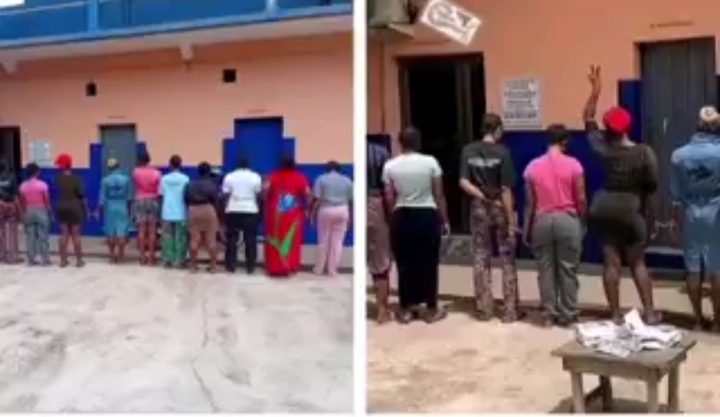
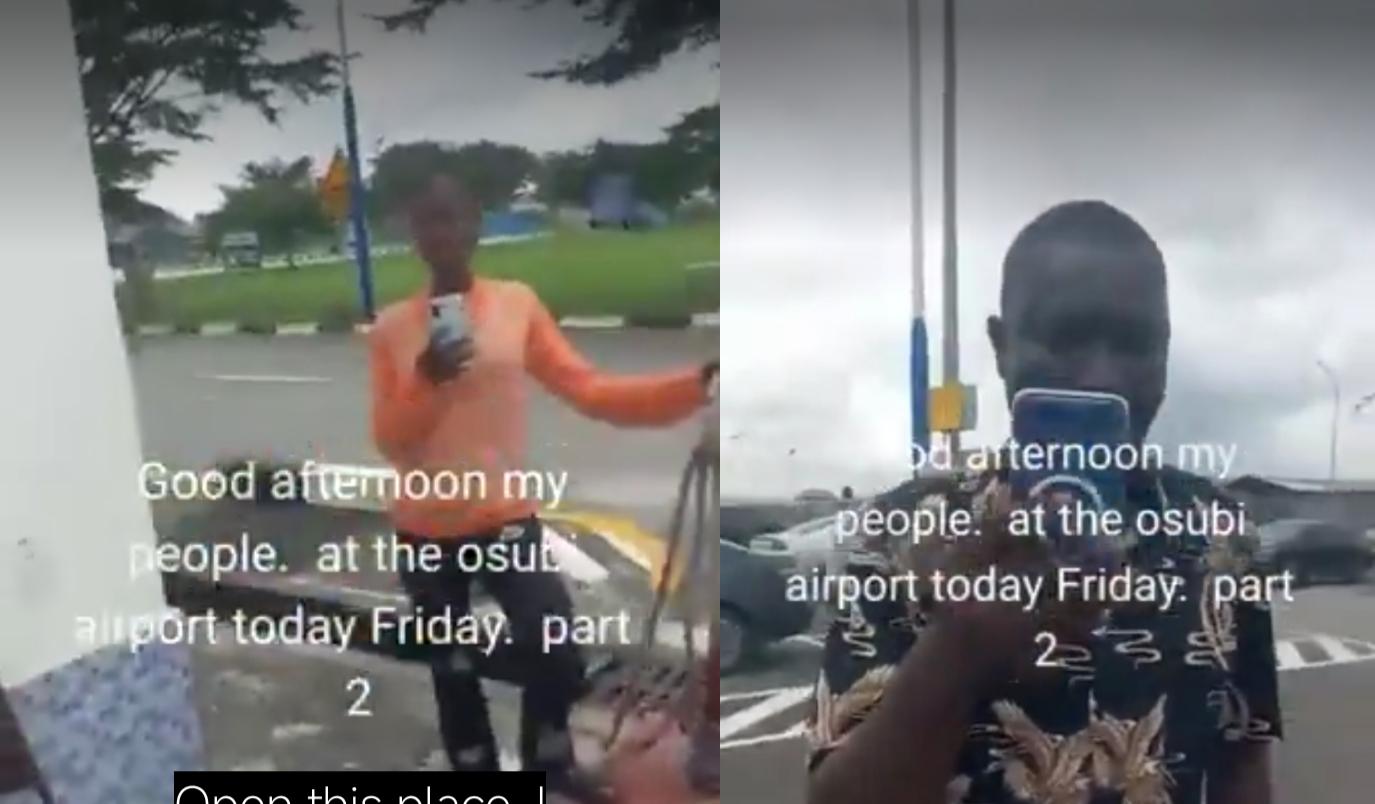
A traveller has accused security guards at Osubi Airport in Warri, Delta State, of locking an exit route and demanding a departure fee from him after he had already paid to enter the airport.
“I already paid ₦700 to enter, now they’re asking me to pay another ₦300 to leave,” the man said in a video blasting the security personnel over what he described as extortion.
Not Osubi Airport’s First Recent Controversy
This is not the first time Osubi Airport has drawn public criticism in recent weeks. Just days earlier, a passenger named Progress Oberiko went viral after a confrontation with Aviation Security (AVSEC) personnel over canned milk and fish products in her luggage during a manual search. She said she had travelled with the same items from Abuja to Osubi without any issue, and accused officials of creating “the worst airport experience” of her life.
Oberiko also said members of her own family had faced similar treatment at the airport before, including officials allegedly demanding money before letting them travel with items initially declared prohibited. The Federal Airports Authority of Nigeria (FAAN) said it had launched an investigation into that incident, with its Managing Director ordering officials to establish the facts.
A Wider Pattern Across Nigerian Airports
These incidents fit into a broader pattern of complaints against aviation security officials nationwide. In March, the Independent Corrupt Practices and Other Related Offences Commission announced plans to prosecute five security personnel accused of accepting bribes to interfere with a security operation at Nnamdi Azikiwe International Airport in Abuja. Months later, the Economic and Financial Crimes Commission arrested an aviation security officer at Mallam Aminu Kano International Airport over an alleged attempt to smuggle gold bars worth more than ₦4.4 billion out of the country.
Frequent travellers have also pointed to a lack of consistency across Nigerian airports as part of the problem, noting that items or fees accepted at one airport are sometimes rejected or demanded at another, leaving passengers unsure of what to expect and vulnerable to arbitrary decisions.
Why These Disputes Keep Happening (Causes and Effects)
A few patterns stand out across these repeated airport confrontations.
First, there is no clear, publicly available fee schedule that passengers can check before arriving, whether for entry, exit, parking, or other airport-related charges. This makes it hard for a traveller to know whether a demand for payment is legitimate or not, which creates room for confusion and, allegedly, exploitation.
Second, accountability tends to end at the announcement stage. FAAN has repeatedly promised investigations after viral incidents, but as with the Osubi luggage dispute and others before it, the outcomes of these investigations are rarely made public, leaving passengers with no way to know whether anyone was actually held responsible.
Third, this affects more than the individuals involved in each incident. For Nigeria as a country, a pattern of unresolved airport confrontations damages the experience of both domestic and international travellers passing through regional airports, and undercuts government efforts to grow air travel and investment in states like Delta.
Possible Solutions
Clear, posted fee schedules at every airport entrance and exit. A visible, standard list of any legitimate charges would remove ambiguity and make it obvious when a demand falls outside the rules.
A single national complaints and outcomes portal. Instead of relying on individual viral videos to trigger a response, FAAN could operate a public system where passengers report incidents and can later see the outcome of the investigation.
Independent audits of airport revenue collection. Where entry or exit fees exist, an independent audit process could confirm the money reaches official accounts rather than individual officials.
Mandatory identification and recording for security personnel on duty. Visible ID badges and routine bodycam use at entry and exit points would make it easier to resolve disputes over what was actually said or demanded.
The Bigger Picture
What ties this incident to the one before it at the same airport is not just the location, but the pattern: a traveller alleges mistreatment, the video goes viral, and an investigation is promised, then the story usually ends there. Whether or not this specific ₦300 demand turns out to be legitimate, the fact that a passenger felt locked in and unsure whether he was being extorted says something about how little clarity Nigerian airports currently offer the public. FAAN’s investigations will only start rebuilding trust when travellers can see what happens after the cameras stop rolling.
Published by Ejoh Caleb