By Ejoh Caleb | Visiotalks
Published: November 23, 2026
Key Takeaways
- FCT Minister Nyesom Wike says denying President Tinubu a second term could undermine the progress of his economic reforms.
- He spoke on Sunday, November 22, at a thanksgiving and dedication service for the Rainbow Coalition campaign council in Rivers State.
- He announced a ₦100 million donation to the church and asked religious leaders to pray for the coalition.
- Official data show inflation falling, but food inflation higher than a year ago. Lecturers’ unions say the 2025 agreement is only partly implemented.
- Whether the service breaks the rules on campaigning in worship places is untested. We found no complaint.
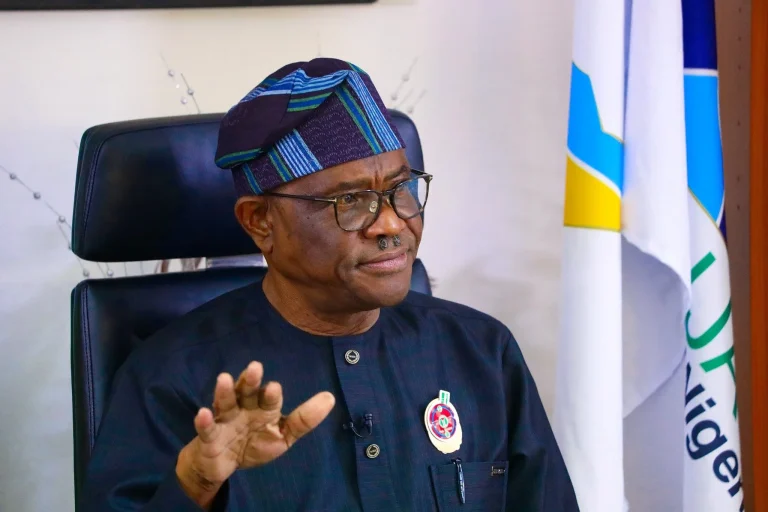
- FCT Minister Nyesom Wike has urged Nigerians to re-elect President Bola Tinubu in 2027, warning that a change of leader could undermine the gains of his economic reforms. He spoke on Sunday, November 22, 2026, at St Peter’s Anglican Church, Rumueprikom, in Obio/Akpor, Rivers State. The service was a thanksgiving and the dedication of the Rainbow Coalition campaign council ahead of the 2027 elections.
What Wike Said, Point by Point
Mr Wike described Mr Tinubu as courageous and said he took hard decisions to stop the country from collapsing. He said the fuel subsidy removal caused hardship but that the disadvantages would be temporary. In his words, the foundation is laid and it is time for prosperity. He argued that if Mr Tinubu is not re-elected, it will be difficult to stabilise what he has done.
He cited fewer university strikes over unpaid entitlements, and he recalled pensioners’ earlier payment problems. He asked Christians, Muslims and traditional worshippers for their votes, saying he is not a native doctor but needs their votes now. He also dismissed claims of religious imbalance in appointments, saying Christians had never had such appointments. He told residents to vote, because those who stay away will still be affected by the result. Campaigning by the coalition was due to start on Monday, November 23.
He also announced a ₦100 million donation to the church on behalf of the coalition, his friends and associates. He asked religious leaders for prayers and the congregation to reciprocate through their votes.
Checking the Claims Against Available Evidence
Claim: Subsidy removal brought hardship that will fade. This is partly supported. Headline inflation fell to 14.06% in October 2026 from 14.63% in September and 18.97% a year earlier, according to the NBS. But food inflation was 19.13%, higher than the 16.30% recorded a year earlier. Food and non-alcoholic beverages contributed 5.63 percentage points to headline inflation, the largest share.
Claim: University strikes are no longer recurring. This is partly supported. There was a two-week nationwide warning strike in October 2025, and a new agreement was signed on January 14, 2026. It included a 40 percent pay rise from January 2026. The Federal Government said implementation began in February. But in September 2026, ASUU threatened to resume its suspended strike over partial implementation and withheld salaries.
Claim: Christians have received unprecedented appointments. This is unverified. We found no data supporting or disproving it, and it remains his claim.
Claim: Reforms will be hard to stabilise without re-election. This is an opinion about the future, not a fact that can be checked today.
Worship Spaces and Campaign Messages: Earlier Warnings and Disputes
The venue raises a separate debate. The Electoral Act 2022 said places of worship should not be used for political campaigns, rallies or processions. A September 2026 report said the Electoral Act 2026 keeps similar limits, though we have not checked the text. In 2022, an INEC official reminded parties of the rule. Then Kano governor Abdullahi Ganduje also warned politicians not to use religious centres to seek votes.
Accusations have come from several sides. In September 2026, activist Deji Adeyanju criticised opposition candidate Peter Obi’s church visits and a governor who gathered clerics to endorse President Tinubu. Earlier this month, Anambra Governor Charles Soludo urged politicians to keep off places of worship. Whether a thanksgiving service and a council dedication count as a campaign is a legal question we cannot answer. We found no complaint to INEC about this event, and the organisers have not been heard on the point.
Continuity Arguments, Hardship and Voter Memory: Forces Shaping the Message
Governing parties often argue for continuity. They say hard reforms need time, and that switching leaders can reset progress. That message works best when voters feel improvement. When prices stay high, opponents argue the opposite, that the policies have failed.
Voter memory also matters. People judge leaders by what they pay for food, transport and school. Official data can show a trend, such as falling annual inflation, while a household still feels strain because prices have not come back down. Both can be true at once, and campaigns will emphasise whichever suits them.
The National Stakes of Judging an Economic Record at the Ballot Box
This is a national question, not only a Rivers State one. The presidential and National Assembly elections are set for January 16, 2027. Voters will decide whether the current direction deserves more time.
The way the case is made matters too. If campaigns rely on religious platforms and donations, some voters may worry about fairness, and others will not. If campaigns focus on checkable records, voters can reach their own judgment. A credible election needs informed choices.
Reform Gains and Household Pressures: Weighing Both Sides
Supporters of the government point to slowing inflation and to the lecturers’ agreement as signs that reforms are working. They argue that a break now could waste the pain already endured. Mr Wike’s “foundation” argument rests on this view.
Critics, and many struggling households, point to food costs. Low-income families spend most of their income on food, so a 19.13 percent food inflation rate is felt hard even when headline inflation falls. They also note that the lecturers’ union says the new agreement is not fully carried out, which suggests that gains have been uneven. Both groups can point to real data, and fair readers will weigh both.
On religion, appeals to Christians and Muslims alike are normal in a diverse country. The claim about appointments is a separate question that needs data. Without it, voters should treat it as a statement of opinion.
Visiotalks Analysis: Five Questions Voters Can Ask of Any Re-Election Pitch
What has changed for ordinary people? Look at prices, jobs, security and services, not only headline figures.
- Which numbers are used? Check whether the data are annual, monthly, food or core.
- Who is speaking? A minister’s statement is partisan, so compare it with independent data.
- What is left out? A good pitch should also address what has not improved.
- Where is it said? The setting can affect how the message is received and whether it follows campaign rules.
By these questions, Mr Wike’s appeal makes clear arguments on continuity and economic reform. It gives little data on household pressures or on the appointments claim.
Frequently Asked Questions
What is the Rainbow Coalition? Reports describe it as a political support group mobilising for President Tinubu’s re-election, with a campaign council in Rivers State.
Did Wike make a donation? Reports say he announced ₦100 million for the church on behalf of the coalition, his friends and associates.
Is inflation falling? Headline inflation is 14.06% in October 2026, down from 14.63% in September. Food inflation is 19.13%, higher than a year ago.
Have university strikes stopped? Not fully. ASUU warned in September 2026 that it could resume its suspended strike.
Is campaigning in churches illegal? The Electoral Act 2022 restricted it, and a report says the 2026 Act keeps similar limits. Whether this event qualifies is for INEC and courts.
Practical Steps for Campaigns, Churches and Voters
Campaign groups can publish clear data behind their claims and state whether events are campaign or worship events. INEC can clarify, in plain language, what religious venues may host during campaign season. Churches can make clear that donations and invitations are open to all parties on equal terms, and can avoid using services as campaign platforms.
Voters can compare official data with party claims and listen to different sides. The media can fact-check claims, such as those on appointments, and avoid reporting statements as established facts. Lawmakers and parties can also publish clear records of past promises.
A Fair Verdict Begins With Facts Everyone Can Check
We note Mr Wike’s appeal and the evidence on both sides. Inflation is easing, which supports part of his case. Food prices and the lecturers’ dispute show that many pressures remain.
We take no side in the contest. We believe voters should decide on records they can check, and that places of worship should stay open and welcoming to everyone. If the rules need clarifying, INEC should do so before the campaign heats up. A fair election starts with honest claims and clear rules, and our democracy depends on both.