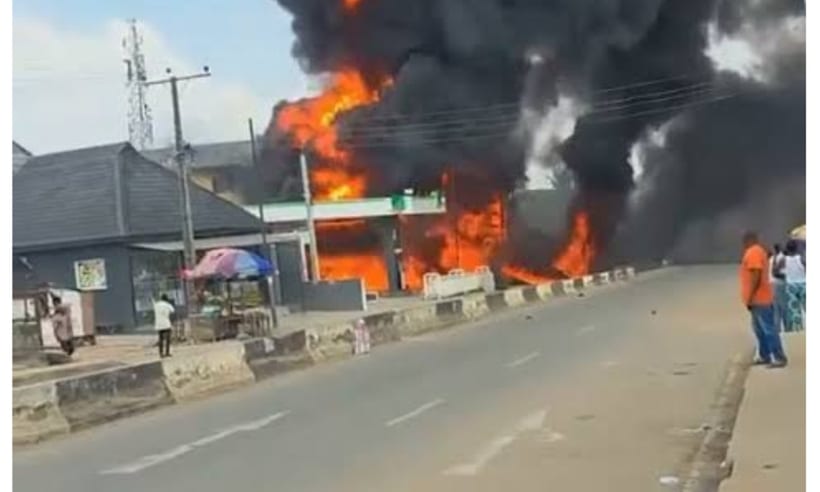
A fire has been reported at a filling station near Awoyaya Bus Stop in Lagos State. The report appeared on social media on Friday, November 20, 2026, at about 5:21 p.m. under the words “Happening now”.
That is all that is confirmed so far. We do not know which station was affected, whether anyone was hurt, or how the fire started. We have not found an official statement from emergency agencies. We will update the facts as they come.
What Is Known and What Is Not Yet Known (An Unconfirmed Report Is One No Official Source Has Verified)
A single social media post can alert the public quickly, but it cannot tell us the full story. We cannot say whether the fire has been put out, whether fuel tanks were involved or whether neighbouring buildings were threatened. We also cannot say whether the report describes a small fire or a major one.
For now, readers should rely on official updates from the Lagos State Emergency Management Agency (LASEMA), whose toll-free numbers are 767 and 112, and from the Lagos State Fire and Rescue Service. People who live nearby should follow instructions from emergency officers and keep roads clear for responders.
A Corridor Where Fuel and Danger Meet: Earlier Incidents Near Awoyaya (The Lekki–Epe Expressway Is a Major Road Linking Lagos Island to Eastern Lagos)
Awoyaya sits along the Lekki–Epe Expressway, and fuel risks have been seen there before. The Lagos State Traffic Management Authority (LASTMA) said it averted a possible fire disaster when a fully loaded petrol tanker overturned at Awoyaya on the inward lane of the expressway at about 2 a.m. Officials said they secured the area, kept away fuel scoopers and worked with the fire service to prevent ignition.
That case did not end in fire, but it shows how close a fuel spill can come to one. A fire at a filling station on the same corridor would raise similar fears about nearby homes, businesses and traffic.
Filling Station Fires in Lagos This Month: What Officials Found Elsewhere
A different fire shows what can happen. Premium Times reported that a filling station fire in Lagos destroyed seven classrooms, three fuel pumps, a truck and a car. LASEMA said preliminary findings showed the fire began while a tanker was discharging diesel at the station and then spread to the pumps and the neighbouring school. No casualties were recorded.
That report is about another location, and we do not suggest the cause is the same at Awoyaya. But it shows that fuel stations can be dangerous when fuel is being moved, and that fires can reach nearby buildings. Social media users also noted that this would be at least the third fire in Lagos that week, though we have not verified that count.
When Fires Spread: Lessons From Larger Lagos Blazes (Containment Means Stopping a Fire From Spreading)
Not every fire is stopped quickly. On Christmas Eve 2024, a fire on Lagos Island burned for days. LASEMA first confirmed three deaths, while officials at the scene said five bodies had been recovered. A trader said the fire spread wildly in under five minutes and urged the government to set up more fire posts.
Quicker responses have also worked. When a fire gutted the top floor of Navy House in Ikoyi, LASEMA said its Shark Team arrived within the estimated 20-minute response time. A multi-agency effort stopped the blaze from spreading to other floors. These cases show that speed and teamwork can limit damage.
Why Filling Station Fires Are a Special Risk: Fuel, Fumes and Crowded Surroundings (A Flammable Substance Is One That Catches Fire Easily)
Petrol and diesel are highly flammable, and their vapours can travel. A single spark can start a fire if fuel is spilled or vapour builds up. Stations are also busy places, with cars, customers and sometimes tankers delivering fuel at the same time.
Many stations also sit close to homes, schools and shops, especially in fast-growing areas. That means a fire can threaten far more than the forecourt. We cannot say what caused the reported fire at Awoyaya, and we avoid guessing.
What a Fire Like This Costs the Community and the Country: Safety, Livelihoods and Confidence
If people are hurt, the human cost is the most serious. Even without injuries, the owner and workers may lose income, and nearby traders can lose customers. Residents may also feel afraid to live or work near a station.
The wider cost reaches the whole country. Fuel stations are a vital link in the supply chain, and every fire disrupts sales and safety checks. Repeated fires in the same city can reduce public trust in safety rules and emergency services. They also place heavy pressure on firefighters and hospitals.
Making Stations and Corridors Safer: Checks, Training and Faster Response
Station owners can follow safe procedures when fuel is delivered, such as stopping sales while a tanker discharges. LASEMA has previously advised station operators to suspend fuel sales whenever fuel is being discharged. Operators can also keep fire extinguishers ready and train staff to use them.
Regulators can carry out regular safety inspections and publish the results. The state can also strengthen emergency coverage along busy corridors, with fire posts and clear response targets. Residents can help by saving the numbers 767 and 112 and by reporting leaks or smoke early.
Waiting for Facts, Watching for Safety: Our Reading of an Unconfirmed Blaze
We cannot say more about this fire than the facts allow. A fire was reported at a filling station near Awoyaya, and everything else remains unknown. We hope no one was hurt and that responders brought the fire under control.
We urge LASEMA and the Lagos State Fire and Rescue Service to share what they find, including the cause and any damage. We also urge residents to avoid spreading rumours or unverified videos.
Whatever the cause, fires at fuel stations are a reminder that safety rules are not paperwork. They protect lives, and we all have a stake in keeping them.
Published by Ejoh Caleb