
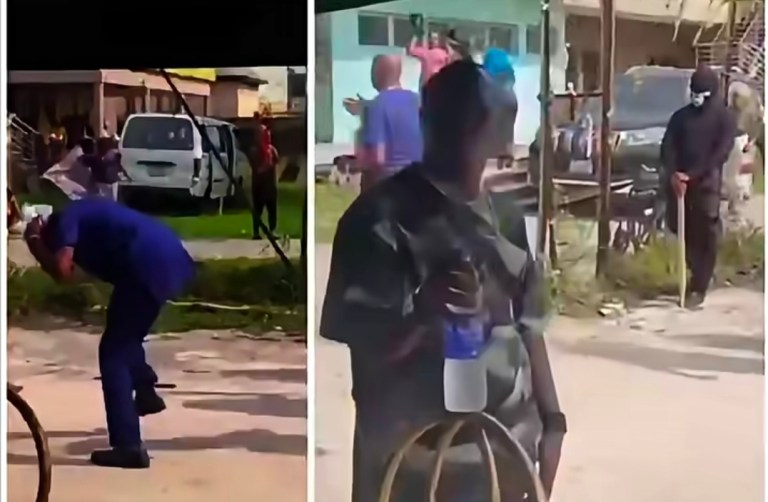
Wedding guests in Warri, Delta State, ran for safety after bees suddenly invaded a reception. A video of the scene is spreading on social media. The bees reportedly chased people around the venue. Many guests were seen praying loudly as they tried to chase the bees away, which turned the party into a prayer battle.
Bees Are Not New at Big Gatherings: Past Cases That Show a Pattern (Swarm Attacks at Weddings and Funerals)
This kind of drama has happened many times in Africa and beyond. In Rehoboth, Namibia, a swarm attacked a wedding reception after children reportedly disturbed bees nesting near the hall. About 10 guests, including the bride, were taken to hospital. The story shows how quickly a small disturbance can become a mass emergency when many people are packed together.
Nigeria has also paid a heavy price. In Imo State, an 83-year-old woman was stung by a swarm after a beehive fell from a breadfruit tree behind her family house. Neighbours rushed her to a private hospital. She died the next day. Her case reminds us that bee attacks can kill, especially older people who cannot run fast.
In Niger Republic, more than 40 villagers, including 14 children, were hospitalised after a gust of wind broke the branch that held a bees’ nest. Some animals also died.
Burials have been hit too. In Ghana, in October 2023, bees descended on a joint burial service of about 400 mourners. People scattered and left coffins behind. In Zimbabwe, more than 30 people were injured when bees chased mourners out of a church, and the coffin was abandoned inside.
Not every case ends in tragedy. In Junnar, India, 19 people were injured at a wedding after someone threw a stone at a mango tree and disturbed a hive. The wedding continued after a short pause. Taken together, these cases show that most attacks have a trigger, and many of those triggers can be prevented.
What Makes Bees Turn on a Crowd: Triggers Hidden in Plain Sight (Causes of Swarm Attacks)
We do not yet know what angered the bees in Warri, so we cannot name a cause. The past cases point to a few common ones. Bees usually attack when they feel their hive is under threat. A stone, a falling branch, a child’s prank or strong wind can all set them off. The Junnar and Rehoboth cases both began with someone disturbing a nest. The Niger and Imo cases began when a hive fell.
Crowds make things worse. Loud music, noise, smoke from cooking and heavy movement can all stress a colony near a venue. Guests may also wear strong perfume, and health-safety guidance says bees and wasps are often drawn to flowery scents and to sweat. The same guidance says wasps are attracted to leftover food and garbage, which is common at receptions. Guests often cannot tell bees from wasps, so a “bee attack” may sometimes involve both.
How One Swarm Can Hurt People, Businesses and the Country (Effects of Swarm Attacks)
The first effect is on the body. Most stings cause only pain and swelling. A swarm is different. Many stings at once can overload the body with venom, and some people have a severe allergic reaction called anaphylaxis. This can make breathing hard and can be deadly. Experts at UC Davis note that a second wave of this reaction can appear hours after the first. That is why anyone with many stings should see a doctor even if they feel fine.
The second effect is panic. A crowd running in fear can cause falls, crushed children and injuries that have nothing to do with bees. Older people, small children and pregnant women are at the greatest risk.
The third effect is financial and emotional. Families spend heavily on weddings. A ruined reception means wasted food, spoiled memories, and possible hospital bills.
The fourth effect reaches the whole country. Nigeria hosts thousands of weddings, burials and church events every weekend. Many are held in open compounds, halls near trees, or rented event centres with little safety checking. Each avoidable emergency adds pressure to hospitals that are already stretched. It also shows that Nigeria has no clear habit of checking event venues for hazards before crowds arrive. Foreign guests and the diaspora, who travel home for these events, may also start asking whether such venues are safe.
Staying Safe Before and During an Attack: Practical Steps Everyone Can Use (Possible Solutions)
Venue owners should inspect the compound before every event. They should look for hives in trees, roofs, walls and ceilings, and call trained beekeepers to remove them. Residents should never try to burn or smash a hive themselves, as this can anger the bees. Event planners should also keep children away from trees and nests.
If bees do attack, health-safety guidance gives clear steps. Run to shelter and go indoors if you can. Do not swat or kill the bees, because this can bring more of them. Do not jump into water, because some bees will wait above the surface. After escaping, scrape out stingers quickly with a fingernail or a card, and do not squeeze them. Go to a hospital if you have many stings, trouble breathing or dizziness.
Government can also help. State governments and local councils could add simple hazard checks to event centre permits. Health workers could also teach the public basic first aid for stings.
Prayer Alone Is Not a Safety Plan: Faith, Fear and Common Sense (Our Honest Assessment)
We understand why the Warri guests prayed. In a moment of fear, many Nigerians turn to faith first, and there is nothing wrong with that. Prayer brings calm and hope. But we believe it works best alongside action. When bees are chasing people, the safest move is to protect the face, run indoors and get help for those who are stung.
We also think this story is bigger than one wedding. It shows how little attention we give to hidden risks at our biggest celebrations. We plan the food, the music and the dress code carefully. Yet we rarely ask whether the venue is safe. We should start asking that question before the next guest list is printed.
Finally, we urge everyone in Warri who was stung to see a doctor, even if the pain seems small. We will update this story as soon as we have confirmed details on injuries, the venue and the cause.
Published by Ejoh Caleb